Category: General Cookbook

  • A Family Cookbook Is A Present With A Future

    Recipes are a tradition that should be passed on to each generation. Although a family food treasure can be lost forever with each passing of a family member. Many families are working together and creating family cookbooks to collect and preserve mealtime treasures.

    Once a labor-intensive task, now families are using the Internet to simplify the project. A website can provide step by step instructions and tools to help the family member serving as cookbook editor to contact others and encourage them to enter their favorite recipes directly into the online system.  The editor then simply reviews and edits the recipes, selects printing options, and sends the cookbook to be printed.  The finished printed cookbooks are received in a few weeks time.

    FamilyCookbookProject.com, winner of the Web Marketing Association’s Best Family Website and Best Publishing Website WebAwards, is one easy-to-use Website available to help families collect their assortment of recipes into a beautifully bound heirloom that can be useful in the kitchen or given as a gift.

    Whether you are looking for a great gift idea or ensuring that the foods you grew up with are enjoyed in future generations, a family cookbook is a present with a future.

    For more information go to www.familycookbookproject.com


    Bill Rice is founder and Co-Publisher of the Great Family Cookbook Project, a website that helps families and individuals collect and share food memories through customized printed cookbooks filled with treasured recipes. Follow us on Facebook and Pinterest!


  • Pass Along Traditions With a Family Cookbook

    The Family Cookbook Project was featured in this article on the popular website NextAvenue.org on how to create a family cookbook.  The article is entitled “Pass Along Traditions With a Family Cookbook: Compiling cherished recipes can be a true labor of love”  by Brette Sember. You can read the article by clicking on the link above.

    
    Bill Rice is founder and Co-Publisher of the Great Family Cookbook Project, a website that helps families and individuals collect and share food memories through customized printed cookbooks filled with treasured recipes. Follow us on Facebook and Pinterest!
  • How To Write A Great Recipe

    Whether you are writing down a family favorite, starting a food blog, or entering a recipe contest, learning how to properly write a recipe is a valuable skill any food lover can use.

    Here are a few standards and general rules of thumb we at FamilyCookbookProject.com suggests when it comes to writing a recipe.  It is important to accurately communicate the ingredients and process, so your recipe can be recreated by others.

    Before the ingredients, comes the title, number of servings and serving size if appropriate. Then the ingredient list and the preparation directions. The final area allows you to provide helpful comments on your recipe.

    Recipe Title:

    • This is the  name of your recipe using words that accurately describe the dish.  Feel free to have a little fun and make it catchy!  You want people to keep reading and be inspired to make the recipe themselves. See our post How to Write A Great Recipe Title to learn more about recipe titles.

    The Ingredient List:

    • List all ingredients in order of use, as described in step-by-step instructions.
      List the most important ingredients first, if it can be consistent with order of use.
    • Spell out everything: tablespoons, ounces, etc. or use commonly accepted abbreviations which can be inserted from the drop down menu on the “Add a recipe” page.
    • If the recipe has different parts (for example, a pie has a crust and a filling), break up the ingredient list with headings such as “Crust” and “Filling” using the multi-part recipe option on your “Add a recipe” page.
    • When several ingredients are used at the same time (in the case of baking, often all the dry ingredients are sifted or mixed together at once), list them in descending order according to volume. If there is an issue over preparation, list in order, so for example if you need the zest and juice of a lemon, list the zest first and then the juice since that is the order you will do the preparation.
    • Do not use two numbers together. You need to set off the second number in parenthesis. This comes up with sizes of packages. For example, “1 (8-ounce) package cream cheese.”
    • If an ingredient begins with a letter instead of a number, freshly ground black pepper, for example, capitalize the first letter, as in “Freshly ground black pepper.”
    • If the preparation of an ingredient is simple, place that technique in the ingredient list, as in “2 eggs, beaten” or “1 stick butter, softened.”
    • If an ingredient is used more than once in a recipe, list the total amount at the place in the ingredient list where it is first used, then add “divided.” In the method part of the recipe, indicated the amount used at each step. For example “1 cup all-purpose flour, divided” then in the method “Sift 3/4 cup of the flour with the…” and later “Sprinkle the remaining 1/4 cup of flour on top of…”
    • Use generic names of ingredients (semi-sweet chocolate chips, not “Tollhouse chips”.

    Directions

    • Where helpful, indicate the size of bowls and cookware. For example, “In a large mixing bowl….”
    • You do not have to write complete sentences. Be as short and concise as possible.
    • With instructions for the stove-top, indicate level of heat. For example, “Simmer over low heat.”
    • State exact or approximate cooking times, with descriptive hints for doneness, if appropriate. For example, “Sear 1 minute on each side,” and “Bake 18-22 minutes, or until crust is light golden brown.”
    • As in the ingredient list, if there are different elements to the recipe, as with the crust and filling of a pie, separate out each element in the method. Begin with the crust and write a header “For the Crust” and give the method. Then do “For the Filling” and give filling instructions. This is done automatically using the multi-part recipe option at FamilyCookbookProject.com.
    • Separate each step into a different paragraph. If you are mixing dry ingredients in a bowl, for example, use one paragraph for all the instructions for that step.
    • Finish with serving instructions including how to plate, what temperature to serve, how to garnish.
    • The last instruction can be regarding storage, if applicable. For a cookie recipe, for example, “Cookies will keep at room temperature in an airtight container for 3-4 days.”

    Comments

    • Use this area to communicate anything additional information someone would need to know to recreate your recipe at home.
    • You can also offer ideas for alternate ingredients, tips, or serving suggestions.
    • You also can use this area to tell a story about this recipe and the meal that is was introduced to the family.
    • Source your recipes in the comments field. If you got your inspiration from a magazine or cookbook, or lift a recipe from a blog or website, you should give them credit.  This goes for recipe photos as well.  Never use images without the owners consent.
    • Especially if you are posting your recipe online, it is important to include the name, source and webpage of the original recipe. State if the recipe is “Adapted from”: Which means you made minor changes to ingredients and/or preparation technique. or “Inspired from”: Which means you used the stated recipe as a guide or inspiration for your own recipe which may include some of the same ingredients and techniques.
    • Food bloggers:  If you are sharing a recipe from your own blog, this field is a great place to put in a link back to your site!

    Time and Servings:

    • Preparation time includes all the measuring, chopping and other preparation of ingredients.
    • Cooking time refers to the total time the food takes to cook, including any preliminary cooking needed.
    • Remember, these times are just a guide for the reader.  Try to be generous with the timing, someone making the recipe for the first time will take longer that you who has experience making it.
    • Also, include the number of servings based on reasonable portions.

    Pictures/Videos:

    • Try to include a photo of the finished product. There is nothing better for people to see the food they are about to prepare that what it will look like when complete.
    • A popular trend today is to create videos of yourself making the recipe. Remember to pause the camera or to cut extra footage so the final video is not too long to watch.


    Bill Rice is founder and Co-Publisher of the Great Family Cookbook Project, a website that helps families and individuals collect and share food memories through customized printed cookbooks filled with treasured recipes. Follow us on Facebook and Pinterest!

  • The Best Time to Start a Family Cookbook – The Holidays

    To most of us, the year-end holidays are a time of family, friends and a lot of food.  While these times can be hectic with all of the running around that needs to be done, it is also the best time to start a family cookbook project says one expert.

    “Many of the family holiday traditions start in the kitchen and center around the meals we serve our family and guests at this time of the year, says William Rice, Founder and Co-Publisher of the Great Family Cookbook Project. “What better way to celebrate our family food traditions than to preserve them for future generations in a family cookbook. There is no better time to start planning a family cookbook than over a wonderful meal during the holidays”.

    A successful family cookbook needs at least one dedicated individual to lead the project as editor. This person gets the project off the ground and invites family members to contribute recipes.  Once a labor intensive task, now families are using the Internet to simplify the project.  “A website, such as www.familycookbookproject.com, can provide step by step instructions and tools to help the family member serving as cookbook editor to contact others and encourage them to enter their favorite recipes directly into the online system,” says  Rice “The editor then simply reviews and edits the recipes, selects printing options, and sends the cookbook to be printed.  The finished printed cookbooks are received in a few weeks time and can be enjoyed and preserved forever.”

    Here are some tips from Familycookbookproject.com to help make your family’s personalized cookbook a success:

    Start talking about the project over dinner – Enjoying the food and dishes we love while being asked to contribute recipes will make the value of the project more real and worthwhile.

    Have a sign up list for those who want to participate – Get everyone’s telephone number and email address in one place. This will help when it is time to be in contact with them over the project.

    Pass out recipe forms after the meal – Having printed recipe forms lets people know what they need to provide and shows them how little work contributing will be.

    Invite everyone to participate – Don’t just invite the family cooks. Everyone has at least one recipe that they can contribute to the cookbook. Use email to invite and stay in touch with contributors. Let them see what others have submitted to encourage them to keep adding their best recipes.

    Set a deadline – Set a deadline one or two month in the future to have all of your recipes submitted. Most people work better if they know they face a hard deadline. If you don’t have enough recipes at the deadline, you can always extend it.

    Keep in touch – After the holidays, keep in touch with everyone via email. Send regular updates and let then know who is participating and who is not.  Set a goal to have every family member contribute at least one recipe so they can be listed in the list of contributors.

    Consider using a Website, like Familycookbookproject.com, to help organize your family cookbook. Here are just some of the benefits of www.FamilyCookbookProject.com:

    – Editors can send contributors an email to invite them to participate in the family cookbook.  The site also makes it easy to send regular updates by email to some or all of the contributors.

    – Allows individuals to enter their recipes directly into the online family cookbook so it does not fall entirely on the editor.

    – Provides an easy way to share recipes online. Contributors have access to everyone’s recipes even before the final family cookbook is printed.

    – Provides many options for recipe layout and cover selections or allows you to create your own cover.

    Family cookbooks are an important way to preserve our mealtime traditions for future generations. With the passing of our loved ones comes the loss of treasured food traditions. A family cookbook ensures that the recipes from one generation can be passed on to the next as a treasured family heirloom. Once the recipes are preserved online, they can be shared with other family members by email, printed individual and included in your own professionally printed cookbook.

    For more information on how your family can make a family cookbook, go to www.familycookbookproject.com.

    About the Great Family Cookbook Project

    The Family Cookbook Project is dedicated to helping individuals and families collect and preserve the time-honored recipes that are so important to our family traditions. The Family Cookbook Project (www.familycookbookproject.com) was recently named the Best Family Website by the Web Marketing Association’s WebAward Competition for the second year in a row.  The website has helped thousands of families and groups coordinate the creation of personalized cookbooks by provides step-by-step instructions and online tools to create a valuable family heirloom.  Personalized cookbooks are also used by schools and church groups as important fundraisers.

  • How to Write A Great Recipe Title

    Your recipe title is the single most important element of your recipe. This is because your title is a headline, and the headline in any type of content has one special and powerful property.

    Think about how you read a cookbook looking for a recipe to try.  You don’t start in the front and read every page like a novel then pick the one you want. No, you scan the pages looking for a photo or recipe title that catches your eye and looks interesting!

    Of all the elements in your recipe, the title has the greatest power for grabbing your readers’ attention and the greatest responsibility for enticing them to continue and read your recipe It follows that the better your title, the higher the chance of turning a recipe scanner into a recipe reader (and ultimately a recipe user).

    For a recipe title to be effective it needs to consider several things:

    Grab Attention – Like any headline you need to grab the readers attention.

    Describe the food being prepared – “Gruel” is one of my son’s favorite dishes, however it no one outside the family knows what it is. Including the main ingredient of the dish and even how it us prepared make the title more useful. “Baked Hamburger Gravy” would be a more descriptive title for our gruel.

    Be different and unique – If you have seen the recipe title before, it does not belong on your recipe!

    Include the source – In family cookbooks, certain people are associated with certain recipes. Grandma’s Apple Pie or Lou’s Lemon Bars help the reader image exactly what dish you are referring to. It just does not help anyone who is not at family gatherings!

    Sell the sizzle as well as the steak – This means to highlight the benefit, the reason why this recipe is worth making.

    Recipe titles that address cooking and eating needs are more likely to seduce the reader into the recipe itself. A good title clearly shows the reader which of their cooking and eating needs the recipe addresses. Every readers’ need is different. For example, it could be for something indulgent or something low fat, or something quick and easy or something sophisticated and thus involved, or something refined or something rustic.

    Consider the following recipe titles: ‘Soft and Chewy Chocolate Chip Cookies’, ‘Quick ‘n’ Easy Chocolate Chip Cookies’, ‘Grandma’s Favorite Chocolate Chip Cookies’, ‘Gluten Free Chocolate Chip Cookies’. Notice how each title addresses a different need and even appeals to different audiences. Quite simply, as the chocolate chip cookie examples show, it’s all down to the words you choose for your title.

    With a little thought and imagination, your recipe titles can stand out and make your readers give your recipes the attention they deserve.

    Bill Rice is founder and Co-Publisher of the Great Family Cookbook Project, a website that helps families and individuals collect and share food memories through customized printed cookbooks filled with treasured recipes. Follow us on Facebook and Pinterest!

  • Cookbooks for Kids

    One of the reasons we works so hard on a family cookbook is to preserve our favorite recipes for future generations. It is equally important to help that next generation develop a love of good food and cooking at an early age. That is why Family Cookbook Project created a simple cookbook just for the kids in your life.

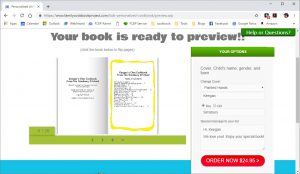
    Kids Cookbook Project lets you create your own customized cookbook for the special little one in your life. Simply enter your  child’s name and choose boy or girl and immediately preview them in their own special personalized Cookbook! We will then print your full color customized, personalized kids cookbook. It’s just $24.95.

    Keep Kids Interested in Reading …put them in the story! Every child loves a story. A good story helps them to explore their imagination. A great story has them as the main character and holds their interest in reading. That’s what we do! …Kids Cookbook Project makes great stories about children with your child as the main character. And we make it easy and simple to do …as simple as 1-2-3.

    As the holiday’s approach, this would make a great personalized gift for the youngsters in your life. To learn more and to order. visit Kids Cookbook Project.


    Bill Rice is Co-Publisher of the Great Family Cookbook Project, a website that helps families and individuals collect and share food memories. Follow us on Facebook and Pinterest!

  • The Easiest Way to Preserve Family Recipes

    Family members may look unrelated, live in different areas, even have different political views. But even the most diverse family can be united by love of their family’s unique food traditions.

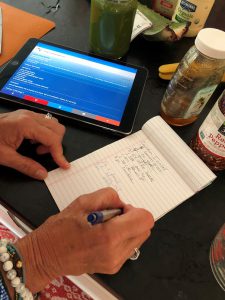
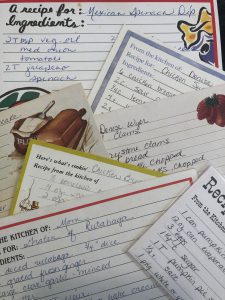
    Until now, the tradition of the family cookbook has often been handwritten on note cards, hastily scribbled on napkins during family gatherings or jotted in lovingly preserved notebooks, yellowed with age. Like everything else it touches, the Internet is revolutionizing family-recipe gathering.

    “Food is an integral part of who we are as individuals, as members of society and as members of groups within that society,” says Bill Rice, founder of the Family Cookbook Project, a Web site that helps thousands of families compile their favorite recipes and publish their own cookbooks. “From Aunt Edna’s pot roast to Grandma’s special pecan pie, family recipes create common ground and wonderful shared memories.”

    The Family Cookbook Project uses proprietary software to help budding cookbook authors compile, edit and organize their family’s recipes online. By creating an account at www.familycookbookproject.com, users can send an invitation e-mail to family members asking them to contribute favorite recipes for the book.

    Family members then sign on to the “editor’s” account and enter their information, eliminating the laborious process of collecting and re-keying recipes. Once all contributions are in, the editor then uses the site’s software to edit and organize the cookbook. Editors can choose from a variety of personalized covers and divider pages for their spiral-bound book.

    The cost of creating a family cookbook is just $19.95 for up to 10 contributors or $29.95 for an unlimited number of family contributors, plus the cost of printing. With a low minimum print quantity of just 50 books, families print and many cookbooks as they need and give others as gifts..

    “Although some of our more enterprising editors sell their family cookbooks on eBay,” Rice points out.

    To get started compiling your family’s recipes and publishing your own family cookbook, visit www.familycookbookproject.com.


    Bill Rice is founder and Co-Publisher of the Great Family Cookbook Project, a website that helps families and individuals collect and share food memories through customized printed cookbooks filled with treasured recipes. Follow us on Facebook and Pinterest!

  • Family Cookbook Project Now offers WW SmartPoints on recipes

    Family Cookbook Project, an online leader in the creation of personalized printed cookbooks, has added the ability to include WW SmartPoints® on recipes being added to a user’s collection of recipes.

    WW (formerly Weight Watchers) SmartPoints* is a system where every food and drink is assigned a point value, and you receive a certain number of SmartPoints to allocate however you’d like every day and week. SmartPoints is designed to help guide you to a healthier pattern of eating every day.

    “Living a health lifestyle and eating right is what WW SmartPoints are all about,” says Bill Rice, Founder and Co-Publisher of the Family Cookbook Project. “Family Cookbook Project has added a field to It’s easy-to-use Add a Recipe form so that users participating in the Weight Watchers program can have an easy way to include the SmartPoint value when adding a recipe to their online recipe box. These recipes can them be printed into a personalized cookbook including all of their favorite recipes.”

    WW’s science-based SmartPoints system assigns every food a number based on four components: calories, saturated fat, sugar, and protein. The higher the number, the more sugar and saturated fat the food will have. The lower the number, the less it will have. The reason for this is that numerous studies have confirmed the benefits of eating less sugar and saturated fat, and more protein—not just for weight loss, but all sorts of other healthy reasons too.

    Family Cookbook Project editors can turn on WW SmartPoints® by going to the Recipe Center and clicking on the link “WW Smartpoints Use/Show”. There are two settings: one for allowing contributors to add WW SmartPoints® to a recipe and another to include SmartPoints in the printed edition of the cookbook.

    In addition, Family Cookbook Project is developing a simple to use calculator that will calculate the SmartPoint value of a food simply by entering information from a food’s packaging. We expect this to be introduced early next year.

    With over 4.6 million users, WW is the most trusted source of weight loss guidance in the world. Family Cookbook Project believes their success is based on meeting the ever-changing needs of our valued customers. “This is just one more example how Family Cookbook Project is putting our customers first,” added Rice.


    *WW SmartPoints is a trademark of WW International, Inc. and are not associated with Family Cookbook Project, LLC.

  • Standard Measurements for Recipes

    For many generations, recipes were handed down by word of mouth from mother to daughter. Recipes consisted of a little of this and a smidgin of that. The food always came our great – or at least that is what we told out mothers! Today things are different. Computers make is easy to write down our recipes and share them with friends and family members over the Internet. However it is important to remember that cooking has a language of its own. It is a language of ingredients and measurements and directions. I believe the most important of these is measurements. If we did not have standard measurements for cooking, “T” could be a teaspoon, a tablespoons, a thimble full or a truck load! Here are a list of Standard Measures Abbreviations commonly used in recipes.

    teaspoon……………………… tsp.
    tablespoon…………………… tbsp. or T.
    cup…………………………….. c.
    quart…………………………… qt.
    ounce…………………………. oz.
    pint…………………………….. pt.
    gallon…………………………. gal.
    inch…………………………….. in.
    pound………………………….. lb.
    milliliter…………………………. ml
    liter……………………………….. L
    milligram……………………….. mg
    gram……………………………… g
    kilogram ……………………….. kg
    millimeter……………………… mm
    centimeter…………………….. cm
    meter……………………………. m
    Celsius…………………………… C
    Fahrenheit……………………. F

    Another important thing about standard measurements is that they don’t work if you don’t use them! Including an ingredient in your recipe without a specific amount is likely to leave someone trying the recipe for the first time scratching their head and wondering what to do. Remember know one will know unless you include it in your recipe.

    Bill Rice is founder and Co-Publisher of the Great Family Cookbook Project, a website that helps families and individuals collect and share food memories through customized printed cookbooks filled with treasured recipes. Follow us on Facebook and Pinterest!

  • Holiday Printing Deadlines for Family Cookbook Project

    The holidays are right around the corner and family cookbooks make a great gift for family and friends – and it is the busiest time for Family Cookbook Project in terms of printing cookbooks for families.

    If you plan to have your cookbooks printed by us and received by Christmas, the deadline to order and make payment is Friday, November 29th. There will be an extended deadline, but expedited shipping will be required. Let us know if we can help!

    If you need your family cookbook for Hanukkah, the print deadline is Friday, November 15th.

    So get your contributors to submit their final recipes and start reviewing everything to get your cookbook ready to print before the holiday deadline to have a wonderful family heirloom to share for generations.