Category: Editor Tips

  • The Importance of Personal Notes in a Family Cookbook

    The Importance of Personal Notes in a Family Cookbook

    In the heart of every family cookbook lies more than just a collection of recipes; it’s a repository of memories, stories, and the essence of familial love shared through food. One of the most cherished elements that elevate a family cookbook from a mere compilation of recipes to a treasured heirloom is the inclusion of personal notes. These handwritten annotations, often scribbled in the margins or alongside ingredients, add a layer of depth and intimacy that transcends the act of cooking itself. Here’s why personal notes are such an important part of a family cookbook, along with ideas on what to include in these heartfelt annotations.

    The Emotional Connection

    Recipes with personal notes evoke a sense of connection and continuity across generations. They are more than just instructions; they carry the essence of the person who penned them. Whether it’s Grandma’s secret ingredient for her famous pie crust or Dad’s tips for achieving the perfect grill marks, these notes encapsulate the wisdom and experience passed down through the years. Each note tells a story, offering a glimpse into the lives and personalities of those who came before, making cooking not just about nourishment but about honoring family traditions and memories.

    Capturing Memories

    A recipe’s personal notes in a family cookbook serve as a time capsule, preserving moments that might otherwise be lost to memory. They capture the joy of a shared meal, the laughter in the kitchen, and the aroma that filled the air during holidays and special occasions. These notes transform recipes into living memories, ensuring that future generations can experience not just the taste but the sentiment behind each dish. As families grow and change, these notes become a link to the past, a reminder of the love and care that went into creating meals that nourished both body and soul.

    Ideas for What to Include in Recipe Notes

    When adding personal notes to recipes in your family cookbook, consider including the following:

    1. Family Stories: Share anecdotes or memories associated with the recipe. For example, recount how Grandma used to bake her famous cookies every Christmas while telling stories of her childhood.
    2. Cooking Tips: Offer practical advice or variations on the recipe. This could include ingredient substitutions, cooking times, or techniques that have been passed down through generations.
    3. Special Occasions: Note when the recipe is traditionally served or its significance during family gatherings. For instance, mention that Aunt Sarah always makes her signature casserole for Thanksgiving dinner.
    4. Recipe Origins: Provide background information on where the recipe originated or how it became a family favorite. This could involve tracing its roots to a specific region, culture, or even a beloved family member’s invention.
    5. Adjustments: Mention any adjustments made to the recipe over time to suit changing tastes or dietary preferences. This could include reducing sugar content, making it gluten-free, or incorporating locally sourced ingredients.
    6. Secret Ingredients: Share any special ingredients that give the dish its unique flavor. This might include a pinch of a particular spice, a dash of a family-made sauce, or a special technique that sets your version of the recipe apart.
    7. Family Traditions: Highlight any rituals or customs associated with preparing or enjoying the dish. This could involve the order of serving, special garnishes, or specific utensils used only for this recipe.
    8. Notes on Presentation: Offer suggestions on how to plate the dish attractively or serve it in a way that enhances its appeal. This might include pairing suggestions with wines or beverages that complement the flavors.
    9. Memorable Moments: Recall fond memories or events that centered around this particular recipe. This could range from birthdays celebrated with a special cake to comforting meals shared during challenging times.
    10. Encouragement and Love: Add personal messages of encouragement or love for those who will be recreating the recipe. This could be a simple note wishing them joy in cooking or expressing hope that they create similar cherished memories with their loved ones.

    Preserving the Legacy

    Incorporating personal notes into your family cookbook is more than just a practical exercise; it’s a labor of love that ensures your family’s culinary heritage endures. These annotations transform recipes into cherished heirlooms, passing down not only flavors but also the stories and traditions that define your family’s unique identity. As you compile your family cookbook, remember that each note is a testament to the bonds that unite us across time and generations, celebrating the joy of sharing meals and creating lasting memories together.

    By infusing your family cookbook with personal notes, you create a living document of your family’s culinary journey, ensuring that future generations can savor not just the taste of your dishes but also the love and history behind them.


    Bill Rice is Founder and Co-Publisher of the Family Cookbook Project, a website that helps families and individuals collect, preserve and share food memories by creating their own printed personal cookbooks. He is the author of The Wellfleet Oyster Cookbook and the Cape Cod Cocktail Cookbook (Available on Amazon), both created using FamilyCookbookProject.com. He is also editor of the Donovan Family Cookbook, now it’s third printing and is an avid genealogist tracing his family back to the 1600’s.

    Follow Family Cookbook Project on Facebook, Instagram, Twitter and Pinterest!

     

  • 7 Deadly Sins When Creating A Family Cookbook

    7 Deadly Sins When Creating A Family Cookbook

    Here are some things to consider while creating your own Family Cookbook:

    Sin #1 – Thinking you can do it all yourself.
    Creating a family cookbook is a big project, and it’s easy to underestimate the time and effort it requires. Collaborating with family members not only eases the load but also enriches the content with diverse recipes and stories. Reach out to relatives to contribute their favorite recipes and anecdotes to make the cookbook a collective treasure.

    Sin #2 – Leaving out the simple recipes.
    Every family has those quick, easy dishes that are go-to favorites. Don’t overlook these simpler recipes in favor of more complex ones. Often, it’s these everyday meals that carry the most sentimental value and are the ones family members will likely cook the most.

    Sin #3 – Printing your cookbook at home.
    While printing at home might seem convenient, it usually doesn’t do justice to a family heirloom that should withstand the test of time. Invest in a professional printing service to ensure your cookbook is durable, looks professional, and can be proudly displayed or gifted.

    Sin #4 – Not including photos.
    A picture is worth a thousand words, especially in cookbooks. Include high-quality images of the dishes, but also add photos of family gatherings, individuals cooking in the kitchen, or any relevant historical family photos. These images will bring your recipes to life and add a personal touch that sets your family cookbook apart.

    Sin #5 – Not including the non-cooks.
    Everyone has something to contribute, even those who aren’t usually behind the stove. Encourage every family member to contribute, whether it’s a favorite store-bought sauce with a personal twist or a simple sandwich that’s been a comfort food. This inclusivity strengthens family bonds and ensures everyone sees themselves in the pages.

    Sin #6 – Not sharing your cookbook when you’re done.
    A family cookbook is an ideal gift for current and future generations. It’s also a lovely way to share your family’s culinary heritage with friends and extended family. Don’t keep it to yourself—spread the love and let others enjoy your family’s recipes.

    Sin #7 – Not using FamilyCookbookProject.com to create your family cookbook.
    With our experience and resources, FamilyCookbookProject.com simplifies the process of assembling and publishing your family cookbook. Our tools make it easy to gather recipes, design pages, and organize content, all while having fun. Let us help you preserve your culinary legacy in a beautifully crafted cookbook that can be cherished for generations.

    Avoiding these common pitfalls will help ensure that your family cookbook becomes a cherished collection of recipes and memories that celebrate your family’s unique flavors and stories.


    Bill Rice is Co-Publisher of the Great Family Cookbook Project, a website that helps families and individuals collect, preserve and share food memories by creating their own printed personal cookbooks. He is the author of The Wellfleet Oyster Cookbook (Available on Amazon) and the Cape Cod Cocktail Cookbook, both created using FamilyCookbookProject.com. He is also editor of the Donovan Family Cookbook, now it’s third printing.

    Follow Family Cookbook Project on Facebook, Instagram, Twitter and Pinterest!

  • Pro Tip: Adding a Co-Editor

    Pro Tip: Adding a Co-Editor

    With our system, it’s really best that only one person serve as Editor – “too many cooks spoil the soup” so to speak.  You really need one person with full control or you cannot keep up with what might have been changed.  That said, you have the ability to promote any contributor to the level of Co-Editor.  To do so, go to Communication Center and click on their name in the list.  Check the box next to their user name and update.  The next time they login they will have access to:

    • Editor Activities Menu with all tools
    • Add/Edit any recipe to help with cookbook editing
    • Communication Center – they can promote/demote users as Co-Editors

    We highly recommend allowing only trusted helpers serving as co-editor.

    Here is a quick tutorial video that shows you how:  https://www.youtube.com/watch?v=99NcfrI-PKM


    Bill Rice is Founder and Co-Publisher of the Family Cookbook Project, the leading online cookbook publisher with a website that helps families and individuals collect, preserve and share food memories by creating their own printed custom cookbooks. He is the author of The Wellfleet Oyster Cookbook and the Cape Cod Cocktail Cookbook (Available on Amazon), both created using FamilyCookbookProject.com. He is also editor of the Donovan Family Cookbook, now it’s third printing and is an avid genealogist tracing his family back to the 1600’s.

    Follow Family Cookbook Project on Facebook, Instagram, Twitter TikTok, YouTube and Pinterest!

  • What To Do Once You’ve Printed Your Family Cookbook

    What To Do Once You’ve Printed Your Family Cookbook

    You’ve done it. You have collected your recipes, got others to contribute their recipes, picked a cover and recipe layouts and used Family Cookbook Project.com to publish your very own cookbook.

    Now what?

    The good news is just because you publish your first cookbook doesn’t mean that you have to be done.

    Here are some ideas on how to continue using your Family Cookbook Project.com account

    Online recipe box – Many people find that they continue adding new recipes to their account even after publishing and printing their personal cookbook. It’s easy to add recipes and it’s convenient to have them all in one place.

    Use the mobile app – Access to your online recipes is only a few clicks away with the award-winning Family Cookbook Project mobile app for both Apple iPhones and android devices.

    Print a second volume for your family cookbook – Often times once a book is printed new people see its value and want to contribute recipes. Creating a second volume for your family cookbook is a great way to get additional people involved and to keep the project alive.

    Create a Best of cookbook – Our family cookbook has over 250 recipes but I personally have about 50 that I like cooking all the time. I created a separate cookbook just of my go to recipes which allows me to find what I’m looking for so much quicker. I printed one copy and keep it right into the kitchen where I can find it quickly.

    Create a personal cookbook – If you have created a family cookbook, you were allowed only to include so many of your recipes in order to give everyone a chance to participate. Consider creating a cookbook with just your recipes which will allow you to enter many more then or in the family cookbook.

    Contribute to someone else’s family cookbook – Share your cookbook with friends and family and let them know you created at FamilyCookbookProject.com and when they ask you to contribute recipes to their cookbook, you can use the handy recipe transfer tool and select which recipes you want to contribute without having to type any of them in a second time!

    Create a fundraising cookbook – Does your church ,school, scout troop or community organization need to raise funds? Suggest a fundraising cookbook and use our system to manage the recipes. Our CookbookFundraiser.com site uses much of the same programming you used and can be a great help to your community group.


    Bill Rice is Founder and Co-Publisher of the Great Family Cookbook Project, a website that helps families and individuals collect, preserve and share food memories by creating their own printed personal cookbooks. He is the author of The Wellfleet Oyster Cookbook (Available on Amazon) and the Cape Cod Cocktail Cookbook, all created using FamilyCookbookProject.com. He is also editor of the Ultimate Donovan Family Cookbook, now it’s third printing and is an avid genealogist tracing his family back to the 1600’s.

    Follow Family Cookbook Project on Facebook, Instagram, Twitter and Pinterest!

  • Follow Family Cookbook Project on Social Media

    Follow Family Cookbook Project on Social Media

    The Family Cookbook Project is more than just a cookbook publisher; it’s a community where families and individuals come together to share recipes and food memories. We provide a system that makes it easy to gather and publish your family food traditions. Additionally, we offer valuable advice on improving your cookbook, creating better recipes, and understanding cooking.

    Here are the ways you can follow us on social media:

    Facebook: Follow us on Facebook to discover interesting recipes from our editors, get ideas to enhance your cookbook, and receive general cooking tips. We also have specific pages for barbecue recipes and cookie recipes, so follow those if they interest you.

    Pinterest: Cooking and recipes are popular categories on Pinterest. The Family Cookbook Project has 18 boards filled with great recipes, cooking tips, and ways to improve your cookbook. Explore interesting categories like Food Guys Like, Recipes from Around the World, and What’s for Breakfast.

    Instagram: Follow the Family Cookbook Project on Instagram for more recipes and tips.

    TikTok: Like short videos about cooking and creating cookbooks, follow our TikTok cookbook channel.

    Twitter: If you prefer X (formerly Twitter), find us at @Family_Cookbook or using the hashtag #familycookbook. We share the same great information across all our social media platforms.

    YouTube: Our How To videos can be found on YouTube, where we post videos on how to use Family Cookbook Project’s online tools to create the perfect family recipe book.


    Bill Rice is Founder and Co-Publisher of the Family Cookbook Project, a website that helps families and individuals collect, preserve and share food memories by creating their own printed personal cookbooks. He is the author of The Wellfleet Oyster Cookbook and the Cape Cod Cocktail Cookbook (Available on Amazon), both created using FamilyCookbookProject.com. He is also editor of the Donovan Family Cookbook, now it’s third printing.

    Follow Family Cookbook Project on Facebook, Instagram, Twitter TikTok, YouTube and Pinterest!

  • 6 Secrets to Creating the Perfect Family Cookbook

    6 Secrets to Creating the Perfect Family Cookbook

    Creating the perfect family cookbook can be a fun and rewarding experience for everyone involved. Not only will it provide you with a collection of family recipes that can be passed down for generations, but it can also be a great way to bond with your loved ones and make lasting memories.

    Here are six secrets to creating the perfect family cookbook:

    Gather family recipes: The first step in creating a family cookbook is to gather all of the recipes that have been passed down through your family. This can include recipes from your grandparents, parents, and even your own children. Ask family members to share their favorite recipes and any special memories or stories that go along with them.

    Secret #1 – remember to ask even people who don’t typically cook. It will make them feel included, and they may have some gems. No one knows about.

    Organize the recipes: Once you have all of the recipes, it’s important to organize them in a way that makes sense for your family. The most common way to organize your recipes is grouping them by food category, such as appetizers, main dishes, and desserts.

    Secret #2 – you can also sort your recipes by meal (such as breakfast, lunch, and dinner) or by contributor. You can also include sections for holidays or special occasions.

    Add personal touches: To make your family cookbook truly special, consider adding personal touches such as family photos, stories, and memories. This can include photos of family members cooking or enjoying meals together, as well as any special memories or stories that go along with certain recipes.

    Secret #3 – including a family tree is a great way to show how everyone is related.

    Test the recipes: Before including a recipe in your family cookbook, it’s important to test it to ensure that it is accurate and delicious. Have family members try the recipe and provide feedback on any changes that should be made.

    Secret #4 – make sure all ingredients are listed in the directions and vice a versa. List the ingredients in the order that they are used in the recipe.

    Design and layout: Once you have all of the recipes, personal touches, and stories, it’s time to design and lay out your family cookbook. This can be done using a word processing program or a specialized cookbook software, like FamilyCookbookProject.com. Be sure to choose a design that is easy to read and includes plenty of white space.

    Secret #5 – the best cookbook covers have a photo or image that is important to a family, like a person, home or a group photo.

    Print and share: The final step in creating the perfect family cookbook is to print it and share it with your family and friends. You can choose to have it professionally printed, or print it yourself at home. Be sure to make extra copies so that everyone in your family can have their own copy.

    Secret #6 – family cookbooks, make great gifts, particularly to someone who is marrying into the family.

    Creating a family cookbook is a great way to preserve family recipes and memories for generations to come. By following these six secrets, you can create a cookbook that is not only filled with delicious recipes, but also personal touches and special memories that will make it a treasured keepsake for years to come.


    Bill Rice is Founder and Co-Publisher of the Family Cookbook Project, the leading online cookbook publisher with a website that helps families and individuals collect, preserve and share food memories by creating their own printed custom cookbooks. He is the author of The Wellfleet Oyster Cookbook and the Cape Cod Cocktail Cookbook (Available on Amazon), both created using FamilyCookbookProject.com. He is also editor of the Donovan Family Cookbook, now it’s third printing and is an avid genealogist tracing his family back to the 1600’s.

    Follow Family Cookbook Project on Facebook, Instagram, Twitter TikTok, YouTube and Pinterest!

  • Understanding Recipe Layout

    Understanding Recipe Layout

    With the advent of personal computers, desktop publishing as born. The ability to not only write word, but to determine how they looked on a page and integrated with images led to an explosion of do-it-yourself publishers with little or no actual design experience or understanding.

    Typefaces or fonts, text size, alignment, subheads, columns, photo locations and white space all go into the readability of a page.

    Now adays, publishing systems, particularly cookbook publishing systems like FamilyCookbookProject.com, take the burden of being a design expert off your shoulders with 20 pre-designed layout options. These layout options control how your recipes will look on the page and should meet the needs of most editors.

    However, for those who have something else in mind for their cookbook, one of the layout options is “Custom Layout”. This allows the editor to change almost every aspect of the recipe, including title, contributor, ingredients, directions and comments. For each section you can select the font type and size, make it bold or italic, justify the text and even change the label for the personal notes.

    Once of the basic tenants for good publishing is consistency. You don’t want each page to look completely different from the last as that can make it difficult for the reader to follow along. With FamilyCookbookProject.com, once your layout is set, all of the recipes will automatically appear in that layout. Each one does not need to be manually adjusted every time. So if you want to see how your cookbook will look with different layouts, go ahead and play around to see what you like the best.

    Here is a Family Cookbook Project Editor “ProTip” – While the layout applies to all of your recipes, the system will allow you to change the layout for each specific recipe if needed. If you have a recipes that does not fit on a page, consider making the text size just a little smaller. This often is not noticeable next to the other recipes and can get that extra text to fit on the page.

    If you really want to get a good understanding of the use of layout, Colorado State University has published a wonderful article on desktop Publishing as a writing guide for it’s students. You can read the article at https://writing.colostate.edu/guides/guide.cfm?guideid=36#page4


    Bill Rice is Co-Publisher of the Great Family Cookbook Project, a website that helps families and individuals collect, preserve and share food memories by creating their own printed personal cookbooks. He is the author of The Wellfleet Oyster Cookbook (Available on Amazon) and the Cape Cod Cocktail Cookbook, both created using FamilyCookbookProject.com. He is also editor of the Donovan Family Cookbook, now it’s third printing.

    Follow Family Cookbook Project on Facebook, Instagram, Twitter and Pinterest!
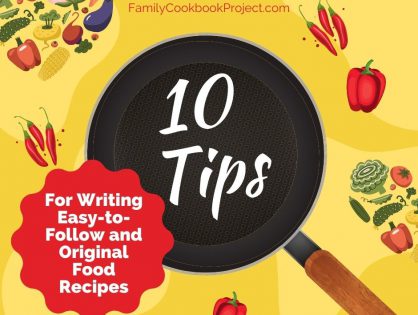
  • 10 Tips for Writing Easy-to-Follow and Original Food Recipes

    10 Tips for Writing Easy-to-Follow and Original Food Recipes

    Writing a recipe isn’t just about listing ingredients; it’s about guiding someone through the cooking process with clarity. Here are 10 essential tips for writing recipes from FamilyCookbookProject.com that are easy to follow and original:

    1. Use Clear, Precise Language

    Keep your instructions simple and straightforward. Avoid technical jargon unless it’s essential, and always explain any unusual techniques.

    2. List Ingredients in Order

    Ensure the ingredients appear in the order they’re used in the recipe. This helps readers follow along easily without confusion.

    3. Be Specific with Measurements

    Instead of vague amounts, be as specific as possible. Use measurements like “1 cup” or “2 tablespoons” rather than “some” or “a pinch.”

    4. Break Steps Into Manageable Parts

    Each step in the recipe should have one clear action. This makes the instructions easier to follow and prevents mistakes.

    5. Include Cooking Times

    Provide approximate times for each stage, from prep to cook time. This helps cooks plan their time and know when the dish is finished.

    6. Offer Temperature Guidelines

    Whether it’s the oven or stovetop, always indicate the appropriate temperature to cook at.

    7. Explain Special Techniques

    If your recipe includes a technique that isn’t common knowledge, explain how to do it. For example, if it involves folding batter or blanching vegetables, provide details.

    8. Add Serving Suggestions

    Let your readers know how to serve the dish. Should it be eaten hot or cold? Does it pair well with a certain side?

    9. Include Variations and Substitutes

    Suggest alternative ingredients or methods for those with dietary restrictions or different tastes.

    10. Test Your Recipe

    Always make sure your recipe works by testing it yourself. This ensures your readers will have a positive cooking experience and achieve the desired results.

    With these tips, your recipes will be clear, original, and enjoyable for any home cook to follow.


    Bill Rice is Founder and Co-Publisher of the Family Cookbook Project, the leading online cookbook publisher with a website that helps families and individuals collect, preserve and share food memories by creating their own printed custom cookbooks. He is the author of The Wellfleet Oyster Cookbook and the Cape Cod Cocktail Cookbook (Available on Amazon), both created using FamilyCookbookProject.com. He is also editor of the Donovan Family Cookbook, now it’s third printing and is an avid genealogist tracing his family back to the 1600’s.

    Follow Family Cookbook Project on Facebook, Instagram, Twitter TikTok, You

  • 5 Biggest Challenges In Making A Family Cookbook

    5 Biggest Challenges In Making A Family Cookbook

    Creating a personal cookbook filled with your favorite family recipes is easy with FamilyCookbookProject.com

    Even though it is easy, it is not without its challenges. To prepare you for starting your own family cookbook, we’ve decided to list some of them here.

    1) You don’t know where to begin

    The first step to create a wonderful family cookbook is to create an account on FamilyCookbookProject.com. Next start entering your recipes when you need a break look at some of the cookbook cover design options and recipe layout options. You’re now well on your way to creating your own treasured family Memento.

    2) You’re not a Graphic designer

    You don’t have to be with FamilyCookbookProject.com. We make available professionally design, cookbook covers, and recipe layouts that all you have to do is select, and the system will customize your cookbook with your choices.

    3) You don’t have the time to enter recipes

    FamilyCookbookProject.com offers a one-of-a-kind contributor invitation system so that you can invite others to submit recipes to your cookbook. If you have your recipes in electronic format already, or are taking them from a website, you can simply cut and paste them into our add a recipe for him.

    4) Not all of your recipes are written down

    Some recipes we have just made so many times that we don’t need a recipe. However, when we pass on, those recipes pass on with us. Wouldn’t it be much better to take the time to write down those recipes next time you make them so that future generations 10 enjoy that as well.

    5) Getting others to get excited as much as you are

    When you start a family cookbook and invite other family members to join in, they may not be as engaged as you’d like them to be in entering Recipes on a timely manner. Be sure to set a reasonable deadline. Send them reminder emails to keep it during the front of their mind FamilyCookbookProject.com has tools to boot to do both of these.

    At the end of the day, creating a family cookbook is a labor of love that future generations will enjoy and appreciate.


    Bill Rice is Founder and Co-Publisher of the Family Cookbook Project, a website that helps families and individuals collect, preserve and share food memories by creating their own printed personal cookbooks. He is the author of The Wellfleet Oyster Cookbook and the Cape Cod Cocktail Cookbook (Available on Amazon), both created using FamilyCookbookProject.com. He is also editor of the Donovan Family Cookbook, now it’s third printing.

    Follow Family Cookbook Project on Facebook, Instagram, Twitter and Pinterest!

  • How Long Does It Take To Make A Cookbook?

    How Long Does It Take To Make A Cookbook?

    What are most popular questions we at FamilyCookbookProject.com yet from someone who is considering creating their own personal cookbook is how long does it take to create a cookbook?

    The answer varies. It depends on how many recipes you want to include in your cookbook, how much time you can devote to it, how much personalization do you want to do?

    The good news is that Family Cookbook Project’s cookbook publishing system is designed for someone with little or no design expertise to create a beautiful personal cookbook for their family and friends very quickly.

    Early November is the most time-consuming aspect of creating your own cookbook is entering the recipes. This can be done by typing them in, cutting and pasting them from another electronic format, or even dictating them. The more recipes you want to include, the more time it will take to complete your cookbook.

    Once the recipes are entered, the next step is the cookbook design. Choosing a cover, recipe layout, and other options can be done very quickly.

    Another time consuming step, can be writing the introduction. Some people are just not good writers, and it takes them a long time to come up with the words they want the reader of the cookbook to know about that cookbook.

    Oh, so back to our original question of how long does it take to create a cookbook. I think the quickest anyone has used our system to create a full cookbook was about one week and we’ve also had people who have been working on their cookbook for years in their spare time and still, don’t have it ready for print

    That being said, I think that most cookbooks can be created within the three month window from start to finish.

    Once you place your order, it takes time to print the cookbook, bind it, and ship it to you: about three weeks.

    One note: if you want your cookbooks for Christmas gifts, the deadline is usually December 30, November 30. However, he will not be alone submitting your order around that time. If you really want to receive your cookbooks for Christmas gift giving, target early November, so that you will receive them in plenty of time for Christmas gift giving.


    Bill Rice is Founder and Co-Publisher of the Family Cookbook Project, a website that helps families and individuals collect, preserve and share food memories by creating their own printed personal cookbooks. He is the author of The Wellfleet Oyster Cookbook and the Cape Cod Cocktail Cookbook (Available on Amazon), both created using FamilyCookbookProject.com. He is also editor of the Donovan Family Cookbook, now it’s third printing and is an avid genealogist tracing his family back to the 1600’s.

    Follow Family Cookbook Project on Facebook, Instagram, Twitter and Pinterest!