Category: How to Ideas

  • Family Cookbook Project.com and COVID-19

    Our hearts go out to anyone in our Family Cookbook Project.com community that have been affected by the recent COVID-19 pandemic, either through sickness, loss of a loss loved one, loss of employment, or the effects of social distancing. This affects all of us and only together will we rise above and beat this crisis.

    With the forced isolation brought on by social distancing and quarantines, we have seen an increase in the number of recipes being added to the system each day. Our system is designed to handle any increase in traffic with minimal impact to the user. We hope this also corresponds with an increase in trying new interesting family recipes since dining out options have been limited.

    As a Family Cookbook Project editor, here are some ideas to add a silver lining to this crisis.

    • Reach out to your contributors and ask them if they have any extra time to contribute a few recipes to your cookbook.
    • If you’ve already printed your cookbook, now is a good time to unlock it and ask contributors to start working on volume two.
    • Add to a recipe story. Family Cookbook Project.com offers an online ability to add comments to recipes that you’ve tried in memories that you have. Ask people to contribute their stories to the recipes they make and try.
    • Use your extra time to review for more than 50 professionally design covers available for your cookbook and get it ready for printing.
    • Create a specialty cookbook. Do you have a lot of dessert recipes or maybe ethnic recipes? Consider creating a small cookbook with just those recipes. These kind of cookbooks make great gifts.

    These are just some simple ideas to help you take your mind off of the difficult times we are experiencing and look forward to a brighter future.


    Bill Rice is founder and Co-Publisher of the Great Family Cookbook Project, a website that helps families and individuals collect and share food memories through customized printed cookbooks filled with treasured recipes. Follow us on Facebook and Pinterest!

  • Understanding Recipe Privacy

    Understanding Recipe Privacy

    We at FamilyCookbookProject.com believe recipes are meant to be shared. Sure we all have our “secret recipes”, but if they are not written down and shared, they will not be enjoyed when we are gone.

    However we give you the control to determine when and where you share your recipes.

    When you or a contributor adds a recipe to your online cookbook, there is an option to make your recipe private. If you check this box just above the save button, your recipe will only be available to those individuals who are logged into your online cookbook. Some people choose this option when a recipe is not yet ready to be shared publicly or they simply want to limit the people who have access to it.

    However, there are many benefits to sharing your recipe publicly. Public recipes are indexed by Google and other search engines. You can access your recipes simply by entering your name and the recipe name into Google. Online access from any computer without having to remember your log in information is very convenient.

    Family Cookbook Project also searches the public recipes to look for the best recipes to be included one of the Family Cookbook Project’s “Best of” cookbooks we publish. We also promote public recipes on our Facebook pages and on Pinterest. This allows us to highlight your recipes to the other Cookbook Editors, which is truly an honor.

    We believe recipes are made to be shared, just like the dishes that are made from them. So next time you enter your favorite recipe into your Family Cookbook Project online recipe box, be sure to mark it public so it can be shared.


    Bill Rice is founder and Co-Publisher of the Great Family Cookbook Project, a website that helps families and individuals collect and share food memories through customized printed cookbooks filled with treasured recipes. Follow us on Facebook and Pinterest!
  • Using Custom Recipe Layouts in a Family Cookbook Project

    One of the things that we are most proud of at FamilyCookbookProject.com is the ability to give complete control of every aspect of making a cookbook to the project’s editor. We provide professionally designed options that are perfect for most people, but some have visions of something different.

    We have already covered creating custom categories and custom cookbook cover or recipe category dividers. This article will cover creating a custom cookbook recipe layouts.

    FamilyCookbookProject.com currently offers 19 pre-set recipe layouts that set three aspects of your recipes that are perfect for most editors:

    • Font type
    • Font size
    • Number of columns for ingredients

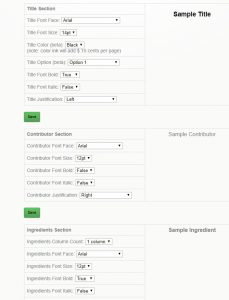
    However if you want something different, that is where custom Layouts come in. You can control each section independently – title, contributor name, ingredients, directions and personal notes.

    In addition to the font type, size and columns above, you also can control:

    • Bold text
    • Italic text
    • Justification of text
    • Label of the Comments Field

    This option is not for someone who does not have strong computer skills, but it can be very effective in displaying your recipes exactly how you wish them displayed.


    Bill Rice is founder and Co-Publisher of the Great Family Cookbook Project, a website that helps families and individuals collect and share food memories through customized printed cookbooks filled with treasured recipes. Follow us on Facebook and Pinterest!
  • Customizing your Family Cookbook Cover

    One of the things that we are most proud of at FamilyCookbookProject.com is the ability to give complete control of every aspect of making a cookbook to the project’s editor. We provide professionally designed options that are perfect for most people, but some have visions of something different.

    Our last article was about creating custom categories. This article will cover creating a custom cookbook cover or recipe category dividers.

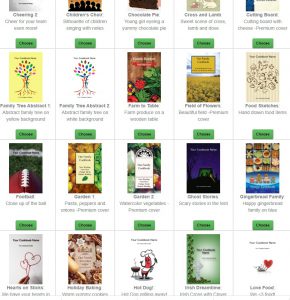
    A custom cookbook cover was the third most popular cover option last year. Some people simply have a white cover with a photo, others with graphic design skills create beautiful designs to personalize  their cookbook. Creativity knows no limit with Family Cookbook Project.

    • When creating a custom cover or divider, here are the specifications to use:
    • Images MUST be in JPG format to be used in your cookbook. GIFs and BMPs will not import correctly.
    • Your images should be 150-300dpi resolution – or they may seem pixilated in printing.
    • Full page with Bleed Custom Covers and Dividers must be sized at 6″x9″ with 4.75″x7.75″ active content or 1800 x 2700 pixels.
    • Full page non-bleed Dividers and other images must be sized at 5.5″x8.5″ with 4.75″x7.75″ active content or 1650 x 2550 pixels.
    • Also, do NOT upload files of the following type — they will not work: .doc, .pps, .ppt, .txt, .htm

    If you wanted to have a special photo on your cover, we suggest to use a page layout program or even a word processing program like Microsoft Word and design the page exactly the way you want it and save it as an image using the guidelines above. Then you can simply upload the image to the FamilyCookbookProject.com site and your custom cover is complete.


    ill Rice is founder and Co-Publisher of the Great Family Cookbook Project, a website that helps families and individuals collect and share food memories through customized printed cookbooks filled with treasured recipes. Follow us on Facebook and Pinterest!
  • Customizing Your Family Cookbook Recipe Categories

    One of the things that we are most proud of at FamilyCookbookProject.com is the ability to give complete control of every aspect of making a cookbook to the project’s editor. We provide professionally designed options that are perfect for most people, but some have visions of something different.

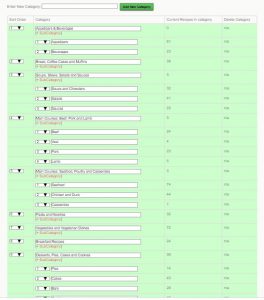
    One of the things that you can customize went creating your family cookbook project is your recipe categories.  We provide 8 basic recipe categories that organize your recipes into types of meal.

    • Appetizers & Beverages
    • Bread and Muffins
    • Soups, Stews, Salads and Sauces
    • Main Courses: Beef, Pork and Lamb
    • Main Courses: Seafood, Poultry, Pasta and Casseroles
    • Vegetables and Vegetarian Dishes
    • Desserts, Pies, Cakes and Cookies
    • Miscellaneous

    By using our custom category tool, you can add different categories or change them altogether. For example, if you wanted to create a dessert cookbook, the categories would all be dessert related. We’ve also seen people organize their recipe sections by family member.

    You can also create sub-categories or categories within categories. In my personal cookbook I have a category for Seafood and then I have added subcategories for Clams, Fish, Oysters, Crab and Shrimp. This way, if I need a shrimp recipe, they are all grouped together.

    You can create your own Custom Categories and sub-Categories by going to the Recipe Center on your Editor’s Homepage.  Then click on Category Add/edit.   Once you add your new categories, you’ll see a sort field – simply number them as you’d like them arranged and Save.

    One note, if you use both our default categories and your own custom categories, ours will come first, then yours in the order you set.  If you want full control, create all your own categories and set the selection to “Use ONLY your own custom categories” .

    If you need to move recipes, there is a bulk move tool at the bottom of the Category Section Editor.


    Bill Rice is founder and Co-Publisher of the Great Family Cookbook Project, a website that helps families and individuals collect and share food memories through customized printed cookbooks filled with treasured recipes. Follow us on Facebook and Pinterest!l

  • Assisted Living Cookbook To Honor Our Moms

    We received an email from Kori, an activity director in an assisted living home. She had an idea that we thought we’d share.

    She wrote “Mother’s Day is coming up and with isolation precautions in effect, I was thinking of a way to honor our moms.  My idea is a cookbook of the children of the moms in our community favorite recipes.”

    We at FamilyCookbookProject.com think this is a wonderful idea and our online program is uniquely suited to create this kind of a lasting tribute to those who made so many meals for us.

    Here is how to create an Assisted Living Cookbook

    1. Invite Recipe Contributors – The first step after establishing your FamilyCookbookProject.com account is to let those in your community know about the project and asking them to share a favorite recipe or two from their loved one. Use your facilities email lists or newsletter to generate interest and then when the responses come in, use the Invitation Tool to add those individuals into the cookbook. This will send them an email with their own username and password and they can add the recipes directly into the system.
    2. Design Your Assisted Living Cookbook – Select a cover from our professionally designed covers or create your own, write an introduction and select a recipe layout (I recommend the Easy Reading format (T3) which is good for older eyes). Our system will automatically create a table of contents and recipe index for your cookbook.
    3. Publish Your Cookbook – While it is too late to get any printed copies for this Mother’s Day, You could make available a PDF copy of the cookbook to everyone. Families could also access the cookbook online using our app. Printed copies of the cookbook would make great holiday gifts for families and staff members.

    When families enter the recipes directly into the cookbook. there is a field for personal notes that they can use to talk about their special person and why the dish reminds them of the person.

    If you have a loved one in an assisted living facility, suggest a community cookbook to the activity director or maybe volunteer to be the coordinator as a great way to bring your community together.


    Bill Rice is founder and Co-Publisher of the Great Family Cookbook Project, a website that helps families and individuals collect and share food memories through customized printed cookbooks filled with treasured recipes. Follow us on Facebook and Pinterest!

  • Target Temperatures for Grilling Meats and Chicken

    For a long time, judging if meat was cooked to our liking was judged by look and feel, an uncertain art at best, it is actually pretty easy to get great results all the time when you use an instant-read thermometer. A thermometer is the only reliable way to measure internal temperature.

    When grilling or baking meat and chicken, it is important to let the meat rest before cutting into it and serving.  If given the time to rest the meat will lose less juice when you cut it and when you eat it the meat will be juicier and tastier. Steaks or chops should stand for 5 minutes before serving while other thicker cuts should be longer. Remember that the meat with continue to cook even after being taken off the grill or out of the oven. Include that fact in your calculation of when to take the food from the heat.

    Rely on the thermometer for doneness, and save your creativity for seasoning and presentation.

    USDA Safe Minimum Family Cookbook Project Sugests
    Chicken & Turkey
    Whole or parts 165 165 breast 165-175 thigh
    Beef & Lamb
    Rare 125 + 3 minute rest
    Medium rare 130-135
    Medium 135-140
    Medium well 145 + 3 minute rest 140-150
    Well done 155+
    Ground 160 160
    Pork
    Medium rare 145 + 3 minute rest 145 + 3 minute rest
    Medium 150
    Well done 160
    Ground 160 160


    Bill Rice is founder and Co-Publisher of the Great Family Cookbook Project, a website that helps families and individuals collect and share food memories through customized printed cookbooks filled with treasured recipes. Follow us on Facebook and Pinterest! Also check out our BBQ Recipes Facebook Group and Family BBQ and Grilling Recipes Pinterest board.


  • How To Share Your Family Cookbook Recipes

    One of the real benefits of collecting all of your recipes in your online cookbook on FamilyCookbookProject.com is to be able to share them very easily with friends and family.

    Say you have friends over and they really like your split pea soup and want the recipe. All you need to do is go to your cookbook account either on your desktop computer or even on your mobile Mobile phone or tablet and pull up the recipe.  Now all you have to do is choose how you want to give it to him.

    Email – In the upper right hand corner, you’ll see a box marked email a recipe. Enter your friends email here and send them your recipe. It’s that easy!

    Posted on Facebook – Wow your friend might like your recipe, so will other friends. You can select the Facebook icon and post your recipe to your Facebook page to be seen by call your friends. Especially if you’ve been adding photos to your recipes, your posts will really stand out and be appreciated by lots of your friends and family.

    Posted on Pinterest – Here’s another way to share your recipes if they have photos attached. Pinterest was built around sharing photos and when you share one of your recipes on this social media platform, the photo becomes the pin and people who click on it will see your recipe.

    Print your recipe – If your friend simply wants a printed copy of your recipe, it is easy to select the print icon and simply print them a copy and give it to them.

    You also might want to suggest to your friends that they create their own family cookbook account so they can share their recipes as well!


    Bill Rice is founder and Co-Publisher of the Great Family Cookbook Project, a website that helps families and individuals collect and share food memories through customized printed cookbooks filled with treasured recipes. Follow us on Facebook and Pinterest!

  • How To Make a Family Reunion Cookbook

    How To Make a Family Reunion Cookbook

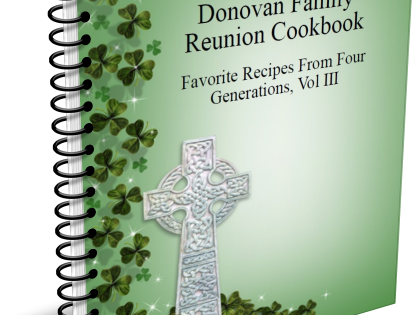
    The Donovan Family Reunion

    Few gatherings are as meaningful and memorable as family reunions. As families grow and people go their own ways, family reunions serve to bring us back together. They’re a chance to recombine, share experiences and renew connections.

    One great idea to make your family reunion truly memorable is to create a family cookbook. Everyone knows the best thing about a family reunion is the food! Everyone brings their favorite dishes and shares stories and food and fun.

    There are two different schools of thought on the best way to create a family reunion cookbook. You be the judge on what is best for your family.

    Reunion Specific Cookbook

    Since reunions take a fair amount of time to plan and often center around a theme, choosing a theme centering on food can be a natural choice. Family members are asked to contribute their favorite recipes to a family cookbook that can be distributed at the event. You set a date and ask everyone to contribute the recipes for the food they will be bringing to the event. The cost of printing the cookbooks is included in the cost of the event and everyone receives one the day of the event. This is also a great way to build buzz for your event!

    Reunion Showcase Cookbook

    The other way families create family cookbooks at family reunions is to use the event to show a sample of what a family cookbooks looks like and collect email addresses used to invite contributors.  People will see your excitement and want to participate as well. Find your favorite dishes at the event and ask whoever made them to contribute the recipe to the cookbook. They will be flattered that you asked and look forward to participating.  Set a deadline that will allow you to have your family cookbooks complete so people can give them as gifts for the holidays.

    Some things to consider when creating your reunion cookbook

    During the planning process, many families are looking for a way to communicate effectively via email. Adding lots of people to the sender line of an email list can result in people being left off and not being able to contact specific people or subsets of the list. FamilyCookbookProject.com can help make this easier. Use our Reminder Email Tool and you make it easy to contact some or all of your family members.

    Don’t wait until the last minute. When planning a family reunion cookbook, the event is a fixed date and comes and goes whether your cookbook is ready or not. Now is the time to start working on a family reunion cookbook if your event is in the summer.

    Remember to invite everyone to participate, not only the great cooks! This cookbook is for all the family members so it best to invite everyone to contribute – even if it is only a recipe or two.

    Finally remember family members no longer with us by including their recipes as well. Family cookbooks help to tell the story of our families. Contributors can be not only the present, but from the past as well.


    Bill Rice is Co-Publisher of the Great Family Cookbook Project, a website that helps families and individuals collect and share food memories. Follow us on Facebook and Pinterest!
  • Anatomy of a Great Recipe

    One of the keys to a great family cookbook is to have great recipes that your family and friends have come to love. Here are some simple tips to help you capture the magic of the food you make.

    1. Use catchy titles. Using a catchy title will make your recipe sound more interesting. It is more interesting to people when they see the title “Gooey Triple Chocolate Cake” rather than just “Chocolate Cake”. When you are writing a title for a recipe, try to think of not only what the final dish will be, but what makes it special as well.

    2. Include photos. Using images in your recipes can allow the person reading your cookbook to see what the final dish will look like and give then a guidepost to follow. Next time you make one of your special dishes, snap a quick photo and add it to your recipe the next time you log in.

    3. Be specific with your Ingredients. For many cooks, include a can of crushed tomatoes in your recipe and they know exactly what you mean or maybe not. Tell them to include a 12oz can of crushed tomatoes and everyone will know exactly what your recipe needs.

    4. Use step by step instructions. You might have made this recipe a thousand times, but someone new will need detailed directions for how to do it. Remember to include pan sizes, cooking times, the order that ingredients are added and how to tell when a dish is done. Also adding how many servings a recipe can make will help with meal planning.

    5. Add personal notes. One of the things that make a family cooks so important is that it helps to capture the family traditions. Include a note with each recipe about how you first were introduced to the recipe and when it is typically served in your household. It makes the recipe more interesting and more meaningful to later generations.


    Chip Lowell is Co-Publisher of the Great Family Cookbook Project, a website that helps families and individuals collect and share food memories. Follow us on Facebook and Pinterest!