![]() |
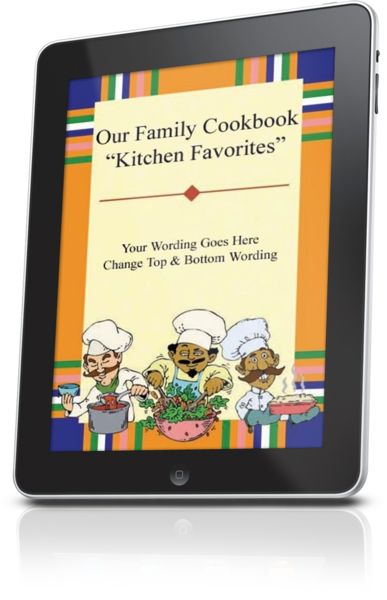
| iPad Cookbooks |
![]() |
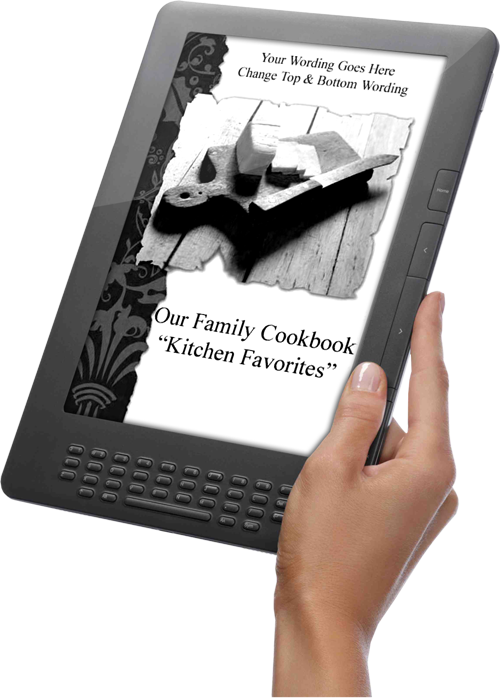
| Kindle Cookbook |
![]() |
| Family Cookbook App |
Bill Rice is Co-Publisher of the Great Family Cookbook Project, a website that helps families and individuals collect and share food memories. Follow us on Facebook and Pinterest!

![]() |
| iPad Cookbooks |
![]() |
| Kindle Cookbook |
![]() |
| Family Cookbook App |
Bill Rice is Co-Publisher of the Great Family Cookbook Project, a website that helps families and individuals collect and share food memories. Follow us on Facebook and Pinterest!

One of the keys to a great family cookbook is to have great recipes that your family and friends have come to love. Here are some simple tips to help you capture the magic of the food you make.
1. Use catchy titles. Using a catchy title will make your recipe sound more interesting. It is more interesting to people when they see the title “Gooey Triple Chocolate Cake” rather than just “Chocolate Cake”. When you are writing a title for a recipe, try to think of not only what the final dish will be, but what makes it special as well.
2. Include photos. Using images in your recipes can allow the person reading your cookbook to see what the final dish will look like and give then a guidepost to follow. Next time you make one of your special dishes, snap a quick photo and add it to your recipe the next time you log in.
3. Be specific with your Ingredients. For many cooks, include a can of crushed tomatoes in your recipe and they know exactly what you mean or maybe not. Tell them to include a 12oz can of crushed tomatoes and everyone will know exactly what your recipe needs.
4. Use step by step instructions. You might have made this recipe a thousand times, but someone new will need detailed directions for how to do it. Remember to include pan sizes, cooking times, the order that ingredients are added and how to tell when a dish is done. Also adding how many servings a recipe can make will help with meal planning.
5. Add personal notes. One of the things that make a family cooks so important is that it helps to capture the family traditions. Include a note with each recipe about how you first were introduced to the recipe and when it is typically served in your household. It makes the recipe more interesting and more meaningful to later generations.
Chip Lowell is Co-Publisher of the Great Family Cookbook Project, a website that helps families and individuals collect and share food memories. Follow us on Facebook and Pinterest!
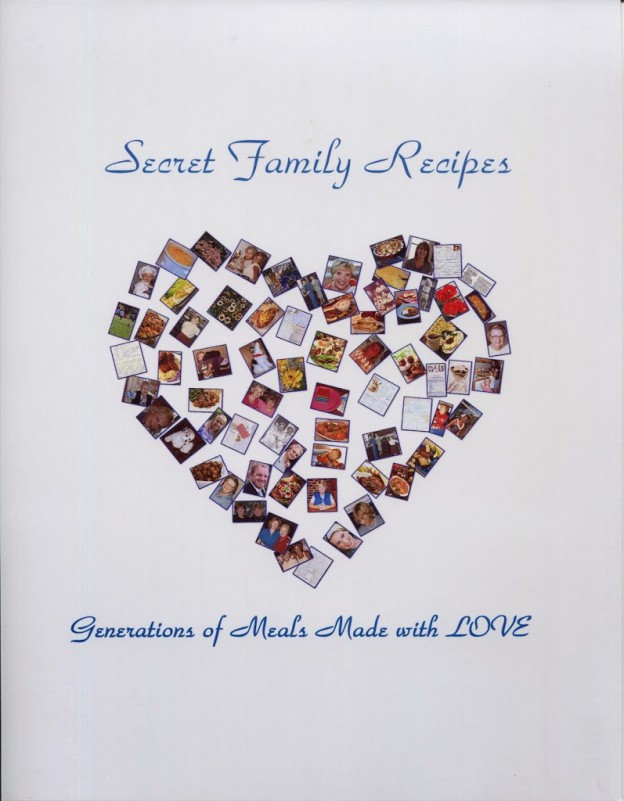
They say a picture is worth a thousand words and with recipes that is especially true.
It’s wonderful to read a list of ingredients and see the potential in a recipe, but to look at the finished product can make your mouth water!
The Family Cookbook Project highly recommends adding a photo to every recipe you can in your online cookbook. It helps people to see what to expect when they follow your recipe and gives them a standard to meet when comparing their finished dish to the original.
With the advent of digital camera built into cell phones, you don’t have to be a professional photographer to take good food photos.
Here are some pointers to help improve your recipe photos:
Hold Still – Taking photos inside, even with ample natural light, often means you have to hold the camera very still to keep it from registering hand shake. If you have a tripod, that’s ideal. If you don’t, you can duplicate the tripod effect by resting your elbows on the table or counter and using them to stabilize the camera. Moving the camera when taking a photo will only lead to blurry unusable photos.
Get close to the food! – Don’t stand back three feet and get the food with the stove, the dirty dishes, and all the condiments around it. Move in and get up close and personal, and let the pan…or the plate…or the cutting board fill the frame.
Stage the shot – The food isn’t the only thing in the photo. Using plates, silverware and linens in complementary colors can help your dish come alive. Shoot food on a beautiful plate or on a table with texture and character. The more appetizing the ingredients, the better your photo will be. Plates that contain colored vegetables and/or meat, preferably in light-colored sauces, are often the most appealing to the eye in photos. Also Don’t be Afraid of a mess. A few crumbs or a smear of dressing can be beautiful, if you let them.
Focus on the food – If you are using a DSLR, stop down your lens to f/1.8 or f/2.0 that limits your depth of field to one part of the image only, blurring out everything around the subject, simulating a shot taken with a macro lens. If you are using an iPhone, there are apps, such as Camera+ or VSCO Cam, that will create the same effect. Remember, you want the food to be the main focus, not the background.
Try different angles – Get up over the food and shoot straight down on it. When shooting overheads, if appropriate, try filling up the frame with what’s already on the table such as cups, wine glasses, utensils and moving hands. You can also think in three dimensions, You might not usually serve brownies piled in a vertical column, but stacking any flat food, like pancakes, cookies, or even onion rings, is a great way to show off texture and make the photo more appealing. You can also add dimension to your food photos by showing the dish right after the that first bite is taken, or the second and third. These are little details that make a viewer feel like they’ve sat down and are enjoying the meal.
Get Close to Ugly Foods – Some foods, no matter how good they taste, just don’t make good photos. But the closer you get to your subject, the more the visual story becomes about texture and color, rather than pure mouth-watering beauty.Avoid foods that are white and gloppy, such as congealed gravy on white pasty mashed potatoes.
Size Matters – Make sure your camera settings are set for a good sized photo. Small photos look blurry when they are enlarged on line. A photo viewed online only has to be 72 dpi (dots per inch, the measure for quality), but if you are going to print your photo, you want it to be at least 300 dpi. 600 pixels wide (a measurement for size) is a good target for minimum photo size.
Using other’s photos – It is important to note that the Internet makes it easy to find photos of recipes already taken. While this might be much easier, the photo still is the property of whomever holds the rights. Don’t always assume that because a photo is on the Internet you can simply use it for your recipe. Make sure you ask permission from the owner before you use it.
Bill Rice takes more than 20,000 photos a year and is Co-Publisher of the Great Family Cookbook Project, a website that helps families and individuals collect and share food memories. Follow us on Facebook and Pinterest!
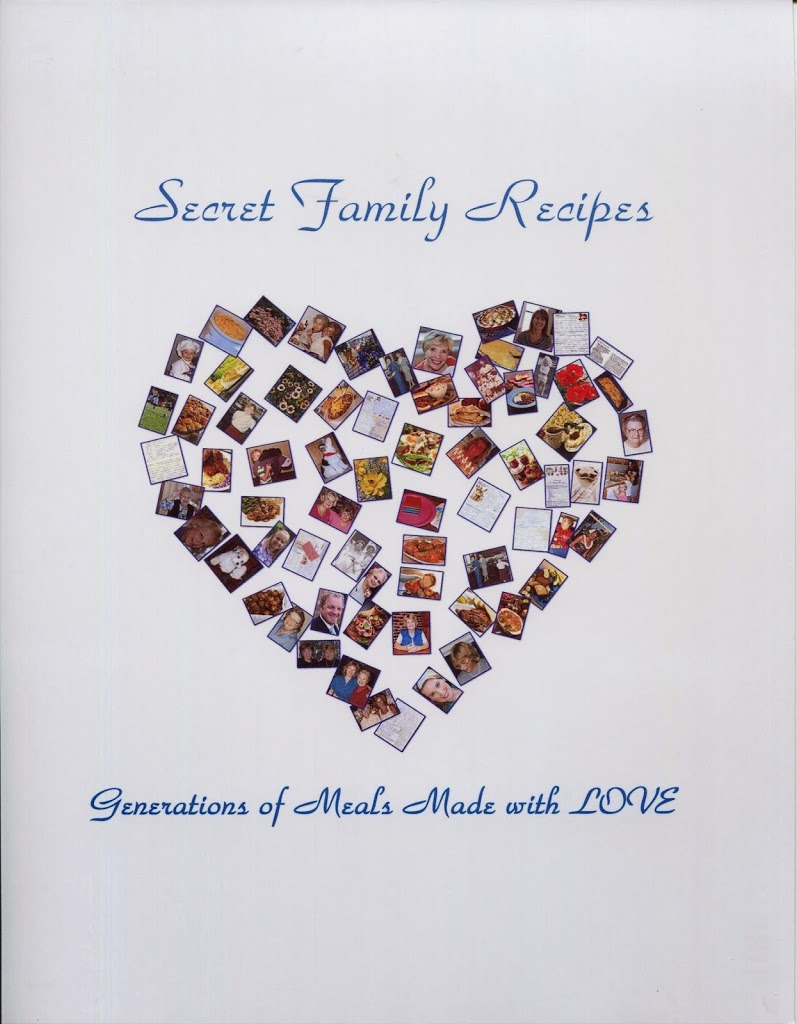
When it comes to printing your family cookbook, page count is the largest determining factor on what the cost per book will be.
To lower the number of pages that need to be printed, you don’t always have to just delete recipes. Here are some simple formatting charges you can make to affect your page count.
Go to Editor Tools>Publishing Tool>Cookbook Options and Design. Under Recipe Layout, choose any or all of these options to save space:
Another thing to do is look at your recipes that are more than one page long. We show you multi page recipes in the “recipes by category” index. There is a “*” next to the edit button of long recipes. Consider removing some of these recipes by unchecking the box by the recipe title and see the impact on page count.
Bill Rice is Co-Publisher of the Great Family Cookbook Project, a website that helps families and individuals collect and share food memories. Follow us on Facebook and Pinterest!
![]() |
||
One issue that comes up regularly for family cookbook project editors is the topic of copy-writing recipes and proper usage. While we at the FamilyCookbookProject.com are not lawyers and do not give legal advice, our research shows that recipes cannot generally be copyrighted.
At the same time, it does not make it right to simply take credit for other people’s work. One way to avoid this is to give credit where credit is due. If your contributor submits a recipe that they originally found in a magazine or cookbook, it is appropriate to list the source in the notes section of the recipe.
A few articles of interest in this topic
Copyright Office flyer on recipes
http://www.copyright.gov/fls/fl122.pdf
Copyrighting Recipes
http://smallbusiness.findlaw.com/copyright/copyright-realworld/recipe-copyrighting.html
Questions & Answers – Copyrighting Recipes
http://whatscookingamerica.net/Q-A/CookbookAdvice.htm
Bill Rice is Co-Publisher of the Great Family Cookbook Project, a website that helps families and individuals collect and share food memories. Follow us on Facebook and Pinterest!
While the end of year holidays are a great time to give out your cookbooks, there are lots of fun events coming up that make for perfect gift giving. Whether you’re creating a cookbook with our cookbook and recipe organizing software at FamilyCookbookProject.com or a fund raising project at CookbookFundraiser.com we make it easy and fun!
Valentine’s Day is in a couple weeks. How about giving your family some food love! You’ll need to order in the next day or two to ensure delivery.
Mother’s Day is coming quickly – May 12th – and it also is one of the best times to have your family cookbook published. Family cookbooks make a great Mother’s Day gift both for the mothers in our lives and even from a mother to her children.
Editor Ideas – how to improve your recipes
One of the keys to a great family cookbook is to have great recipes that your family and friends have come to love. Here are some simple tips to help you capture the magic of the food you make.
1. Use catchy titles. Using a catchy title will make your recipe sound more interesting. It is more interesting to people when they see the title “Gooey Triple Chocolate Cake” rather than just “Chocolate Cake”. When you are writing a title for a recipe, try to think of not only what the final dish will be, but what makes it special as well.
2. Include photos. Using images in your recipes can allow the person reading your cookbook to see what the final dish will look like and give then a guidepost to follow. Next time you make one of your special dishes, snap a quick photo and add it to your recipe the next time you log in.
3. Be specific with your Ingredients. For many cooks, include a can of crushed tomatoes in your recipe and they know exactly what you mean or maybe not. Tell them to include a 12oz can of crushed tomatoes and everyone will know exactly what your recipe needs.
4. Use step by step instructions. You might have made this recipe a thousand times, but someone new will need detailed directions for how to do it. Remember to include pan sizes, cooking times, the order that ingredients are added and how to tell when a dish is done. Also adding how many servings a recipe can make will help with meal planning.
5. Add personal notes. One of the things that make a family cooks so important is that it helps to capture the family traditions. Include a note with each recipe about how you first were introduced to the recipe and when it is typically served in your household. It makes the recipe more interesting and more meaningful to later generations.
Featured recipe from the database
The Great Family Cookbook Project has a huge amount of public recipes in the system thanks to you! If you need a fun recipe idea that’s not in your own cookbook, go to our home page and use the search function to see what’s available – lots of good eats!
Here is a recipe we tried recently:
| This recipe for Valentine Truffles, by Susan Aitken, is from The Aitken Family Cookbook Project. Search for more great recipes here from over 500,000 in our family cookbooks! |
Chip Lowell is Co-Publisher of the Great Family Cookbook Project, a website that helps families and individuals collect and share food memories. Follow us on Facebook and Pinterest!