Blog

  • Cookbook Printing Guide: How to Print a Custom Family Cookbook

    Cookbook Printing Guide: How to Print a Custom Family Cookbook

    Printing your family cookbook is the exciting final step that turns recipes, stories, and photos into a keepsake your family can hold, cook from, and share. This cookbook printing guide explains how to prepare your book for printing, choose size and binding, understand page count and cost, proofread carefully, and decide whether to order professionally printed copies, print locally, or download a PDF for self-printing.

    Cookbook printing is the final step of turning recipes, photos, stories, and layout choices into a physical cookbook.

    Before printing, however, it is important to review the cookbook carefully. Recipe titles, ingredient lists, directions, contributor names, categories, photos, page layouts, and introductions should all be checked before placing an order.

    Printing cost is also affected by page count, layout choices, photos, recipe length, and formatting. A few smart design decisions can reduce page count without removing meaningful recipes. Family Cookbook Project includes tools and settings that help editors prepare their cookbook for printing and manage the final cost.

    Quick Answer: To print a custom family cookbook, finish entering recipes, organize categories, preview the full book, proofread recipes and photos, choose size, paper, binding, and cover options, estimate printing cost based on page count and quantity, then order printed copies or download a high-resolution PDF for local or self-printing.

    Review Every Recipe Before Printing

    Check each recipe for missing ingredients, incomplete directions, spelling mistakes, unclear measurements, and formatting problems. A good rule is to have someone else proofread the cookbook because editors often miss mistakes in their own work.

    Cookbook Printing Proof Checklist

    Before placing your final order, check:

    • Cookbook title spelling
    • Cover image quality
    • Contributor names
    • Recipe titles
    • Missing ingredients
    • Ingredients listed but not used in directions
    • Directions that mention missing ingredients
    • Oven temperatures
    • Cooking times
    • Serving sizes
    • Category order
    • Table of contents
    • Index
    • Photo placement
    • Photo quality
    • Blank pages
    • Dedication and acknowledgments
    • Page numbers
    • Shipping address
    • Quantity ordered

    Check out How To Get Your Cookbook Ready To Print,  6 Ways to Enter Your Recipes into a Family Cookbook, How to Dictate a Recipe Into Your Family Cookbook Project, and How to Create a Multi-Part Recipe for more information on this topic.
    Check Contributor Names and Recipe Stories

    Contributor names are part of what makes a family cookbook special. Make sure names are spelled consistently and that recipe notes or stories are included where appropriate. These details matter because they help preserve family memory along with the recipe itself.

    For families still collecting final contributions, link to Tips for Collecting and Organizing Recipes from Multiple Family Members. For more emotionally focused projects, link to Genealogy and Culinary Heritage: Creating a Family Cookbook for Future Generations.

    Understand What Affects Printing Cost

    The cost to print a family cookbook depends mainly on page count, quantity, size, paper, binding, photos, cover options, and shipping. Page count is one of the biggest drivers of cookbook printing cost. Longer recipes, larger fonts, extra spacing, photos, divider pages, and custom pages can all increase the total number of pages. Before printing, preview your cookbook and look for ways to keep the book attractive while avoiding unnecessary page growth.

    Cookbook printing cost is usually affected by:

    • Number of pages
    • Number of copies ordered
    • Cookbook size
    • Paper type
    • Binding type
    • Color photos
    • Cover options
    • Lamination
    • Shipping
    • Recipe length and layout choices

    Check out How Much Does Printing a Family Cookbook Cost?, which explains that final cost is determined by the number of pages when the cookbook is sent to print and that editors can get a quote in the Publishing Center.

    Also see Lowering the cost of printing your cookbook, which reinforces that page count is a major cost factor.

    Use Space-Saving Layout Options

    Editors can often reduce page count without deleting recipes. The right formatting choices can make the cookbook more efficient while still keeping it attractive and easy to read.

    Read Pro Tip: Space Saving Options To Lower Printing Cost, which explains that page count has a major impact on cost and that formatting changes can help reduce the number of printed pages.

    Also see Recipe Layout Tool Upgrade on FamilyCookbookProject.com, Side-by-Side Recipe Layout Now Available, and 5 New Typefaces Available for Recipe Layouts.

    Review Photos Before Printing

    Photos should be clear, properly placed, and meaningful. Review recipe photos, family photos, scanned recipe cards, and cover images before printing. Low-resolution images may not print as well as they appear on screen, so this is especially important for custom covers and divider pages.

    Check out Customizing Your Family Cookbook Cover and Family Cookbook Project Introduces New Cover Editing Tool. For photo placement inside the recipe pages, see Recipe Layout Tool Upgrade on FamilyCookbookProject.com.

    Why Blank Pages May Appear Before Printing

    Some blank pages are part of proper cookbook layout. For example, the table of contents and category dividers may need to begin on the right-hand page. Before removing or filling blank pages, review whether they are serving a layout purpose.

    See Removing Blank Pages From Your Family Cookbook and Why Your Cookbook Needs Blank Pages to explain the balance between reducing cost and maintaining proper book layout.

    Decide How Many Recipes to Include

    A cookbook does not have to include every recipe in the family archive. Editors should balance sentimental value, usefulness, page count, and cost.

    Read How Many Recipes Should My Cookbook Have? and How Many Recipes Does My Cookbook Need? which notes that larger cookbooks can be impressive, but printing cost is related to the number of pages, so editors need to balance recipe quantity and quality.

    Design Choices That Affect Printing

    A beautiful cookbook does not need to be crowded, but it also does not need to waste space. Preview your cookbook and choose a layout that balances readability, appearance, and printing cost.

    Design choices that may increase page count include:

    • Large fonts
    • Extra spacing
    • Long recipe introductions
    • Many photos
    • Full-page divider images
    • Custom pages
    • One recipe per page layouts
    • Long recipe directions

    Plan Around Deadlines

    If the cookbook is intended for Christmas, Mother’s Day, a reunion, wedding, or other event, build in extra time for proofreading, ordering, printing, shipping, and unexpected edits.

    If your cookbook is a holiday gift, work backward from the date you need it in hand. Leave time to finish recipes, proofread, order, print, ship, and wrap the books. For Christmas gifts, remind editors early that waiting until the last minute can create stress, especially if they want contributors to submit missing recipes. This is FamilyCookbookProject.com‘s busiest time of the year and cookbooks are printed on a first come for served basis, so first movers get their cookbooks sooner.

    Before your recipes become a printed cookbook, take time to review, proofread, and choose the best print options for your family. Family Cookbook Project makes it easy to turn your finished cookbook into printed copies everyone can enjoy.

    Ready to print your family cookbook? Start at FamilyCookbookProject.com, preview your book, check every recipe and photo, choose your printing options, and order professionally printed copies your family can enjoy for years.


    Bill Rice is Founder and Co-Publisher of the Family Cookbook Project, the leading online cookbook publisher with a website that helps families and individuals collect, preserve and share food memories by creating their own printed custom cookbooks. He is the author of The Wellfleet Oyster Cookbook and the Cape Cod Cocktail Cookbook (Available on Amazon), both created using FamilyCookbookProject.com. He is also editor of the Donovan Family Cookbook, now its third printing and is an avid genealogist tracing his family back to the 1600’s.

    Follow Family Cookbook Project on Facebook, Instagram, Twitter TikTok, YouTube and Pinterest!


    Frequently Asked Questions About Cookbook Printing

    How do I print a family cookbook?
    Finish entering recipes, preview the cookbook, proofread carefully, choose size and binding, estimate printing cost, then order printed copies or download a high-resolution PDF for local or self-printing.

    How much does it cost to print a family cookbook?
    Cookbook printing cost depends on page count, quantity, cookbook size, paper type, binding, photos, cover options, lamination, and shipping. Family Cookbook Project’s pricing page notes that most cookbooks average about two recipes per page.

    Can I print only one cookbook?
    Yes. Family Cookbook Project’s pricing page says the minimum print order is one copy.

    Can I print my cookbook somewhere else?
    Yes. Family Cookbook Project allows paid members to download a high-resolution PDF that can be taken to a local printer.

    Why does my cookbook have blank pages?
    Some blank pages are intentional so sections such as the table of contents or category dividers can start on the right-hand page.

    What is the deadline for printing cookbooks for Christmas?
    Family Cookbook Project’s usually sets November 30 as the Christmas delivery deadline and recommends allowing 2–3 weeks to receive professionally printed cookbooks during other times of the year.
  • A Gift from the Heart: Why Family Cookbooks Make the Best Presents

    A Gift from the Heart: Why Family Cookbooks Make the Best Presents

    Some gifts are used for a season. Others are remembered for a lifetime. A family cookbook belongs firmly in the second category. It’s more than a collection of recipes — it’s a gift of stories, memories, and love passed from one generation to the next.

    When you give someone a family cookbook, you’re not just handing them a book. You’re sharing a piece of your family’s history — the smells, flavors, and traditions that define who you are. It’s a personal, timeless present that feels as warm and genuine as the meals inside it.

    Whether given at weddings, holidays, or reunions, a family cookbook is the kind of gift that grows more meaningful with time. Here’s why it’s one of the most heartfelt presents you can give — and how you can easily create your own through FamilyCookbookProject.com.

    The Meaning Behind the Gift

    A family cookbook isn’t a store-bought item chosen from a list. It’s something created with care. Each recipe tells a story, and every story connects the giver and the receiver.

    A recipe isn’t just instructions; it’s a memory captured in ingredients. It’s the sound of laughter in a busy kitchen, the smell of fresh bread on Sunday mornings, and the quiet pride in a dish made just right.

    When you give a cookbook filled with those memories, you’re giving something much larger than food — you’re giving connection.

    1. It’s Personal

    Unlike generic gifts, a family cookbook reflects the people who made it. The handwriting, the photos, and the family anecdotes make it feel alive.

    Each recipe carries the voice of its creator. Maybe your grandmother’s biscuit recipe is written in her neat cursive, or your uncle’s chili comes with a note: “Add an extra jalapeño if you dare.”

    No two family cookbooks are ever the same. That’s what makes them so special.

    1. It’s a Celebration of Family

    A cookbook brings the family together on every page. It tells the story of shared meals, favorite traditions, and the people who made them possible.

    You can open to any section and find a piece of your family’s collective identity — dishes that have been served for decades, and new recipes added by the next generation.

    For families who are scattered across states or countries, a printed cookbook becomes a way to feel connected even when you can’t be together in person.

    It’s a reminder that home can be found in the recipes we share.

    1. It’s a Keepsake That Lasts

    Most gifts fade with time, but a printed family cookbook endures. It becomes something people pull from the shelf again and again — to cook, to reminisce, or simply to feel close to loved ones who are gone.

    When future generations open the book, they won’t just see ingredients — they’ll see a history of the family, complete with stories, photos, and memories.

    That’s what turns a cookbook into an heirloom.

    1. It Fits Every Occasion

    Family cookbooks make thoughtful gifts for almost any milestone or holiday. They carry meaning without being formal, and they feel heartfelt without being overly sentimental.

    Here are a few perfect moments to give one:

    • Weddings: A newlywed couple receives the family’s favorite recipes to start their own kitchen traditions.
    • Graduations: A young adult heading out on their own gets a reminder of home-cooked comfort.
    • Christmas or Hanukkah: A personal gift that stands out among store-bought presents.
    • Anniversaries: A shared look back at meals that shaped a relationship.
    • Family reunions: A group project turned into a lasting keepsake.
    • Memorials: A way to honor someone’s life through the recipes they loved.

    No matter the occasion, a family cookbook always feels right because it comes from the heart.

    1. It Encourages Sharing and Connection

    A cookbook isn’t meant to sit untouched. It’s meant to be opened, spilled on, written in, and shared.

    When you give one, you start conversations. Family members swap stories, compare notes, and sometimes debate who makes the “right” version of a dish. That exchange is part of the joy.

    Food connects generations more directly than almost anything else. Recipes become the language of memory, and a family cookbook keeps that language alive.

    1. It’s Easy to Create and Print

    Thanks to FamilyCookbookProject.com, turning your recipes into a beautiful printed gift is simple.

    You can:

    • Invite family members to submit their recipes online.
    • Add stories, photos, and notes to each dish.
    • Choose from multiple cookbook sizes and binding styles — spiral-bound for everyday use or hardcover for heirloom quality.
    • Design a custom cover that reflects your family’s personality.

    Once you’re done, you can order as many printed copies as you’d like. That means one project can become dozens of gifts — perfect for holidays, weddings, and beyond.

    1. It Brings Generations Together

    Creating a cookbook can be just as meaningful as giving it. The process invites conversation across generations — older relatives sharing stories, younger ones discovering family favorites, and everyone learning a little more about their shared history.

    By including stories, photos, and even handwriting, you create a record of family life that feels deeply human.

    Years from now, your grandchildren might flip through those same pages, recognizing names and faces they’ve heard about but never met.

    That’s the quiet power of a family cookbook — it keeps the family together, even across time.

    1. It Honors Those Who Came Before

    Every family has recipes tied to people who are no longer here. Including their dishes in a cookbook honors their memory in the most natural way possible — by keeping their food alive on the table.

    Cooking those recipes again becomes a form of remembrance. It lets you pass down not just the dish, but the feeling it brings — comfort, love, and familiarity.

    When you give someone a family cookbook, you give them a way to reconnect with the people who made your family what it is.

    1. It Teaches and Inspires

    A family cookbook is also a gift of knowledge. It teaches the next generation how to make the dishes they grew up eating and inspires them to keep experimenting and adding their own touches.

    You can even leave blank pages or sections for future recipes — a quiet invitation for the next cooks to add their mark.

    That’s how a family cookbook remains alive: always growing, always teaching.

    1. It Comes Straight from the Heart

    The best gifts don’t rely on cost or convenience — they reflect time, thought, and love.

    A family cookbook captures all three. It’s created from shared effort, shaped by real stories, and filled with memories that can’t be replicated.

    Every page feels personal. Every recipe feels like a conversation. It’s a gift that reminds people of where they came from and who they share that with.

    No store-bought item can match that kind of meaning.

    The Joy of Giving a Family Cookbook

    When you hand someone a cookbook filled with family recipes, you’re giving them something that can’t be found anywhere else — a physical piece of your family’s story.

    It’s a gift that warms the kitchen, fills the table, and stirs the heart.

    And best of all, it never goes out of style.

    Get Started Today

    Ready to give a gift that truly comes from the heart? Create a custom family cookbook with FamilyCookbookProject.com — the easy, online way to collect recipes, add photos and stories, and print beautiful, personalized cookbooks for everyone you love.

    A family cookbook isn’t just a present; it’s a keepsake that connects generations and celebrates the people who make life delicious.


    Bill Rice is Founder and Co-Publisher of the Family Cookbook Project, the leading online cookbook publisher with a website that helps families and individuals collect, preserve and share food memories by creating their own printed custom cookbooks. He is the author of The Wellfleet Oyster Cookbook and the Cape Cod Cocktail Cookbook (Available on Amazon), both created using FamilyCookbookProject.com. He is also editor of the Donovan Family Cookbook, now it’s third printing and is an avid genealogist tracing his family back to the 1600’s.

    Follow Family Cookbook Project on Facebook, Instagram, Twitter TikTok, YouTube and Pinterest!


  • Mastering the Grill: Why You Need a Personalized Barbecue Cookbook

    Mastering the Grill: Why You Need a Personalized Barbecue Cookbook

    Barbecuing is more than just a cooking method; it’s an art form that celebrates flavors, techniques, and the experience of outdoor cooking. Every barbecue enthusiast knows that no two grill masters are the same. Whether you’re known for your perfect ribs, smoky brisket, or unique spice rubs, your grilling methods and recipes deserve to be preserved and shared. That’s where creating a personalized barbecue cookbook comes in.

    Documenting your unique barbecue recipes and techniques in a custom cookbook not only helps you keep track of your best meals but also allows you to share your culinary expertise with family, friends, or even future generations. Let’s explore why a personalized barbecue cookbook is a must-have for any serious grill master.

    Capture Your Signature Barbecue Style

    Every grill master has a signature style, whether it’s a unique dry rub, a special barbecue sauce, or a secret smoking technique passed down through the family. By creating a personalized barbecue cookbook, you can document these recipes and methods, ensuring that they are never lost.

    This cookbook can become your ultimate go-to guide, a place where your most successful barbecue creations live. You can include notes on specific wood chips that enhance the smoky flavor of your meats or the ideal grilling time for your favorite cuts. A personalized cookbook also gives you the freedom to organize your recipes by categories that make sense to you, like beef, pork, chicken, or even specific regional barbecue styles like Texas brisket or Carolina pulled pork.

    Perfect Your Techniques Over Time

    One of the great things about barbecuing is that it’s a journey of constant learning. Each time you grill, you might tweak your technique slightly—whether it’s adjusting cooking times, changing the blend of spices in your rub, or experimenting with different woods for smoking. By documenting these changes in your personalized barbecue cookbook, you can keep track of what works and what doesn’t.

    You’ll be able to refer back to your notes and build on your successes, continually refining your techniques until you’ve perfected each dish. The cookbook becomes not only a record of your recipes but also a reflection of your growth as a grill master.

    Pass Down a Family Tradition

    Grilling is often a family tradition, with barbecue secrets passed down from generation to generation. Whether you learned how to grill from a parent or grandparent, or you’ve developed your own techniques over the years, creating a personalized barbecue cookbook allows you to preserve those traditions.

    By documenting your recipes and tips, you can pass down a legacy to your children or grandchildren. Imagine the joy of gifting your personalized cookbook to a family member who has always admired your grilling skills. Your cookbook can become a cherished family heirloom, keeping your barbecue traditions alive for future generations.

    Share Your Expertise with Friends and Family

    Hosting a barbecue is as much about the company as it is about the food. When you share your recipes with friends and family, you’re not just serving up delicious meals; you’re also sharing a piece of your culinary expertise. A personalized barbecue cookbook allows you to easily share your favorite recipes with loved ones.

    You could even use your custom cookbook to host a barbecue recipe swap among friends or fellow grill enthusiasts. Each person could contribute a recipe or technique, creating a community cookbook that showcases everyone’s grilling prowess. It’s a great way to bring people together over a shared love of barbecue.

    A Personalized Cookbook Makes a Great Gift

    A custom barbecue cookbook isn’t just for yourself—it also makes an excellent gift. Whether it’s for Father’s Day, a birthday, or as a thank-you to someone who has shared many cookouts with you, a personalized cookbook is a thoughtful and unique present. You can tailor it to include their favorite recipes, grilling tips, and personal notes on how to achieve the perfect barbecue meal.

    For a special touch, you can include photos of your grilling setup, backyard barbecues, or even your prized smoked meats. A well-curated cookbook is not only functional but also serves as a meaningful keepsake.

    Showcase Your Creativity

    Grilling is one of the most creative forms of cooking, allowing for experimentation with flavors, ingredients, and techniques. A personalized barbecue cookbook lets you showcase this creativity. Whether you’re a traditionalist who loves classic smoky flavors or an experimental griller who incorporates global spices and innovative cooking methods, your cookbook can reflect your unique culinary vision.

    The best part about creating your own cookbook is the freedom to design it as you see fit. You can include photos, personal anecdotes, grilling tips, and even space for future recipes. It’s your personal creative expression, captured in a book that you can use and share for years to come.

    Track Seasonal and Regional Recipes

    Barbecue isn’t a one-size-fits-all approach. The time of year, weather, and location can influence the types of dishes you grill. A personalized barbecue cookbook can help you organize your recipes by season or region, so you always have the perfect dish on hand, whether you’re grilling in the heat of summer or during a cool fall evening.

    For example, you might have a summer section filled with lighter, grilled vegetables and seafood, while your winter section includes heartier meats and smoked dishes. You can also document regional recipes from your travels, whether it’s learning how to smoke brisket in Texas or mastering tangy vinegar-based sauces from North Carolina. Your cookbook becomes a culinary journey that reflects your personal experiences and tastes.

    Save Time and Eliminate Guesswork

    We’ve all been there—grilling up a fantastic dish only to realize we didn’t write down exactly how we made it. A personalized barbecue cookbook takes the guesswork out of recreating your best meals. By having all your recipes and techniques documented, you can quickly reference your book and get back to grilling without having to remember the details.

    Your cookbook also makes meal planning easier. Need to grill for a large gathering? No problem—just flip through your cookbook to find your tried-and-true recipes, along with any notes on how to scale them up for a crowd.

    Stay Organized and Consistent

    Keeping track of all your grilling techniques, sauces, marinades, and rubs can be overwhelming. A personalized cookbook allows you to stay organized and maintain consistency in your cooking. Instead of having recipes scattered across various notebooks or digital files, you can compile them into one easy-to-reference guide.

    This organization can be especially helpful if you’re known for your barbecue at events or gatherings. By maintaining consistency in your recipes, you can ensure that every time you grill, the results are just as amazing as the last.

    Start Your Barbecue Legacy Today

    Whether you’re a seasoned grill master or just starting to perfect your craft, creating a personalized barbecue cookbook is a rewarding way to document your culinary journey. It’s more than just a collection of recipes—it’s a way to preserve your grilling style, perfect your techniques, and share your love of barbecue with others.

    Start crafting your barbecue legacy today by gathering your best recipes, experimenting with new techniques, and putting together a custom cookbook that reflects your passion for the grill. You’ll have a treasured resource for all your future cookouts, as well as a meaningful gift to share with loved ones.

    With FamilyCookbookProject.com, creating your personalized barbecue cookbook is easy and fun. Their online platform allows you to organize your recipes, design custom covers, and even include photos and personal notes. Whether you’re grilling for fun, competitions, or family gatherings, your barbecue recipes deserve to be preserved in a beautiful, personalized cookbook. Happy grilling!


    Bill Rice is Founder and Co-Publisher of the Family Cookbook Project, the leading online cookbook publisher with a website that helps families and individuals collect, preserve and share food memories by creating their own printed custom cookbooks. He is the author of The Wellfleet Oyster Cookbook and the Cape Cod Cocktail Cookbook (Available on Amazon), both created using FamilyCookbookProject.com. He is also editor of the Donovan Family Cookbook, now it’s third printing and is an avid genealogist tracing his family back to the 1600’s.

    Follow Family Cookbook Project on Facebook, Instagram, Twitter TikTok, YouTube and Pinterest!

  • How to Find Buyers for Your Fundraising Cookbook: Proven Strategies for Success

    How to Find Buyers for Your Fundraising Cookbook: Proven Strategies for Success

    Creating a fundraising cookbook is a time-tested and effective way to raise funds for churches, schools, sports teams, and community groups. Filled with personal, time-tested recipes from members of your organization, a cookbook has the added appeal of offering supporters something tangible and meaningful in exchange for their donations. However, after all the hard work of collecting recipes and designing your cookbook, the next big question is:  How do you find buyers?

    Let’s explore key strategies for promoting your fundraising cookbook, reaching buyers, and maximizing your sales potential. From leveraging your contributors and group members to using peer-to-peer outreach and social media, these proven methods will help you get your cookbook into the hands of eager supporters.

    Start with Your Contributors: The Low-Hanging Fruit

    The first place to find buyers for your fundraising cookbook is among the people who contributed recipes. These contributors already have a personal connection to the cookbook—they’ll want to see the final product and share it with their friends and family. When reaching out to contributors:

    • –  Offer pre-sales or early access : Give contributors the option to purchase their copies before the official launch. This creates excitement and a sense of ownership.
    • –  Encourage bulk purchases : Many contributors will want multiple copies to give as gifts, so offer a discount for bulk purchases or a bundle deal.
    • –  Highlight their contributions : Make sure contributors know their recipes are featured prominently, which gives them even more reason to buy copies.


    Target Other Group Members Who Didn’t Contribute Recipes

    Not everyone in your church, school, or sports team may have contributed recipes, but that doesn’t mean they won’t want to buy a cookbook. In fact, many members who didn’t contribute will still want to support the project, especially if the proceeds benefit their group or organization. When reaching out to these members:

    • –  Showcase the value of the cookbook : Emphasize that the cookbook is filled with time-tested recipes from friends and fellow group members.
    • –  Appeal to group pride : Highlight the fact that the cookbook is a community project, representing the collective efforts of their peers. This can inspire a sense of pride and encourage purchases.
    • –  Promote convenience : Some group members may appreciate having access to a curated collection of recipes, especially if they’re looking for new meal ideas.


    Leverage Peer-to-Peer Fundraising

    Peer-to-peer fundraising has become one of the most effective ways to raise money because it taps into the personal networks of your supporters. Instead of having your organization ask for cookbook purchases, individual members of your group—those who directly benefit from the fundraiser—reach out to their family, friends, and extended networks to promote the cookbook. This strategy is effective because:

    • –  Personal connections matter : People are more likely to support a cause when asked by someone they know personally. When a group member asks for support, it feels more authentic and compelling.
    • –  Social sharing increases reach : Group members can easily share information about the cookbook on their personal social media accounts, dramatically expanding your reach.
    • –  Encourage healthy competition : Set up a friendly competition within your group to see who can sell the most cookbooks, offering a prize or recognition for the top sellers.

    To maximize your peer-to-peer fundraising efforts, provide members with all the materials they need to promote the cookbook, including a compelling sales pitch, sample messages for emails or social media, and easy links for making purchases or donations.


    Accept Direct Donations Alongside Cookbook Sales

    While the primary goal may be to sell as many cookbooks as possible, don’t underestimate the power of offering an option for direct donations. Some supporters may prefer to make a donation instead of buying a cookbook, especially if they already have plenty of recipe books at home or simply want to contribute more to the cause. Offering both options:

    • –  Increases fundraising flexibility : Supporters who don’t want or need a cookbook can still help your cause by making a donation.
    • –  Catches impulse donors : Some people might be inspired by the fundraising cause itself but aren’t interested in purchasing a cookbook. Giving them the option to donate keeps them engaged.
    • –  Boosts overall profits : Direct donations, especially when paired with cookbook sales, can significantly increase your fundraising total.


    Utilize Social Media for Promotion

    Social media is one of the most powerful tools for promoting your fundraising cookbook and reaching potential buyers. Platforms like Facebook, Instagram, and Twitter allow you to reach a large audience with minimal effort. Here’s how to effectively use social media:

    • –  Share sneak peeks : Post teaser images of the cookbook’s design, featured recipes, or behind-the-scenes moments from the recipe collection process.
    • –  Feature recipe highlights : Post short stories or testimonials from contributors about their favorite recipes to generate interest.
    • –  Host giveaways or contests : Offer a free cookbook as a prize for followers who share your post or tag friends. This increases engagement and expands your reach.
    • –  Use targeted ads : If you have the budget, consider using social media ads to target people in your community or network who might be interested in supporting the fundraiser.

    When promoting your cookbook on social media, be sure to include clear calls to action, such as a link to purchase or donate. Also, encourage your group members to share posts on their personal accounts to further increase visibility.


    Engage the Local Community

    People in your local community are often happy to support a good cause, especially when it’s tied to a group or organization they recognize, such as a local school, church, or sports team. Here’s how to engage your community in buying your fundraising cookbook:

    • –  Promote at local events : Sell your cookbooks at community events, farmer’s markets, bake sales, or group gatherings where people are already interested in supporting local causes.
    • –  Partner with local businesses : Ask local stores, cafés, or restaurants if they’re willing to sell or display copies of your cookbook, especially if the proceeds support a local group. In return, you can promote their business in your marketing efforts.
    • –  Reach out to local media : Contact local newspapers, radio stations, or blogs to see if they’ll cover your fundraising efforts or promote the cookbook. A local story often resonates with community members who want to help.


    Bundle the Cookbook with Other Fundraising Items

    If your group already has other fundraising initiatives, consider bundling the cookbook with other items, such as:

    • –  Gift baskets : Combine the cookbook with baking or cooking tools, such as spatulas, measuring cups, or local specialty ingredients, to create a unique gift basket.
    • –  Event tickets : If your group is hosting an event (like a banquet, bake sale, or auction), offer the cookbook as part of the ticket package or as a door prize.
    • –  Discounts or coupons : Partner with local businesses to include discount coupons for products or services that align with the theme of the cookbook.


    Creating a Recipe for Fundraising Success

    Finding buyers for your fundraising cookbook is all about leveraging the personal connections within your group, reaching out to the wider community, and using modern tools like social media and peer-to-peer outreach to expand your reach. By focusing on contributors, group members, and community engagement, and offering the option for direct donations, you can ensure that your fundraising cookbook reaches as many people as possible.

    With these strategies in hand, your cookbook fundraiser is set to be a sweet success—helping you raise funds for your cause while sharing beloved recipes with those who care about your group and its mission.


    Bill Rice is Founder and Co-Publisher of the Great Family Cookbook Project, a website that helps families and individuals collect, preserve and share food memories by creating their own printed personal cookbooks. He is the author of The Wellfleet Oyster Cookbook and the Cape Cod Cocktail Cookbook (Available on Amazon), both created using FamilyCookbookProject.com. He is also editor of the Donovan Family Cookbook, now it’s third printing and is an avid genealogist tracing his family back to the 1600’s.

    Follow Family Cookbook Project on Facebook, Instagram, Twitter TikTok, YouTube and Pinterest!


  • How to Finish a Family Cookbook You Started Months—or Years—Ago

    How to Finish a Family Cookbook You Started Months—or Years—Ago

    You started a family cookbook with the best of intentions.

    Maybe you had a stack of recipe cards on the counter. Maybe you had a folder full of old family favorites. Maybe you thought, “This will be a great holiday gift!” Then life walked in, dropped its bags in the hallway, and stayed a while.

    Months passed. Maybe years.

    Now your cookbook is still sitting there, waiting for you like that half-finished puzzle on the card table. The good news? You do not have to start over. You do not even have to make it hard.

    In fact, finishing your cookbook may be much easier than it was when you first started.

    FamilyCookbookProject.com now offers tools that help you add recipes faster, organize your cookbook more easily, and get your printed cookbook across the finish line without turning the process into a second job.

    Let’s be real. You already have enough jobs.

    Quick Answer: To finish a family cookbook you started months or years ago, log back into your cookbook, review what is already complete, make a short list of missing recipes, add recipes in small batches, use the Smart Recipe Converter to turn recipe photos into editable text, ask relatives for recipe photos, preview the cookbook, and print one copy.

    Your Unfinished Family Cookbook Is Still Worth Finishing

    First, take a deep breath.

    Your cookbook project is not “too old.” Recipes do not go bad just because the project sat for a while. Unlike milk, they do not develop a smell and demand immediate removal from the house.

    The recipes you entered months or years ago are still there. The work you already did still counts. Every recipe, photo, note, and category you added moved you closer to a printed cookbook.

    So do not think of this as starting over.

    Think of it as picking up where you left off.

    And honestly, that is much better. You already did the hardest part: you began.

    Start With a Quick Cookbook Check-In

    Before you add anything new, look at what you already have.

    Log in to your Family Cookbook Project account and review your cookbook. You may find more progress than you remember.

    Check for three things:

    How many recipes are already entered?

    Which sections look strong?

    Which favorite recipes are still missing?

    You do not need to study every page like you are preparing for a final exam. Just get a feel for where the cookbook stands.

    Maybe your dessert section is packed, but your main dishes need help. That happens. Families are often very good at saving cookie recipes and oddly relaxed about dinner. Priorities, right?

    Once you know what you have, you can make a short list of what you still need.

    Short is the key word.

    Make a Short List of Missing Family Recipes

    When people restart a cookbook project, they often make the mistake of thinking they need to add everything.

    Every aunt’s recipe. Every holiday dish. Every casserole. Every sauce. Every handwritten card in the drawer.

    That is how a simple cookbook turns into a full-time research project with snacks.

    Instead, make a “Just Add These” list.

    Choose 10 to 20 recipes that would make the cookbook feel complete. Focus on the ones your family would miss most if they were left out.

    Ask yourself:

    What recipes do people ask for again and again?

    Which dishes remind us of someone special?

    What recipes would be hard to find if we lost the original card?

    Which recipes belong in the printed book before they disappear into the great kitchen drawer of mystery?

    This simple list gives you a clear path. You are not “finishing the cookbook” in some huge, vague way. You are just adding the missing recipes that matter most.

    That feels doable because it is doable.

    Use the Smart Recipe Converter to Skip the Typing Marathon

    Here is where finishing gets much easier.

    If you have handwritten recipe cards, printed recipes, screenshots, or photos of recipes, you do not have to type them all by hand.

    FamilyCookbookProject.com’s Smart Recipe Converter can help turn a photo or scan of a recipe into editable text.

    That means you can take a picture of Grandma’s handwritten recipe card, upload it, and let the tool do much of the typing work for you.

    Is that a relief? Yes. Is it magic? Pretty close. The only thing missing is a tiny wizard hat on your phone.

    This is especially helpful if you have:

    • Old recipe cards
    • Printed family recipes
    • Recipes saved as screenshots
    • Photos of cookbook pages
    • Recipes typed on paper years ago
    • Handwritten notes from relatives

    Instead of sitting down to type each recipe from scratch, you can upload the image, review the converted text, make any needed edits, and save it into your cookbook.

    You still want to check the recipe after conversion. Old handwriting can be tricky. Some of us write “teaspoon” like we are trying to hide state secrets. But even with a quick review, the Smart Recipe Converter can save a lot of time.

    And time is often the reason cookbooks stay unfinished.

    Add Recipes in Small Batches

    Do not try to finish the whole cookbook in one sitting.

    That sounds heroic, but so does cleaning the whole garage on a Saturday. We all know how that usually ends: one labeled box, three old extension cords, and regret.

    Instead, add recipes in small batches.

    Try this simple plan:

    • Upload five recipes today.
    • Review five recipes tomorrow.
    • Add personal notes to five recipes later in the week.

    Small steps work because they keep the project moving without making you feel buried.

    You can even set a timer for 20 minutes. Add or review what you can. Then stop.

    A family cookbook does not need one giant burst of energy. It needs steady little pushes.

    Ask Family Members for Recipes and Photos, Not Homework

    If you still need recipes from family members, make your request easy.

    Instead of asking people to type everything perfectly, ask them to send a photo of the recipe.

    That one change can make a big difference.

    Try this message:

    “I’m finishing our family cookbook and would love to include your favorite recipe. You can just take a photo of the recipe card or printed recipe and send it to me. I can add it from there.”

    That feels simple.

    People are much more likely to send a quick photo than sit down and type a full recipe. They can do it while standing in the kitchen. They can do it while cleaning out a drawer. They can do it while pretending they are not avoiding another task.

    Once they send the photo, you can use the Smart Recipe Converter to help add it to the cookbook.

    Less typing for them. Less typing for you. Everyone wins.

    Make the Cookbook Useful, Not Perfect

    When you come back to an older cookbook project, you may notice things you want to improve.

    A recipe title may need a tweak. A category may feel off. A direction may be missing a cook time. A note may need a little polish.

    Fix what matters.

    Then keep moving.

    Your goal is not to create the world’s most perfect cookbook. Your goal is to create a printed cookbook your family can use and enjoy.

    Will someone notice if one recipe says “Mom’s Brownies” and another says “Brownies from Mom”? Probably not.

    Will they care that the recipe is saved, printed, and ready to bake? Absolutely.

    A printed cookbook with small imperfections is still a treasure. An unfinished cookbook with perfect intentions is still unfinished.

    That may sound blunt, but it is true. And sometimes blunt is helpful. Like a spatula.

    Add a Few Notes That Make People Smile

    If you want your cookbook to feel more personal, add short recipe notes.

    You do not need a long story for every dish. A simple sentence can bring a recipe to life.

    Try notes like:

    • “Grandma made this every Easter.”
    • “This was always the first dessert gone at family parties.”
    • “Dad doubled the garlic, whether the recipe said to or not.”
    • “Best served warm, with someone else doing the dishes.”

    These little notes turn recipes into memories. They also make the cookbook more fun to read.

    Food is never just food in a family cookbook. It is people, places, stories, habits, and a few mild arguments about who really invented the potato salad.

    Preview It Like a Reader

    Once you have added the missing recipes, preview your cookbook.

    Try to look at it the way a family member will.

    Can they find recipes easily?

    Do the sections make sense?

    Does the cover title feel right?

    Do the recipes look clear enough to cook from?

    Are the most important family favorites included?

    You do not need to catch every tiny issue. Just make sure the cookbook feels ready.

    If you want help, ask one trusted person to review it. Choose someone kind and practical. Do not choose the person who once corrected the grammar on a birthday cake.

    This Is Easier Than It Used to Be

    If you started your cookbook a long time ago, you may remember typing recipes by hand.

    Now, with tools like the Smart Recipe Converter, finishing can be much faster.

    You can take old recipe cards, printed pages, and recipe photos and turn them into cookbook entries with less work. You can ask family members to send quick photos instead of typed recipes. You can add a batch at a time and build momentum.

    That old project does not have to stay old.

    It can become this year’s holiday gift. Or reunion keepsake. Or birthday surprise. Or Mother’s Day treasure. Or just the cookbook your family has been waiting for without knowing how much they wanted it.

    Give Yourself a Simple Cookbook Deadline

    A family cookbook is easier to finish when it has a purpose. Instead of saying, “I need to finish this someday,” connect the project to a real occasion. Your finished cookbook could become a Christmas gift, Mother’s Day gift, family reunion keepsake, anniversary surprise, birthday present, or memorial tribute. A clear deadline helps you decide what truly needs to be included and what can wait for a future edition.

    Bring It Back to Life

    A cookbook you started months or years ago is not a failure.

    It is a head start.

    You already cared enough to begin. You already saved recipes. You already imagined the finished book.

    Now you have easier tools to help you finish.

    So open your cookbook. Look at what you have. Make a short list of what is missing. Use the Smart Recipe Converter to add recipes faster. Ask family members for photos of their recipes. Review the book. Print one copy.

    That is how a long-paused project becomes a finished family treasure.

    And once that printed cookbook arrives, you may wonder why you waited so long.

    But do not worry. We will not tell anyone.

    We will just be over here, cheering you on — and hoping someone included the brownies.

    Bill Rice is Founder and Co-Publisher of the Family Cookbook Project, the leading online cookbook publisher with a website that helps families and individuals collect, preserve and share food memories by creating their own printed custom cookbooks. He is the author of The Wellfleet Oyster Cookbook and the Cape Cod Cocktail Cookbook (Available on Amazon), both created using FamilyCookbookProject.com. He is also editor of the Donovan Family Cookbook, now its third printing and is an avid genealogist tracing his family back to the 1600’s.

    Follow Family Cookbook Project on Facebook, Instagram, X (Twitter) TikTok, YouTube and Pinterest!


    Frequently Asked Questions About Finishing a Family Cookbook

    How do I finish a family cookbook I started years ago?

    Start by reviewing what is already in the cookbook, then make a short list of the most important missing recipes. Add recipes in small batches, ask relatives for recipe photos, preview the cookbook, and print one copy instead of trying to make it perfect.

    Do I have to start over if my cookbook project is old?

    No. If your recipes, notes, photos, and categories are still saved, your old cookbook project is a head start. You can update it, add missing recipes, and continue from where you left off.

    How many recipes do I need to finish a family cookbook?

    There is no required number. A smaller cookbook with 25–50 meaningful family recipes can still be valuable, while larger family cookbooks may include 100 or more recipes.

    What is the fastest way to add old recipe cards to a cookbook?

    The fastest way is to take clear photos or scans of the cards and use a recipe conversion tool to turn them into editable text. Then review the converted recipe for accuracy before saving it.

    How can I get family members to send recipes?

    Make the request simple. Ask relatives to send a photo of a recipe card, printed recipe, or handwritten note instead of asking them to type everything perfectly.

    Should I print my cookbook before it is perfect?

    Yes, if the recipes are readable and the most important family favorites are included. A printed cookbook with small imperfections is more valuable than an unfinished cookbook no one can use.

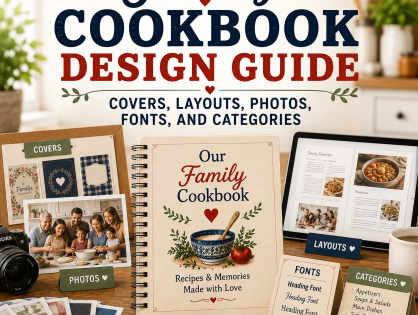
  • Family Cookbook Design Guide: Covers, Layouts, Photos, Fonts, and Categories

    Family Cookbook Design Guide: Covers, Layouts, Photos, Fonts, and Categories

    A family cookbook should be beautiful, personal, and easy to use. Good cookbook design is not about making every page complicated. It is about helping recipes look clear, organized, readable, and inviting while still reflecting the personality of your family.

    The most important design choices include your cover, title, recipe categories, dividers, page layout, typefaces, photos, table of contents, and recipe formatting. These choices help readers find recipes quickly and make the finished cookbook feel like a keepsake.

    Family Cookbook Project gives editors access to professionally designed covers and layouts, while also allowing custom options for families who want more control. That combination is important: users can create something polished without needing professional design skills.

    Quick Answer: To design a family cookbook, choose a cover that matches the cookbook’s purpose, write a meaningful title, organize recipes into clear categories, select readable fonts, use a consistent recipe layout, add photos that support the story, review the full book before printing, and consider how design choices affect page count and cost.

    Choose a Cookbook Cover That Tells the Story

    The cover is the first thing people see, so it should match the purpose of the cookbook. A heritage cookbook might use a family tree design, an old family photo, or a collage. A BBQ cookbook might use grilling imagery. A wedding cookbook might feature the couple.

    Take a look at Customizing Your Family Cookbook Cover, which explains how editors can use professionally designed options or create a more personalized custom cover and Family Cookbook Project Introduces New Cover Editing Tool, which explains how editors can adjust cover text, fonts, and photo placement using the Cover Arranger Tool.

    For a broader design-thinking article, review Judging a Cookbook By Its Cover.

    Write a Meaningful Cookbook Title

    A strong title helps define the cookbook’s purpose. Titles can be practical, emotional, funny, or family-specific. Examples include “Recipes from Our Family Tree,” “Grandma’s Kitchen,” “The Johnson Family Cookbook,” or “Three Generations at the Table.”

    For themed cookbook inspiration, check out Turn Local Flavor Into a Legacy: Create a Regional Cookbook for Family and Friends, Grill Master’s Guide: Why Every BBQ Enthusiast Needs Their Own Cookbook, and Sweet Success: How to Create and Share Your Favorite Dessert Recipes.

    Use Recipe Categories That Make Sense

    Categories are the backbone of a usable cookbook. Default categories work well for many families, but custom categories help make the cookbook more personal.

    Learn more at Customizing Your Family Cookbook Recipe Categories, which explains that Family Cookbook Project provides basic categories but also allows editors to create custom categories for dessert cookbooks, family-member sections, or other specialty formats and also Organizing Your Recipes in Your Family Cookbook, which should become one of the core support articles for this entire design pillar.

    Choose a Readable Recipe Layout

    Recipe layout affects how easy the cookbook is to use in the kitchen. The layout controls title style, ingredient formatting, directions, comments, columns, and photo placement. Keep readability first. Decorative fonts can be attractive, but ingredients and directions should be easy to read while cooking.

    See Recipe Layout Tool Upgrade on FamilyCookbookProject.com, which explains that the recipe layout tool controls the size and font of titles, ingredients, directions, comments, columns, and photo placement.

    For info on our newest layout, see Side-by-Side Recipe Layout Now Available, which explains the layout option that places ingredients and directions beside each other.

    Select Fonts and Typefaces Carefully

    Fonts help set the personality of the cookbook, but they should never get in the way of readability. Use decorative fonts sparingly for titles or section headings, and choose clear fonts for ingredients and directions.

    See 5 New Typefaces Available for Recipe Layouts in this section, and Recipe Layout Tool Upgrade on FamilyCookbookProject.com.

    Add Photos With Purpose

    Photos make a cookbook more personal and visually interesting. Use finished dish photos, family photos, old kitchen photos, reunion photos, wedding photos, and scanned recipe cards. Photos should support the story of the cookbook, not simply fill space.

    For heritage cookbooks, see Genealogy and Culinary Heritage: Creating a Family Cookbook for Future Generations. For recipe-card preservation, see How Family Recipes Help Genealogists Bring Ancestors to Life.

    For examples of event cookbooks, see How To Make A Bridal Shower Cookbook.

    Review the Full Cookbook Before Printing

    Before printing, review the cookbook as a complete book. Look for inconsistent formatting, missing photos, category issues, blank pages, recipes that run too long, and readability problems.

    Learn more at How To Get Your Cookbook Ready To Print, Removing Blank Pages From Your Family Cookbook, and Why Your Cookbook Needs Blank Pages.

    Design Choices Can Also Affect Printing Cost

    Design is not just about appearance. Layout choices can affect page count and printing cost. Large fonts, extra spacing, photos, and recipe length can increase page count.

    Check out How Much Does Printing a Family Cookbook Cost? and Pro Tip: Space Saving Options To Lower Printing Cost, which explains that page count is one of the largest factors in final printing cost.

    Common Family Cookbook Design Mistakes to Avoid

    • Choosing a cover that does not match the cookbook theme.
    • Using decorative fonts for ingredients or directions.
    • Creating too many recipe categories.
    • Using photos that are too dark, blurry, or unrelated.
    • Forgetting to preview the full cookbook before printing.
    • Making recipe titles inconsistent.
    • Using large fonts or extra spacing without realizing it can increase page count.
    • Forgetting that a cookbook needs to be easy to use while cooking.

    You do not need to be a designer to create a beautiful family cookbook. Choose a cover, organize your recipes, add photos, and let Family Cookbook Project help turn your recipes into a polished printed book.

    Bill Rice is Founder and Co-Publisher of the Family Cookbook Project, the leading online cookbook publisher with a website that helps families and individuals collect, preserve and share food memories by creating their own printed custom cookbooks. He is the author of The Wellfleet Oyster Cookbook and the Cape Cod Cocktail Cookbook (Available on Amazon), both created using FamilyCookbookProject.com. He is also editor of the Donovan Family Cookbook, now its third printing and is an avid genealogist tracing his family back to the 1600’s.

    Follow Family Cookbook Project on Facebook, Instagram, Twitter TikTok, YouTube and Pinterest!

    Frequently Asked Questions About Family Cookbook Design

    How do I design a family cookbook?
    Start by choosing a meaningful cover, writing a clear title, organizing recipes into categories, selecting readable fonts, choosing a consistent recipe layout, adding photos, and reviewing the full cookbook before printing.

    What should be on the cover of a family cookbook?
    A family cookbook cover can include a family photo, old recipe card, family tree, favorite dish, reunion photo, wedding image, or design that matches the cookbook’s theme.

    What are the best fonts for a cookbook?
    The best cookbook fonts are easy to read. Decorative fonts can work for titles or section headings, but ingredients and directions should use clear fonts that are readable while cooking.

    How should recipes be organized in a family cookbook?
    Most family cookbooks organize recipes by category, such as appetizers, main dishes, side dishes, desserts, breakfast, holidays, or family favorites. Some cookbooks organize recipes by contributor, family branch, or special event.

    Should a family cookbook include photos?
    Yes. Photos can make a cookbook more personal, especially when they show finished dishes, family gatherings, old kitchens, recipe cards, or relatives connected to the recipes.

    How does cookbook design affect printing cost?
    Design choices such as font size, spacing, photo placement, and recipe layout can affect page count. Since page count influences printing cost, it is helpful to review the layout before ordering.

  • Pro Tip: The Need For Blank Pages In A Cookbook

    Pro Tip: The Need For Blank Pages In A Cookbook

    While removing a few extra pages might save you a few pennies when printing, almost all blank pages are needed. In the publishing world, certain pages need to start on the right side of a two page layout.  The Table of Contents and Category Dividers are two examples of these types of pages that always are placed on the right side of a two page layout.

    Quick Answer: Blank pages appear in a cookbook because printed books often need major sections, such as the Table of Contents or category dividers, to start on the right-hand page. A blank page may be added at the end of a section to keep the next section in the correct position. These pages may change as recipes are added, edited, or removed.

    If you run your preview and look at the 3D Preview, you’ll see that almost all blank pages are the end of sections to leave the new sections to start fresh.

    In terms of the recipes categories, if the last page of a recipe category is blank, that page was placed there so as to have the next category starts on the right page side. However, if you add additional recipes to that first section, the blank page may come and go depending on the number of recipes in the section.

    You have an option of adding a photo using the Cookbook Picture Manager or a custom page using the Custom Pages Tool to the “end” of any recipe section. That can help fill the blank page. However, if you have not finished the section and add/edit recipes, you may end up with a blank page after your photo/custom page, so wait until all of your recipes are added before considering adding any custom pages.

    Blank Page Troubleshooting Checklist

    • Review the cookbook in 3D Preview.
    • Check whether the blank page appears before a Table of Contents, divider, or new category.
    • Confirm that all recipes have been added.
    • Avoid filling blank pages until recipe editing is complete.
    • Decide whether the blank page improves section layout.
    • Add a photo or custom page only after the section is final.
    • Preview again before placing the print order.

    Bill Rice is Founder and Co-Publisher of the Family Cookbook Project, the leading online cookbook publisher with a website that helps families and individuals collect, preserve and share food memories by creating their own printed custom cookbooks. He is the author of The Wellfleet Oyster Cookbook and the Cape Cod Cocktail Cookbook (Available on Amazon), both created using FamilyCookbookProject.com. He is also editor of the Donovan Family Cookbook, now it’s third printing and is an avid genealogist tracing his family back to the 1600’s.

    Follow Family Cookbook Project on Facebook, Instagram, Twitter TikTok, YouTube and Pinterest!

    Frequently Asked Questions About Blank Pages in a Cookbook

    Why are there blank pages in my cookbook?
    Blank pages often appear because printed books use two-page layouts. Major sections, such as the Table of Contents or category dividers, may need to start on the right-hand page, so a blank page is added before them.

    Are blank pages in my cookbook a mistake?
    Not usually. Many blank pages are intentional and help the cookbook print with a cleaner, more professional layout.

    Can I remove blank pages from my cookbook?
    Some blank pages may change as recipes are added or edited, but others may be needed for proper section placement. Review the 3D Preview before deciding whether to fill or adjust them.

    Can I add a photo to a blank page?
    Yes. After your recipes are final, you may be able to add a photo using the Cookbook Picture Manager or add a custom page using the Custom Pages Tool.

    Why do blank pages appear at the end of recipe sections?
    A blank page may appear at the end of a recipe section so the next category or divider can begin on the right-hand page.

    When should I fill blank pages with photos or custom pages?
    Wait until all recipes have been added and edited. If you fill blank pages too early, the page layout may change and the blank page may move.

  • Cajun or Creole? A Guide to the Two Styles of Louisiana Cooking

    Cajun or Creole? A Guide to the Two Styles of Louisiana Cooking

    When people think of Louisiana cuisine, two styles immediately come to mind: Cajun and Creole. Both are flavorful, rich culinary traditions deeply rooted in the history of the American South, yet they are distinct in their ingredients, cooking techniques, and cultural backgrounds. Despite their differences, Cajun and Creole cooking share many similarities, reflecting the blending of cultures, ingredients, and flavors over time.

    Let’s explore the origins of both Cajun and Creole cooking, how they differ, and how they overlap. We’ll also dive into some of the most popular dishes from each style, so you can better understand the distinct flavors of Louisiana cuisine.

    The Origins of Cajun and Creole Cooking

    Cajun Cooking

    Cajun cuisine has its roots in the Acadian people, French settlers who were expelled from Canada (then called Acadia) by the British in the mid-18th century. These settlers eventually found their way to the rural areas of southern Louisiana, particularly the bayous and swamplands. The Acadians (later known as Cajuns) had to adapt to the ingredients available in their new environment, and their resourcefulness gave rise to Cajun cooking.

    Cajun food is often referred to as “country food”, with its focus on hearty, one-pot meals made from easily accessible ingredients like game, seafood, rice, and vegetables. The cuisine was influenced by Native American, French, and African cooking traditions, resulting in a rustic, flavorful style that prioritizes simplicity and bold flavors.

    Creole Cooking

    Creole cuisine, on the other hand, developed in New Orleans and reflects the city’s diverse cultural history. Creole cooking is often described as “city food” because it was born in the more cosmopolitan environment of New Orleans, where ingredients and culinary traditions from Europe, Africa, the Caribbean, and the Americas blended together. The word “Creole” historically refers to people of European (mostly French or Spanish) descent born in the colonies, though it eventually encompassed a wider range of ethnicities.

    Creole food is more refined than Cajun food, with an emphasis on complex sauces, rich spices, and a wider variety of ingredients. It incorporates more European techniques, such as the use of butter and cream, and tends to feature seafood, meats, and vegetables seasoned with a blend of spices.

    How Are They Alike?

    Cajun and Creole cooking share several similarities, as both styles evolved in the same region and were influenced by overlapping cultures. Here are a few ways the two cuisines are alike:

    • •Shared Ingredients: Both cuisines rely heavily on ingredients like onions, bell peppers, celery (the “holy trinity”), garlic, and rice. Seafood, especially shrimp, crawfish, and fish, is also common in both styles.
    • •Bold Flavors: Cajun and Creole dishes are known for their bold, robust flavors, often featuring spices such as cayenne pepper, paprika, and thyme. Both cuisines also make use of roux (a mixture of fat and flour) as the base for many dishes, particularly stews and gumbos.
    • •One-Pot Dishes: Both traditions have a love for one-pot meals, particularly stews, jambalaya, and gumbo, which are staples of Louisiana cuisine.

    Key Differences Between Cajun and Creole Cooking

    While Cajun and Creole cooking share some similarities, their differences lie in the details, from the ingredients used to the cooking methods employed.

    Ingredients and Accessibility

    •Cajun: Cajun cooking developed in rural, less affluent areas, so the cuisine relies on locally available ingredients. Wild game, pork, crawfish, and vegetables are common, and Cajun dishes often use animal fats like lard or oil instead of butter. The flavors are bold but simple, and the dishes often reflect a “what’s on hand” mentality.

    •Creole: Creole cooking, being city-based, has a more diverse range of ingredients, thanks to the port city of New Orleans’ access to imported goods. Tomatoes, butter, cream, and seafood are frequently used. Creole food often incorporates more refined ingredients, and the use of butter, particularly in sauces, is more common than in Cajun cooking.

    Spices and Seasonings

    •Cajun: The spice level in Cajun cooking can be quite high, with a heavy use of cayenne pepper, paprika, black pepper, and garlic. Seasoning blends, often called Cajun seasoning, are commonly used to flavor proteins, rice, and stews. Cajun food also tends to be more rustic and straightforward in its seasoning.

    •Creole: Creole cooking focuses on a wider variety of seasonings and herbs, including parsley, thyme, bay leaves, and oregano. The spice level is often milder than Cajun food, and the dishes rely more on the complex layering of flavors from different herbs and spices rather than heat alone.

    Use of Tomatoes

    •Cajun: Tomatoes are rarely used in traditional Cajun cooking. Cajun gumbo, for instance, is typically made with a dark roux and no tomatoes.

    •Creole: Tomatoes are a defining feature of Creole dishes. For example, Creole gumbo often includes tomatoes, and dishes like shrimp Creole prominently feature tomato-based sauces.

    Cooking Techniques

    •Cajun: Cajun cooking is often about making the most of what’s available, so many dishes are prepared using simple techniques, like blackening, braising, or stewing. The use of a roux, made with oil and flour, is common to create a rich base for dishes like gumbo or étouffée.

    •Creole: Creole cooking incorporates more European techniques, such as sautéing, flambéing, and baking, and often uses butter and cream to enrich sauces. The cooking is typically more refined, and the dishes are known for their complexity.

    Popular Cajun Dishes

    Gumbo: Cajun gumbo is a hearty stew made with a dark roux, chicken, sausage (usually Andouille), and okra, but it can also include seafood. It’s served over rice and flavored with Cajun spices.

    Jambalaya: A one-pot dish made with rice, sausage, chicken, seafood, and vegetables, jambalaya is seasoned with a variety of spices and cooked until the rice absorbs all the flavors.

    Crawfish Boil: A Cajun classic, crawfish boils involve boiling crawfish, corn, potatoes, and sausage in a seasoned broth. It’s typically served family-style, with everyone gathering around a table to peel and eat the crawfish.

    Boudin: Boudin is a Cajun sausage made from a mixture of pork, rice, and seasonings, often served in links or as a filling for other dishes.

    Étouffée: A rich, thick stew made with shellfish (typically crawfish or shrimp), étouffée is often served over rice. The name comes from the French word “étouffer,” meaning “to smother,” which describes how the seafood is smothered in a flavorful roux-based sauce.

    Popular Creole Dishes

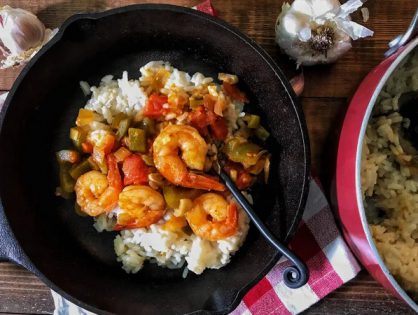
    Shrimp Creole: A dish featuring shrimp cooked in a spicy tomato-based sauce with onions, bell peppers, and celery (the “holy trinity” of Creole cooking). It’s typically served over rice.

    Red Beans and Rice: This Creole dish is made with slow-cooked red beans, sausage, and vegetables, served over rice. It’s traditionally eaten on Mondays in New Orleans.

    Creole Gumbo: Unlike Cajun gumbo, Creole gumbo often includes tomatoes, seafood, and okra. It’s lighter and more refined, with the use of seafood stock and a thinner roux.

    Bananas Foster: This famous Creole dessert is made by flambéing bananas in a sauce of butter, brown sugar, cinnamon, and rum, then serving it over vanilla ice cream.

    Pompano en Papillote: A more refined Creole dish, this involves baking fish (usually pompano) with a delicate sauce made from wine, butter, and herbs, all sealed in parchment paper to steam.

    Two Unique but Complementary Styles

    While Cajun and Creole cooking are often spoken of together, they offer two distinct styles of cooking that reflect the diverse cultural history of Louisiana. Cajun cuisine is rustic, bold, and rooted in rural traditions, while Creole cuisine is more refined, blending the influences of French, Spanish, African, and Caribbean cultures. Both traditions celebrate the rich flavors of the region, and whether you prefer a hearty bowl of gumbo or a refined seafood dish, you’ll find that Cajun and Creole cooking offer something for every palate.


    Bill Rice is Founder and Co-Publisher of the Family Cookbook Project, the leading online cookbook publisher with a website that helps families and individuals collect, preserve and share food memories by creating their own printed custom cookbooks. He is the author of The Wellfleet Oyster Cookbook and the Cape Cod Cocktail Cookbook (Available on Amazon), both created using FamilyCookbookProject.com. He is also editor of the Donovan Family Cookbook, now it’s third printing and is an avid genealogist tracing his family back to the 1600’s.

    Follow Family Cookbook Project on Facebook, Instagram, Twitter TikTok, YouTube and Pinterest!

  • The Top Reasons Family Cookbook Projects Stall—and How to Get Yours Moving Again

    The Top Reasons Family Cookbook Projects Stall—and How to Get Yours Moving Again

    Every family cookbook begins with good intentions.

    You picture the finished book. You imagine everyone’s favorite recipes in one place. You think about passing it around at the holidays, giving it as a gift, or setting it on the kitchen counter where it can finally be used instead of living in three drawers, two email folders, and one mysterious shoebox.

    Then something happens.

    The project slows down.

    Then it stops.

    And suddenly your family cookbook is sitting there like a gym membership in February. Full of promise. Quietly waiting. Not judging you, exactly, but also not printing itself.

    If your cookbook project has stalled, you are not alone. It happens all the time. The good news? A stalled cookbook is not a failed cookbook. It is simply a project that needs a small push.

    Let’s look at why cookbook projects stall and, more importantly, how to get yours moving again.

    Quick Answer: Family cookbook projects usually stall because editors are waiting for more recipes, the project feels too large, typing recipes takes too long, photos are missing, or the editor is afraid of making mistakes. To restart, set a final recipe deadline, work in small batches, use recipe photos or the Smart Recipe Converter, choose a theme for this edition, and preview the cookbook.

    Reason 1: You Were Waiting for “Just a Few More Recipes”

    This may be the most common reason family cookbooks get stuck.

    You have a good collection of recipes already, but you keep thinking, “I should wait until I get a few more.”

    A few more from your sister. A few more from the cousins. A few more from Uncle Bob, who promised to send his barbecue sauce recipe in 2021 and has since entered witness protection, apparently.

    Waiting for more recipes sounds reasonable. But it can keep your cookbook unfinished for months or years.

    Here is the fix: set a final recipe deadline.

    Send one friendly reminder to the people you still want to hear from. Give them a clear date. Then move forward.

    You can say:

    “I’m finishing the family cookbook and placing the first print order soon. Please send any final recipes by Friday if you want them included in this edition.”

    Notice the magic words: this edition.

    That takes the pressure off. You are not saying this is the only cookbook your family will ever make. You are saying this version is ready to finish.

    And if someone sends a recipe later? Great. Add it to the next edition.

    Reason 2: The Project Feels Too Big

    A family cookbook can start to feel huge.

    There are recipes to add. Photos to find. Notes to write. Categories to organize. Names to check. Covers to choose. Suddenly, what started as a sweet family project feels like you accidentally volunteered to run a small country.

    No wonder people stop.

    Here is the fix: shrink the next step.

    Do not think, “I need to finish the cookbook.”

    Think:

    “I need to review five recipes.”

    Or:

    “I need to add three missing recipes.”

    Or:

    “I need to choose a cover.”

    Small steps work because they feel possible. And once you complete one, the next one feels easier.

    Try working in short sessions. Set a timer for 20 minutes. Review or add what you can. Then stop.

    That may sound too simple, but small bits of steady work can bring a cookbook back to life fast.

    After all, most family recipes were not built in one giant leap either. They were built one spoonful, one pinch, and one “just add a little more” at a time.

    Reason 3: Typing Recipes Took Too Long

    Typing recipes can slow everything down.

    If you have old recipe cards, printed pages, or handwritten notes, the idea of typing them all by hand may make you want to lie down quietly and rethink your hobbies.

    But here is the good news: you do not have to do all that typing anymore.

    FamilyCookbookProject.com’s Smart Recipe Converter makes it much easier to add recipes. You can upload a photo, scan, or screenshot of a recipe and turn it into editable text. This is especially helpful for stalled cookbook projects because old recipe cards, screenshots, and family recipe photos no longer have to sit in a folder waiting for someone to type them by hand.

    That means you can take a picture of an old recipe card, upload it, review the converted recipe, make a few edits, and save it to your cookbook.

    This tool can help with:

    • Handwritten recipe cards
    • Printed recipes
    • Screenshots
    • Typed recipe pages
    • Recipes sent by family members as photos
    • Old family recipe collections

    You still need to review the recipe after conversion. Handwriting can be tricky, especially when someone wrote “1 tsp” like they were signing a doctor’s note. But the Smart Recipe Converter can save a lot of time and make finishing feel much easier.

    Even better, you can ask family members to send photos of recipes instead of typing them.

    That one change can make a big difference.

    Try this:

    “Please send a photo of your recipe card or printed recipe. I can add it to the cookbook from there.”

    Simple. Easy. Much less likely to be ignored.

    Reason 4: You Could Not Decide What to Include

    Some cookbook projects stall because the editor gets stuck making decisions.

    Should you include every recipe? Only family favorites? Should the store-bought cake mix recipe count? What about the one recipe nobody makes anymore but everyone remembers?

    Decisions can pile up like dishes after Thanksgiving dinner.

    Here is the fix: choose a theme for this edition.

    Your cookbook does not have to be everything. It can be one clear thing.

    For example:

    • “Our Family Favorites”
    • “Grandma’s Recipes”
    • “Holiday Traditions”
    • “Best Recipes from the Cousins”
    • “Recipes for the Next Generation”
    • “Comfort Foods We Love”

    A theme gives you a filter. If a recipe fits the theme, include it. If it does not, save it for later.

    And yes, the cake mix recipe can count if your family loves it. Family cookbooks are not cooking contests. No one is standing there with a tiny scorecard saying, “Technically, this begins with a boxed mix.”

    If the recipe matters to your family, it belongs.

    Reason 5: You Were Waiting for Better Photos

    Photos add warmth to a family cookbook. They make the book feel personal. They help people remember the cook, the kitchen, the holiday, the table, and maybe the wallpaper nobody wants to discuss.

    But photos can also become a roadblock.

    You may think you need a photo for every recipe. Or you may want better scans of old pictures. Or you may keep waiting for someone to send that one perfect family photo.

    Here is the fix: use what you have.

    A cookbook does not need a photo on every page to be meaningful.

    Use a few strong photos where they matter most. Add a picture of Grandma, a holiday table, a handwritten recipe card, a family reunion, or a finished dish. Even one or two photos in each section can add a lot of heart.

    And remember: old photos do not need to look perfect. A slightly faded kitchen photo can carry more feeling than a perfect food photo from the internet.

    Real beats perfect. Especially in a family cookbook.

    Reason 6: You Were Afraid of Making a Mistake

    This one sneaks up on people.

    You may worry about typos. Missing ingredients. Wrong names. A recipe that does not look quite right. A family member who may point out that the famous “Aunt Joan’s Brownies” actually came from Aunt Jean.

    These worries can stop the whole project.

    Here is the fix: print one copy first.

    You do not have to order copies for the whole family right away. Print one copy and review it in your hands.

    A printed copy helps you see the cookbook in a new way. You can flip through it, mark any small changes, and decide what to adjust before ordering more.

    This makes the final step feel safer.

    And honestly, even if a tiny mistake slips through, your family will still love the book. They are not looking for a flawless publishing masterpiece. They are looking for the recipes they remember.

    They want the cookies. The soup. The Sunday sauce. The pie.

    They are not going to reject the cookbook because a comma wandered off.

    Reason 7: You Forgot How Much It Matters

    Sometimes a cookbook project stalls because the emotional fuel runs low.

    You start strong, then the project becomes a task. The meaning gets buried under details.

    So pause and remember why you started.

    You wanted to save recipes that matter. You wanted to honor the people who made them. You wanted to help the next generation cook the foods that taste like family.

    That is a wonderful reason to finish.

    A printed cookbook is more than a stack of recipes. It is a gift. It is a family record. It is a way to say, “These meals mattered. These people mattered. These memories are worth keeping.”

    When someone opens the cookbook and sees a recipe in a loved one’s name, it means something.

    When a child or grandchild makes that recipe years from now, it means even more.

    That is worth finishing.

    What Counts as a Finished Family Cookbook?

    A family cookbook can be finished when it has:

    • A meaningful title
    • The most important family recipes
    • Clear recipe categories
    • Recipes that are readable and complete
    • A cover you like
    • A few family photos or recipe stories
    • A final preview

    A Simple Restart Plan

    Here is an easy way to get your cookbook moving again.

    First, log in and review what you already have. Do not edit yet. Just look.

    Next, make a short list of what is missing. Keep it to the recipes that matter most.

    Then use the Smart Recipe Converter to add recipe cards, printed pages, screenshots, or photos without typing everything from scratch.

    After that, organize your categories and add a few personal notes if you want.

    Finally, preview the cookbook and print one copy.

    That is it.

    No giant plan. No family committee. No waiting until every recipe in the known universe has been collected.

    Just one step, then the next.

    Your Stalled Cookbook Is Still Worth Finishing

    A stalled family cookbook is not a sign that you failed. It is a sign that life got busy.

    That happens. Life is very good at being life.

    But the recipes are still there. The memories still matter. The people you wanted to honor are still worth honoring.

    And with tools like the Smart Recipe Converter, adding the last few recipes can be much easier than it used to be.

    So open the project again. Take a look. Add a recipe. Review a section. Pick a print date.

    Your cookbook does not need another year of waiting.

    It needs one small step.

    Then another.

    Before you know it, you will hold the finished cookbook in your hands and wonder why it felt so hard to get started again.

    And when that happens, go ahead and smile.

    Maybe even celebrate with one of the recipes inside.

    Family Cookbook Restart Checklist

    • Log in and review what you already have.
    • Count the recipes already entered.
    • Make a short list of the most important missing recipes.
    • Send one final recipe reminder with a deadline.
    • Ask relatives to send recipe photos instead of typed recipes.
    • Use the Smart Recipe Converter for recipe cards, screenshots, and printed recipes.
    • Choose a theme for this edition.
    • Add a few meaningful photos, not one for every recipe.
    • Preview the cookbook.

    Ready to get your family cookbook moving again? Log in to FamilyCookbookProject.com, review what you already have, add one missing recipe, use the Smart Recipe Converter for recipe cards or photos, and take the next small step toward printing your finished cookbook.

    Bill Rice is Founder and Co-Publisher of the Family Cookbook Project, the leading online cookbook publisher with a website that helps families and individuals collect, preserve and share food memories by creating their own printed custom cookbooks. He is the author of The Wellfleet Oyster Cookbook and the Cape Cod Cocktail Cookbook (Available on Amazon), both created using FamilyCookbookProject.com. He is also editor of the Donovan Family Cookbook, now its third printing and is an avid genealogist tracing his family back to the 1600’s.

    Follow Family Cookbook Project on Facebook, Instagram, X (Twitter) TikTok, YouTube and Pinterest!


    Frequently Asked Questions About Stalled Family Cookbook Projects

    Why do family cookbook projects stall?
    Family cookbook projects often stall because editors are waiting for more recipes, the project feels too big, typing recipes takes too long, photos are missing, or the editor is worried about making mistakes before printing.

    How do I restart an unfinished family cookbook?
    Start by reviewing what you already have. Then make a short list of missing recipes, set a final recipe deadline, add recipes in small batches, preview the cookbook, and print one copy.

    What if family members have not sent their recipes?
    Send one final reminder with a clear deadline. Ask relatives to send a photo of a recipe card or printed recipe instead of asking them to type everything.

    Do I need every family recipe before printing?
    No. A family cookbook can be printed as “this edition.” Late recipes can always be added to a future edition.

    What is the fastest way to add old recipe cards?
    Take clear photos or scans of the recipe cards and use the Smart Recipe Converter to turn them into editable text. Always review the converted recipe before saving it.

  • Family Cookbook Project Cooks for a Cause: Supporting Food Charities Through Cooking

    Family Cookbook Project Cooks for a Cause: Supporting Food Charities Through Cooking

    At Family Cookbook Project, we believe food has always been about more than ingredients. It is about family, comfort, tradition, and caring for one another. That is why we are excited to announce Family Cookbook Project Cooks for a Cause, a new ongoing fundraising program created to help food-related charities make a difference.

    Quick Answer: Family Cookbook Project Cooks for a Cause is an ongoing charitable giving program that supports a different food-related nonprofit every three months. Visitors can shop for kitchen-related items at CooksForACause.com, with proceeds benefiting the featured charity. The first beneficiary is World Central Kitchen.

    Every three months, we will select a new charity beneficiary and invite our cookbook creators, contributors, friends, families, and the general public to help support that organization. Participants can visit CooksForACause.com to purchase kitchen-related items, with proceeds benefiting the featured charity.

    Our first beneficiary is World Central Kitchen, the nonprofit founded by chef José Andrés that provides fresh meals to communities affected by humanitarian, climate, and community crises. World Central Kitchen is often among the first to respond when disaster strikes, bringing food, comfort, and hope to people when they need it most. Their work reflects a belief we share deeply: a meal can do more than feed someone — it can remind them they are not alone.

    Why World Central Kitchen Was Chosen First

    World Central Kitchen is a natural first beneficiary because its mission reflects the heart of Family Cookbook Project: food connects people, comforts families, and brings hope during difficult times. Founded by chef José Andrés, WCK provides fresh meals in response to humanitarian, climate, and community crises. Supporting WCK through Cooks for a Cause lets the Family Cookbook Project community extend the power of food beyond family tables to people facing urgent need.

    How Cooks for a Cause Works

    1. Family Cookbook Project selects a food-related charity beneficiary.
    2. The beneficiary is featured for two months.
    3. Visitors go to CooksForACause.com.
    4. Supporters purchase kitchen-related items.
    5. Proceeds benefit the featured charity.
    6. The Family Cookbook Project community helps spread the word.

    We invite you to be part of this new effort. Please visit CooksForACause.com, browse the kitchen-related items available, and make a purchase in support of World Central Kitchen. Then share the program with your family, friends, cookbook contributors, and anyone who believes in the power of food to bring people together.

    Why Cookbook Editors and Contributors Make Great Supporters

    Family Cookbook Project editors already understand that food can tell stories, preserve memories, and bring people together. Cooks for a Cause gives that same community a simple way to help others through food-related giving. If you are creating a family cookbook, sharing this program with your contributors is a natural way to connect your family’s love of cooking with a larger purpose.

    Together, the Family Cookbook Project community can help preserve treasured recipes, celebrate the joy of cooking, and support organizations that are feeding hope around the world.

    Visit CooksForACause.com today and help us cook for a cause.


    Frequently Asked Questions About Cooks for a Cause

    What is Family Cookbook Project Cooks for a Cause?
    Cooks for a Cause is an ongoing charitable giving program from Family Cookbook Project that supports food-related nonprofit organizations through kitchen-related purchases.

    How does Cooks for a Cause work?
    Every three months, Family Cookbook Project features a new charity beneficiary. Supporters can visit CooksForACause.com and purchase kitchen-related items, with proceeds benefiting the featured organization.

    Who is the first Cooks for a Cause beneficiary?
    The first beneficiary is World Central Kitchen, a nonprofit founded by chef José Andrés that provides fresh meals in response to humanitarian, climate, and community crises.

    Do I need to be a Family Cookbook Project customer to participate?
    No. Cookbook creators, contributors, friends, families, and the general public can all support the featured charity through CooksForACause.com.

    How often does the beneficiary change?
    Family Cookbook Project plans to select a new charity beneficiary every three months.

    How can I help promote Cooks for a Cause?
    You can share the program with family, friends, cookbook contributors, cooking groups, churches, schools, and anyone who believes food can help bring people together.