Blog

  • New Functionality Added to White Space Filler Tool

    New Functionality Added to White Space Filler Tool

    White space filler are images and quotes that can be added to pages in your cookbook that have a lot of blank space. Sometimes it’s nice to break up the text of a recipe with some images.

    Until now, you had to select a package theme of images and had no choice within those sets. Over the years, we’ve had many requests for the ability to pick and choose images but programming wise it was difficult to implement.

    Due to some advanced programming from our crack development team, you now have the ability to pick and choose which images within a package you’d like to include.

    Here’s how it works:

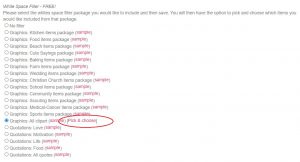
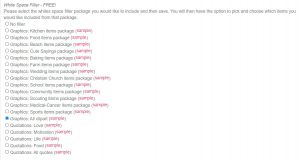
    In your editors, design center, select white space images. This will take you to a page that shows you the different packages of both images and quotations.

    Pick the package that is most appealing to you and click on the save button.

    Now look at that package you just selected and you’ll see a new text link that says pick and choose images. Click on that to see all of the images in that package.

    Now simply unselect the images or quotes, you do not want and save. Only those which you have selected will appear in your cookbook.

    If you want more than one package, you can select all images or all quotes and save. Now, when you go back to click the link to choose, you will have access to all of the images or all of the quotations in the system. Go ahead and mix-and-match to get the best set of white space filler for your particular cookbook.

    Family Cookbook Project will continue to provide the best online cookbook publishing system available anywhere for you our customers.

  • The Right Stuff: Understanding Cooking Oil

    The Right Stuff: Understanding Cooking Oil


    If you’ve followed a recipe, you’ve used cooking oils. However it is easy to be overwhelmed by all the varieties and options of cooking oil. Even when you know what you are looking for it can be tough to navigate through all those bottles and labels!

    First things first, what’s the purpose of using cooking oil?

    Cooking oils are a type of fat and no matter what he current fad diet says, fat is a nutrient that is required in large amounts in our diet. Oil is just one way to meet our fat needs. Other ways would be using foods that are higher in fat content, like nuts, avocado, eggs, fish, etc… There are different roles of oil in our cooking… Cooking oil can add wonderful flavors and aromas (think olive oil, pumpkin seed oil, walnut oil, etc) which can balance out components like vinegar, lime juice or bitter-tasting vegetables. On top of that, oil can be used as a cooking lubricant when sautéing so that food can be cooked without sticking to itself and the pan.

    In vinaigrettes, oil acts as a thickener by creating an emulsion with vinegar. Oil also adheres well to the surface of leafy vegetables allowing it to better coat and evenly distribute over the leaves causing the leaf to darken and its structure to weaken.

    Cooking oils can come from a variety of sources. Cooking oils can be made from Nuts and legumes (peanut oil, coconut oil, walnut oil, soybean oil, etc.), Fruits (avocado oil, olive oil, etc.), or Seeds (canola oil, sunflower oil, grapeseed oil, flaxseed oil, etc.). Each oil can add something different to a dish and should be use

    Understanding Smoke Point

    Smoke point refers to the temperature where an oil starts to burn and smoke. If you go beyond an oil’s smoke point, the oil will not only have a burnt flavor but it’s beneficial nutrients (found in many unrefined oils) will be destroyed and harmful free radicals can be created.

    There is a wide range of smoke points for cooking oils. Here is a guide choosing an oil for cooking.

    • Oils for high heat cooking: High heat cooking (> 450 F) includes searing, browning, and deep-frying. Cooking oils best for high heat cooking include avocado oil, safflower oil, sunflower oil, and refined peanut oil. These oils are higher in monounsaturated fats so their smoke point is much higher.
    • Oils for medium-high heat cooking: Medium-high heat (350 F – 450 F) cooking oils are good for baking, oven cooking, or stir-frying. Canola oil, almond oil,  grapeseed oil, macadamia nut oil, corn oil and refined olive oil are best for medium-high heat cooking.
    • Oils for medium heat cooking: Medium heat cooking oils (< 350 F) are best for light sautéing, sauces, and low-heat baking. These oils include extra virgin olive oil, coconut oil, corn oil, hemp oil, pumpkin seed oil, sesame oil, soybean oil, and peanut oil.
    • Oils for no heat cooking: It depends what flavor you like and prefer as some oils are more fragrant or have a distinct flavor, such as extra virgin olive oil, truffle oil, peanut oil, sesame oil, pumpkin seed oil, etc…

    The good news is that with so many cooking oils to choose from, many of us have one or two “go to” oils that fit most of our daily needs. However don’t be afraid to try something new every now and then. You might find something you like better!


    Bill Rice is founder and Co-Publisher of the Great Family Cookbook Project, a website that helps families and individuals collect and share food memories through customized printed cookbooks filled with treasured recipes. Follow us on Facebook and Pinterest!

  • How To Add A Co-Editor To Your Family Cookbook Project

    How To Add A Co-Editor To Your Family Cookbook Project

    With the FamilyCookbookProject.com Publishing System, we recommend that only one person serve as Editor – “too many cooks spoil the soup” so to speak.  You really need one person with full control or you cannot keep up with what might have been changed.

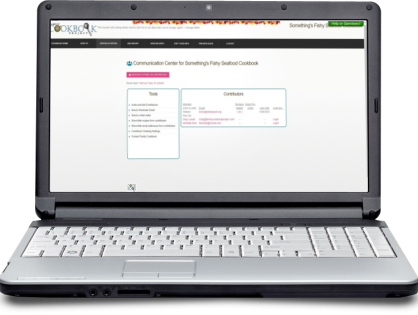
    That said, you have the ability to promote any contributor to the level of Co-Editor.  To do so, go to Communication Center and click on their name in the list.  Check the box next to their user name and update.  The next time they login they will have access to:

    • Editor Activities Menu with all tools
    • Add/Edit any recipe to help with cookbook editing
    • Communication Center – they can promote/demote users as Co-Editors

    We highly recommend allowing only trusted helpers serving as co-editor.

    Here is a quick tutorial video that shows you how:  https://www.youtube.com/watch?v=99NcfrI-PKM


    Bill Rice is Co-Publisher of the Great Family Cookbook Project, a website that helps families and individuals collect, preserve and share food memories by creating their own printed personal cookbooks. He is the author of The Wellfleet Oyster Cookbook (Available on Amazon) and the Cape Cod Cocktail Cookbook, both created using FamilyCookbookProject.com. He is also editor of the Donovan Family Cookbook, now it’s third printing.

    Follow Family Cookbook Project on Facebook, Instagram and Pinterest!

  • How To Use The Family Cookbook Project Photo Arranger Tool Video

    How To Use The Family Cookbook Project Photo Arranger Tool Video

    This video demonstrates the easy way to add photos to your Family Cookbook.

    About the Family Cookbook Project

    The Family Cookbook Project helps individuals and families collect and preserve the time-honored recipes that are so important to our family traditions. The website at www.familycookbookproject.com provides step-by-step instructions and online tools to create a valuable family heirloom that preserves recipes and memories for future generation.  Personalized cookbooks are also used by schools, church and other groups as important fundraisers.


  • How to Take Great Food Photos for Your Recipes

    How to Take Great Food Photos for Your Recipes

    They say a picture is worth a thousand words and with recipes that is especially true.

    It’s wonderful to read a list of ingredients and see the potential in a recipe, but to look at the finished product can make your mouth water!

    Family Cookbook Project highly recommends adding a photo to every recipe you can in your online cookbook. It helps people to see what to expect when they follow your recipe and gives them a standard to meet when comparing their finished dish to the original.

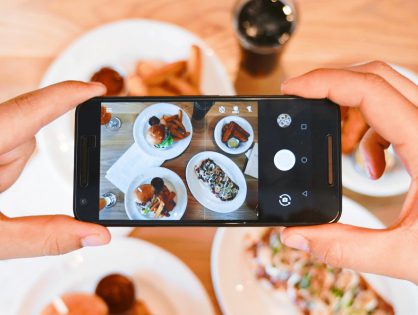
    With the advent of digital camera built into cell phones, you don’t have to be a professional photographer to take good food photos.

    Here are some pointers to help improve your recipe photos:
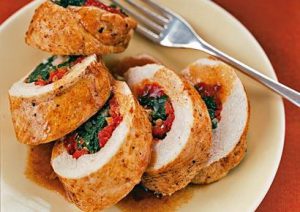
    Use Natural Light – Make sure that the light is right – shoot the food either next to a bright window or under a pendant light in the restaurant. Don’t use your camera’s flash! Set your dish near a window and turn off any artificial lights that might be on nearby. Try to photograph with the light at your back or to the side of a dish, so that the shadows are to the side or behind it. 

    Hold Still – Taking photos inside, even with ample natural light, often means you have to hold the camera very still to keep it from registering hand shake. If you have a tripod, that’s ideal. If you don’t, you can duplicate the tripod effect by resting your elbows on the table or counter and using them to stabilize the camera. Moving the camera when taking a photo will only lead to blurry unusable photos. 

    Get close to the food! – Don’t stand back three feet and get the food with the stove, the dirty dishes, and all the condiments around it. Move in and get up close and personal, and let the pan…or the plate…or the cutting board fill the frame.  
    Stage the shot – The food isn’t the only thing in the photo. Using plates, silverware and linens in complementary colors can help your dish come alive. Shoot food on a beautiful plate or on a table with texture and character. The more appetizing the ingredients, the better your photo will be. Plates that contain colored vegetables and/or meat, preferably in light-colored sauces, are often the most appealing to the eye in photos. Also Don’t be Afraid of a mess. A few crumbs or a smear of dressing can be beautiful, if you let them. 

    Focus on the food –  If you are using a DSLR, stop down your lens to f/1.8 or f/2.0 that limits your depth of field to one part of the image only, blurring out everything around the subject, simulating a shot taken with a macro lens. If you are using an iPhone, there are apps, such as Camera+ or VSCO Cam, that will create the same effect. Remember, you want the food to be the main focus, not the background. 

    Try different angles –  Get up over the food and shoot straight down on it. When shooting overheads, if appropriate, try filling up the frame with what’s already on the table such as cups, wine glasses, utensils and moving hands. You can also  think in three dimensions, You might not usually serve brownies piled in a vertical column, but stacking any flat food, like pancakes, cookies, or even onion rings, is a great way to show off texture and make the photo more appealing. You can also add dimension to your food photos by showing the dish right after the that first bite is taken, or the second and third. These are little details that make a viewer feel like they’ve sat down and are enjoying the meal. 
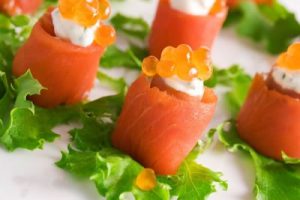
    Get Close to Ugly Foods  – Some foods, no matter how good they taste, just don’t make good photos. But the closer you get to your subject, the more the visual story becomes about texture and color, rather than pure mouth-watering beauty. Avoid foods that are white and gloppy, such as congealed gravy on white pasty mashed potatoes. 

    Size Matters –  Make sure your camera settings are set for a good sized photo. Small photos look blurry when they are enlarged on line. A photo viewed online only has to be 72 dpi (dots per inch, the measure for quality), but if you are going to print your photo, you want it to be at least 300 dpi. 600 pixels wide (a measurement for size) is a good target for minimum photo size.

    Using other’s photos – It is important to note that the Internet makes it easy to find photos of recipes already taken. While this might be much easier, the photo still is the property of whomever holds the rights. Don’t always assume that because a photo is on the Internet you can simply use it for your recipe. Make sure you ask permission from the owner before you use it.


    Bill Rice takes more than 20,000 photos a year and is Co-Publisher of the Great Family Cookbook Project Project, a website that helps families and individuals collect and share food memories. Follow us on Facebook, Instagram and Pinterest!

  • Food Related Holidays – August 2023

    Food Related Holidays – August 2023

    It seems that every day is a special day for something. Especially when it comes to our favorite (or not so favorite) foods.

    FamilyCookbookProject.com created a list of special food related holidays that you may not be aware of.

    For fun, pick some of your favorites and served them on their national day.


    August Food Related National Days

    1 –

    2 –

    3 –

    4-

    5 –

    6 –

    7 –

    8 –

    9 –

    10 –

    11 –

    12 –

    13 –

    14 –

    15 –

    16 –

    18 –

    19 –

    20 –

    21 –

    22 –

    23 –

    24 –

    25 –

    26 –

    27 –

    28 –

    29 –

    30 –

    31 –


    Source: National Day Calendar


    Bill Rice is Co-Publisher of the Great Family Cookbook Project, a website that helps families and individuals collect, preserve and share food memories by creating their own printed personal cookbooks. He is the author of The Wellfleet Oyster Cookbook (Available on Amazon) and the Cape Cod Cocktail Cookbook, both created using FamilyCookbookProject.com. He is also editor of the Donovan Family Cookbook, now it’s third printing and is an avid genealogist tracing his family back to the 1600’s.

    Follow Family Cookbook Project on Facebook, Instagram, Twitter and Pinterest!

  • 4 Family Cookbook Mistakes to Avoid

    4 Family Cookbook Mistakes to Avoid

    At Family Cookbook Project, we have been helping people create custom cookbooks for more than 15 years. We have learned a lot in that time and we wanted to point out some of the things not to do to make your personal cookbook a success.

    Mistake #1 -Thinking that everyone in the family will be interested in participating. While it is always a good thing to invite as many people as possible to contribute to your family cookbook, expecting everyone to participate is simply unrealistic. There’s a lot of people in every family that just don’t like to cook, think they are too busy or simply forget and miss the deadline.

    It’s important that once you invite your contributors that you keep them motivated by sending messages using family cookbook project reminder tool on a regular basis. You also can have them contacted when new recipes are added to the cookbook.

    Mistake #2 – Making the One Final Perfect Family Cookbook. let’s face it, family cookbooks are living documents that are currently evolving just like the families themselves. my family is already on its third volume of recipes. A lot of people also add and use recipes online.

    So the bottom line is don’t hold up the entire cookbook waiting for one or two specific recipes or contributors.

    Mistake #3 – Making the Family Recipe Book Only About Recipes. Sure the cookbook will have great recipes, however what people really like to read are the personal notes about the recipes and why they are important to the people who contributed them. Family photos are another great way to make your cookbook truly your family cookbook.

    Mistake #4 – Bad Proof Reading. One of the most important jobs as editor is reading all of the recipes activate been submitted to make sure the format is consistent and any miss spelled words are corrected.

    Luckily Family Cookbook Project has created an “editor edit mode” which allows you to go through each recipe and make changes to them quickly and efficiently. You browser’s spell check will also point out questionably spelled words.

    We would add a fifth mistake – not using Family Cookbook Project to organize and print your family cookbook!


    Bill Rice is Co-Publisher of the Great Family Cookbook Project, a website that helps families and individuals collect, preserve and share food memories by creating their own printed personal cookbooks. He is the author of The Wellfleet Oyster Cookbook (Available on Amazon) and the Cape Cod Cocktail Cookbook, both created using FamilyCookbookProject.com. He is also editor of the Donovan Family Cookbook, now it’s third printing.

    Follow Family Cookbook Project on Facebook, Instagram and Pinterest!
     

  • It’s Time To Start Thinking About Christmas

    It’s Time To Start Thinking About Christmas

    There is a reason why 90% of the cookbooks FamilyCookbookProject.com prints are submitted in late November and early December. Everyone knows that family cookbook‘s make great Christmas gifts! Everyone wants something personal and special to give to love ones at the holidays and a family cookbook is makes the perfect gift.

    Why are we telling you this in July? Well cookbooks don’t just happen by themselves, they need to be have recipes at it, professionally design covers selected and everything proofread before they are submitted for printing.

    The time it takes to have your cookbook printed and shipped also more than doubles just before the holidays because of the sheer volume. So now is the time to put your efforts into your cookbook and have it completed and submitted for printing by the time September rolls around.


    Bill Rice is Co-Publisher of the Great Family Cookbook Project, a website that helps families and individuals collect and share food memories by creating their own printed personal cookbooks. Follow us on Facebook, Instagram and Pinterest!

  • How To Create A Multi-Part Recipe

    How To Create A Multi-Part Recipe

    Have you ever had a cake recipe that really needed a specific frosting? Or a meat recipe that required a special sauce? Wouldn’t it be great if a a recipe could have sub recipes attached to keep them together?

    Many of our FamilyCookbookProject.com editors have asked for the ability to have multiple sections or steps in recipes. We like to listen and have added it! Now you can have up to 5 “sub” recipes or steps within a recipe, each with its own set of ingredients and directions. Example? You have Carrot Cake and you want a section for the “Cake” with its ingredients and directions, then “Cream Cheese Frosting” with another set of ingredients and directions.

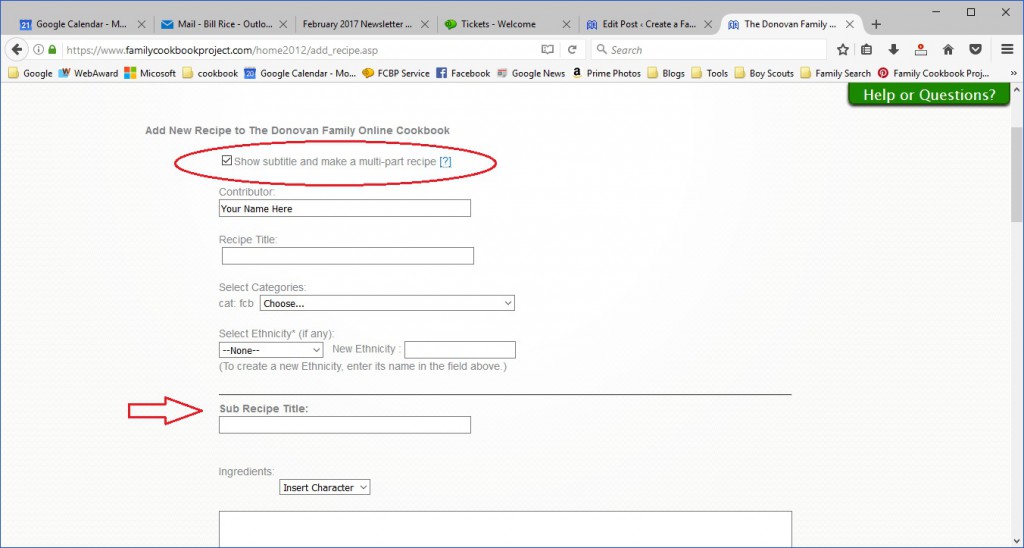
    To use this feature, simply go to Add Recipe or Edit an existing recipe. First check the box for “Show subtitle and make a multi-part recipe” right under the contributor field. This will add a field for sub-recipe title.

    Using our example above, here is where you would add your carrot cake ingredients and directions.

    Next, click on the green button to “Add new sub recipe”. This will add fields for a second set of sub recipe title, ingredients and directions for your Cream Cheese Frosting.

    You can add up to five sub recipes for your overall recipe.

    When you are done, make sure to click on the green button on the bottom of the page to save your recipe before moving on to your next recipe.


    Bill Rice is Co-Publisher of the Great Family Cookbook Project, a website that helps families and individuals collect, preserve and share food memories by creating their own printed personal cookbooks. He is the author of The Wellfleet Oyster Cookbook (Available on Amazon) and the Cape Cod Cocktail Cookbook, both created using FamilyCookbookProject.com. He is also editor of the Donovan Family Cookbook, now it’s third printing.

    Follow Family Cookbook Project on Facebook, Instagram and Pinterest!

  • How-to Add A Co-Editor To A Family Cookbook Project Video

    How-to Add A Co-Editor To A Family Cookbook Project Video

    This video demonstrates how to add a “co-editor” to help you get your custom cookbook project ready for production.


    About the Family Cookbook Project

    The Family Cookbook Project helps individuals and families collect and preserve the time-honored recipes that are so important to our family traditions. The website at www.familycookbookproject.com provides step-by-step instructions and online tools to create a valuable family heirloom that preserves recipes and memories for future generation.  Personalized cookbooks are also used by schools, church and other groups as important fundraisers.