
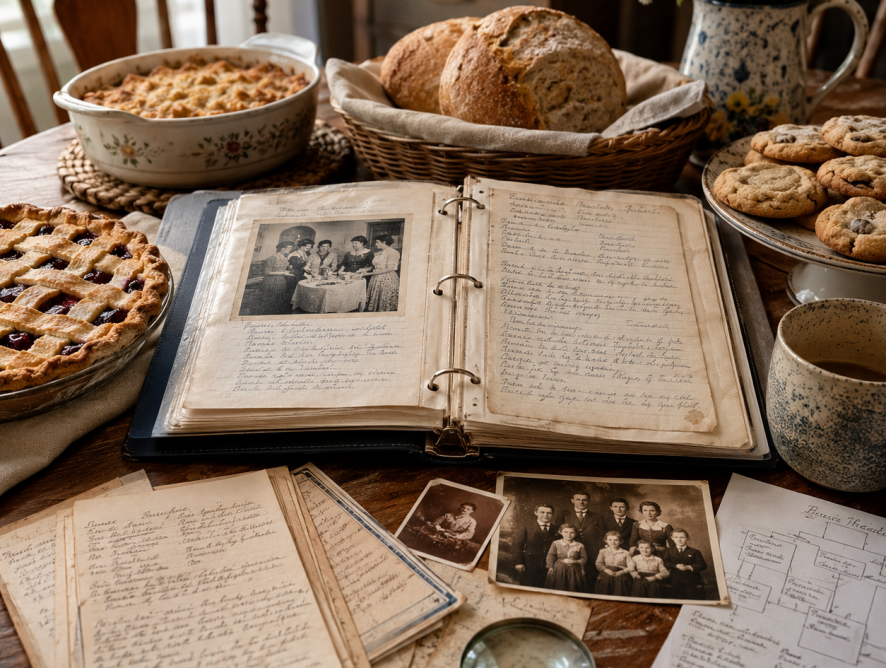
Genealogy often begins with names, dates, and places. A birth certificate shows where someone entered the world. A census record tells us where they lived and who shared their household. A marriage record connects one branch of the family tree to another. These documents are valuable, but they can also feel a little flat. They tell us that our great-grandmother existed, but they rarely tell us what made her laugh, what she served on Sunday, what she packed for a church supper, or what dish made everyone gather in the kitchen before dinner was ready.
That is where family recipes come in. Family recipes are valuable genealogy records because they reveal cultural traditions, migration patterns, everyday life, family relationships, and personal memories that official documents rarely capture. Recipes can help genealogists understand migration, cultural identity, economic conditions, religious customs, and family routines.
For genealogists, recipes are more than instructions for preparing food. They are clues. They are cultural records. They are edible memories. A handwritten recipe card, a stained church cookbook, or a favorite holiday dish can reveal where a family came from, how they lived, what they valued, and how traditions moved from one generation to the next.
Creating a family cookbook is one of the most meaningful ways to preserve that information. A genealogy-inspired family cookbook combines recipes, handwritten cards, family stories, photos, and ancestor information into one shareable family-history keepsake. It gathers family recipes, stories, photos, and memories into one place, giving future generations something far richer than a list of ancestors. It gives them a taste of family history.
Quick Answer: Family recipes help genealogists bring ancestors to life by revealing what people cooked, where they came from, how they celebrated, what ingredients they used, and which traditions they passed down. A family cookbook can preserve recipes, handwritten cards, photos, stories, and oral history in one place for future generations.
Food Tells the Story Behind the Family Tree
Most genealogy research focuses on facts: names, dates, locations, occupations, military service, immigration records, and family relationships. These are the bones of family history. Recipes add the heart.
A recipe can tell you what ingredients were available to your ancestors. It can hint at their economic circumstances, regional traditions, religious customs, ethnic background, and family routines. A simple soup recipe may reflect a farming family that wasted nothing. A holiday bread may point to Eastern European roots. A seafood stew may reveal a coastal upbringing. A casserole may say a lot about mid-century American home cooking, church suppers, and feeding a large family on a budget.
Food is often one of the last traditions families hold onto after moving to a new place. A family may lose the language of their homeland over time, change the spelling of their name, and move far from where earlier generations lived. But the recipes often remain. The cookies still appear at Christmas. The dumplings still show up at reunions. The sauce is still made “the way Grandma made it,” even if nobody remembers exactly which village Grandma came from.
That makes recipes especially valuable to genealogists. They preserve family identity in a way official records cannot.
Recipes Can Reveal Migration and Cultural Roots
One of the most fascinating parts of genealogy is tracing how families moved. Recipes often travel with them.
A family cookbook can show how food traditions changed as ancestors moved from one country to another, from rural farms to cities, or from one region of the United States to another. A family with Italian roots may have tomato sauce recipes that changed after arriving in America because different ingredients were available. A Southern family may have cornbread, greens, and barbecue recipes that reflect regional history. A New England family may have clam chowder, baked beans, or cranberry dishes connected to local ingredients and customs.
Sometimes a recipe’s name gives genealogists a clue. A dish called “Nana’s Polish Pierogi,” “Aunt Rose’s Kugel,” “Grandpa’s Swedish Meatballs,” or “Memere’s Tourtiere” points directly toward cultural heritage. Even when the recipe has been adapted over time, it can still open the door to deeper research.
Genealogists can use these recipes as starting points. Where did this dish come from? Was it common in a certain region? Did it appear in immigrant communities? Was it connected to a holiday, religious observance, or family celebration? Suddenly, one recipe becomes a path into history.
Handwritten Recipes Preserve Personality
Genealogy is filled with typed records, official forms, and digital databases. A handwritten recipe is different. It feels personal.
The handwriting itself can become a treasured connection. Seeing a grandmother’s cursive or a father’s quick notes in the margin gives descendants a direct link to that person. Smudges, stains, substitutions, and little comments tell their own story. A recipe card marked “double for Thanksgiving” or “John likes extra cinnamon” brings a person into focus.
These details matter because genealogy is not just about proving lineage. It is about understanding people. A family cookbook can preserve those human details before they disappear.
When creating a family cookbook, include scans or photos of original recipe cards whenever possible. Type the recipe so it is easy to read and use, but also preserve the original image. That way, future generations get both the practical recipe and the emotional connection.
A typed recipe tells someone how to make the pie. A photo of the old recipe card shows them whose hands made it first.
Family Stories Make Recipes More Valuable
A recipe becomes much more powerful when paired with a story.
Instead of simply listing “Grandma’s Apple Cake,” include a short note explaining when she made it. Was it served after Sunday dinner? Did she bring it to every family reunion? Did she bake it when grandchildren visited? Was it made from apples grown in the backyard? Did someone always sneak a slice before dessert?
These stories turn recipes into family history.
Genealogists should encourage relatives to share memories connected to food. Ask questions such as:
- What dish do you remember most from your childhood?
- Who was the best cook in the family?
- What food appeared at every holiday?
- Were there recipes connected to your family’s country of origin?
- Did anyone have a signature dish?
- What did your family eat during hard times?
- Were there foods your parents or grandparents made from scratch?
- Which recipes were passed down, and which were written down later?
- Who taught you to make this recipe?
- Was this recipe served for a holiday, Sunday dinner, or special event?
- Did the recipe change after the family moved?
- Was this dish connected to a country, region, religion, or family tradition?
- Was it considered an everyday meal or a special-occasion dish?
- Did anyone in the family have a signature recipe?
- Are there old recipe cards, clippings, or community cookbooks we should preserve?
- What recipe reminds you most of your parents or grandparents?
The answers can reveal details that never appear in public records. They can show who hosted family gatherings, how holidays were celebrated, what children loved, and how families cared for one another.
Recipes Show Daily Life, Not Just Major Events
Genealogy often focuses on major life events: births, marriages, deaths, military service, immigration, and property ownership. Recipes show daily life.
They show what people ate on ordinary Tuesdays. They reveal how families stretched food during the Great Depression, wartime rationing, or lean financial years. They show how home cooks adapted to changing technology, from wood stoves to electric ovens, from iceboxes to refrigerators, from handwritten cards to online recipes.
A family cookbook can include both special occasion dishes and everyday meals. The everyday recipes may be the most revealing. A pot roast recipe, a lunchbox cookie, a breakfast casserole, or a simple vegetable dish can say a lot about the rhythm of family life.
For genealogists, these details help fill in the spaces between official documents. They answer the question, “What was life actually like?”
Genealogy Recipe Research Checklist
When using family recipes for genealogy, look for:
- The name of the person connected to the recipe
- The original handwritten recipe card
- Notes in the margins
- Ingredient names that may reflect a region or culture
- Old measurements such as “pinch,” “teacup,” or “moderate oven”
- Holiday or religious connections
- Family reunion, church supper, or community cookbook sources
- Immigration or regional food clues
- Stories from relatives about when the dish was served
- Photos of the person, place, or gathering connected to the recipe
- Changes made after migration or relocation
- Who still makes the recipe today
Family Cookbooks Help Preserve Oral History
Many family recipes are never written down. They live in memory. Someone knows how much flour to add “until it feels right.” Someone else knows the sauce needs “a little more of this” but never measures it. These recipes are especially vulnerable because they can vanish when the person who knows them is gone.
Creating a family cookbook gives families a reason to capture those recipes now.
Interview older relatives. Cook with them. Record their process. Take photos. Ask them to explain the steps, even the ones they think are obvious. Many family recipes are filled with assumed knowledge, such as the size of a “small can,” the meaning of a “moderate oven,” or how long to knead dough.
Writing these details down is an act of preservation. It protects not only the recipe but also the voice, habits, and wisdom of the person who carried it.
Photos Make the Cookbook Even More Meaningful
A family cookbook can become a powerful genealogy resource when it includes photos. These can be photos of the finished dishes, but they can also be images of the people, places, and gatherings connected to the recipes.
Include a picture of Great-Grandma next to her famous rolls. Add a photo of the old family farmhouse beside the pickling recipe. Place a reunion photo near the potato salad everyone remembers. Use wedding photos near anniversary cake recipes or holiday photos beside traditional Christmas cookies.
These pairings help readers understand that recipes are part of a larger family story.
For younger family members, this can make genealogy much more approachable. Not everyone gets excited about census records, but almost everyone can connect with a photo, a story, and a recipe for something delicious. Genealogy becomes less like homework and more like being invited to dinner. A much better strategy, honestly.
A Family Cookbook Creates a Shareable Genealogy Keepsake
One challenge genealogists often face is how to share their research with relatives. A detailed family tree may be important, but not every family member will read a long genealogy report. A family cookbook is different. It is useful, personal, and easy to enjoy.
People will open it. They will cook from it. They will give it as a gift. They will pass it around at reunions. They will tell stories while looking through it.
That makes a family cookbook one of the most accessible forms of family history. It can include a family tree, short ancestor profiles, old photos, immigration stories, and regional notes alongside the recipes. It does not need to replace traditional genealogy research. It can make that research more inviting.
A cookbook also gives relatives a reason to contribute. Some family members may not have old documents or genealogy knowledge, but they may have a recipe, a memory, or a photo. That contribution helps them become part of the preservation process.
What to Include in a Genealogy-Inspired Family Cookbook
A family history cookbook can include:
- Family recipes
- Recipe contributor names
- Photos of original recipe cards
- Typed versions of handwritten recipes
- Short ancestor profiles
- Family tree charts
- Immigration stories
- Regional food notes
- Holiday traditions
- Church supper or community cookbook recipes
- Photos of relatives, homes, farms, kitchens, and gatherings
- Stories about who cooked each dish and when it was served
- Notes about how recipes changed over time
How Family Cookbook Project Helps Genealogists Preserve Food History
Family Cookbook Project makes it easy to gather, organize, and print family recipes in a professional cookbook that can be shared for generations. Recipes can be entered online, organized into custom categories, and enhanced with family stories and photos. Families can invite relatives to contribute their own recipes, making the cookbook a shared project rather than one person’s burden.
For genealogists, this is especially helpful. You can create categories based on family branches, regions, holidays, generations, or recipe types. You can include contributor names, recipe notes, family memories, and photos that connect the food to the people who made it.
Family Cookbook Project also allows families to turn scattered materials into something lasting. Instead of recipes being tucked into drawers, hidden in email threads, or stored on fading cards, they can become part of a printed keepsake cookbook.
That printed book becomes more than a collection of meals. It becomes a family history document.
Preserve Handwritten Recipe Cards Alongside Typed Recipes
For genealogy purposes, the original recipe card is part of the historical record. The handwriting, spelling, stains, crossed-out measurements, and margin notes may reveal as much as the ingredients. In a family cookbook, include a clear typed recipe for cooking and a photo of the original card for memory and documentation.
If your genealogy research has uncovered handwritten recipe cards, newspaper clippings, or old community cookbook pages, Family Cookbook Project’s Smart Recipe Converter AI can help turn recipe photos into editable text. That makes it easier to preserve the original image while also creating a clean, readable version for your family cookbook.
Start With One Recipe
Creating a genealogy-inspired family cookbook does not have to be overwhelming. Start with one recipe. Choose a dish that reminds you of someone. Write down the recipe. Add the person’s name. Include a story. Find a photo if you can.
Then add another.
Before long, you are not just collecting recipes. You are preserving voices, memories, traditions, and family identity.
Genealogy tells us where we came from. Recipes help us understand how our ancestors lived, gathered, celebrated, struggled, adapted, and loved. A family cookbook brings those stories together in a way future generations can hold, read, cook from, and cherish.
Because sometimes the best way to meet your ancestors is not only through a record book.
Sometimes, it is through a recipe card covered in flour.
Ready to turn your family recipes into a genealogy keepsake? Start your cookbook at Family Cookbook Project, invite relatives to contribute recipes and stories, add photos of original recipe cards, and create a printed family cookbook that brings your ancestors’ food traditions to life.
Frequently Asked Questions About Family Recipes and Genealogy
How can family recipes help with genealogy?
Family recipes can reveal cultural roots, migration patterns, family traditions, religious customs, economic circumstances, and everyday details that official records often leave out.
Are handwritten recipe cards useful for family history?
Yes. Handwritten recipe cards preserve handwriting, personal notes, ingredient choices, substitutions, stains, and small details that can help descendants feel connected to the person who used the recipe.
What should genealogists ask relatives about family recipes?
Ask who made the recipe, when it was served, where it came from, whether it changed over time, and what family memories are connected to it.
Can a family cookbook include genealogy information?
Yes. A family cookbook can include recipes, family stories, photos, family trees, ancestor profiles, immigration notes, and regional food history.
Why are recipes important for preserving family history?
Recipes show how families lived, celebrated, adapted, and passed traditions from one generation to the next. They add personality and daily life to names, dates, and records.
How do I preserve old recipe cards in a family cookbook?
Take a clear photo or scan of each card, type the recipe into a readable format, add the contributor’s name and story, and include both the typed recipe and original card image in the cookbook.
Bill Rice is Co-Publisher of the Family Cookbook Project, a website that helps families and individuals collect, preserve and share food memories by creating their own printed personal cookbooks. He is the author of The Wellfleet Oyster Cookbook (Available on Amazon) and the Cape Cod Cocktail Cookbook, both created using FamilyCookbookProject.com. He is also editor of the Donovan Family Cookbook, now its third printing and is an avid genealogist tracing his family back to the 1600’s.
Follow Family Cookbook Project on Facebook, Instagram, X (Twitter) and Pinterest!