Blog

  • Understanding A Cooking Oil’s Smoke Point

    Understanding A Cooking Oil’s Smoke Point


    If you’ve followed a recipe, you’ve used cooking oils. However it is easy to be overwhelmed by all the varieties and options of cooking oil. Even when you know what you are looking for it can be tough to navigate through all those bottles and labels!

    First things first, what’s the purpose of using cooking oil?

    Cooking oils are a type of fat and no matter what he current fad diet says, fat is a nutrient that is required in large amounts in our diet. Oil is just one way to meet our fat needs. Other ways would be using foods that are higher in fat content, like nuts, avocado, eggs, fish, etc… There are different roles of oil in our cooking… Cooking oil can add wonderful flavors and aromas (think olive oil, pumpkin seed oil, walnut oil, etc) which can balance out components like vinegar, lime juice or bitter-tasting vegetables. On top of that, oil can be used as a cooking lubricant when sautéing so that food can be cooked without sticking to itself and the pan.

    In vinaigrettes, oil acts as a thickener by creating an emulsion with vinegar. Oil also adheres well to the surface of leafy vegetables allowing it to better coat and evenly distribute over the leaves causing the leaf to darken and its structure to weaken.

    Cooking oils can come from a variety of sources. Cooking oils can be made from Nuts and legumes (peanut oil, coconut oil, walnut oil, soybean oil, etc.), Fruits (avocado oil, olive oil, etc.), or Seeds (canola oil, sunflower oil, grapeseed oil, flaxseed oil, etc.). Each oil can add something different to a dish and should be use

    Understanding Smoke Point

    Smoke point refers to the temperature where an oil starts to burn and smoke. If you go beyond an oil’s smoke point, the oil will not only have a burnt flavor but it’s beneficial nutrients (found in many unrefined oils) will be destroyed and harmful free radicals can be created.

    There is a wide range of smoke points for cooking oils. Here is a guide choosing an oil for cooking.

    • Oils for high heat cooking: High heat cooking (> 450 F) includes searing, browning, and deep-frying. Cooking oils best for high heat cooking include avocado oil, safflower oil, sunflower oil, and refined peanut oil. These oils are higher in monounsaturated fats so their smoke point is much higher.
    • Oils for medium-high heat cooking: Medium-high heat (350 F – 450 F) cooking oils are good for baking, oven cooking, or stir-frying. Canola oil, almond oil,  grapeseed oil, macadamia nut oil, corn oil and refined olive oil are best for medium-high heat cooking.
    • Oils for medium heat cooking: Medium heat cooking oils (< 350 F) are best for light sautéing, sauces, and low-heat baking. These oils include extra virgin olive oil, coconut oil, corn oil, hemp oil, pumpkin seed oil, sesame oil, soybean oil, and peanut oil.
    • Oils for no heat cooking: It depends what flavor you like and prefer as some oils are more fragrant or have a distinct flavor, such as extra virgin olive oil, truffle oil, peanut oil, sesame oil, pumpkin seed oil, etc…

    The good news is that with so many cooking oils to choose from, many of us have one or two “go to” oils that fit most of our daily needs. However don’t be afraid to try something new every now and then. You might find something you like better!


    Bill Rice is founder and Co-Publisher of the Great Family Cookbook Project, a website that helps families and individuals collect and share food memories through customized printed cookbooks filled with treasured recipes. Follow us on Facebook and Pinterest!

  • How To Bold Text In Your Family Cookbook Project Recipe

    How To Bold Text In Your Family Cookbook Project Recipe

    Have you ever wanted to call everyone’s attention to a specific line an a recipe?

    Do not cook longer than 10 minutes!

    Add ingredients in this specific order!

    Do not preheat your oven!

    Certain directions are critical to the outcome of a favorite dish and Family Cookbook Project as made it easy if you want to bold your text in a recipe.  You just have to learn HTML or Hyper Text Markup Language, the programming language of every website on the Internet.

    Now before you say “I’m not a computer programmer, I can barely turn on my laptop””. It’s super easy for what you want to do.

    In directions, comments and ingredients when you are adding a new recipe, you can use simple HTML tags like:

    <b>BOLD</b>
    <i>Italic</i>
    <u>Underline</u>

    Replace the word between the tags with what you want to appear in that format. It’s as simple as that!

    For example <b>Do not cook longer than 10 minutes!</b> looks like this Do not cook longer than 10 minutes!

    If you use Do not cook longer than 10 minutes! it will look like this Do not cook longer than 10 minutes!

    and if you use <u>Do not cook longer than 10 minutes!</u> it will look like this Do not cook longer than 10 minutes!

    The most important thing to remember is that all tags start with “<>” and end with a “</>”. If you forget the /> then every thing else in your recipe will be based on the tag you used. Don’t forget your “</>”!

    Family Cookbook Project is always looking for ways to make your favorite recipes come to life for you and your family.

    Save

  • The Role of Cookbooks in Modern-Day Kitchens: Tradition Meets Technology

    The Role of Cookbooks in Modern-Day Kitchens: Tradition Meets Technology

    Cookbooks have always held a special place in the heart of the kitchen. They represent more than just instructions on how to prepare food—they are collections of memories, traditions, and cultural heritage. From the days when recipes were meticulously handwritten and passed down through generations to today’s world of online recipe databases, cookbooks remain an essential part of our culinary experiences. Despite the growing reliance on digital tools, the enduring charm of printed cookbooks continues to thrive, illustrating the important role they play in modern kitchens.

    Early Role of Cookbooks and Recipe Boxes in Recipe Collection

    The tradition of cookbooks dates back centuries, with some of the earliest known recipe collections found in ancient Greece and Rome. These early documents were practical guides for food preparation, meant for chefs and households to replicate meals. However, as time progressed, cookbooks evolved from simple instruction manuals into treasured collections that offered a glimpse into the lifestyles, cultural preferences, and personal tastes of families.

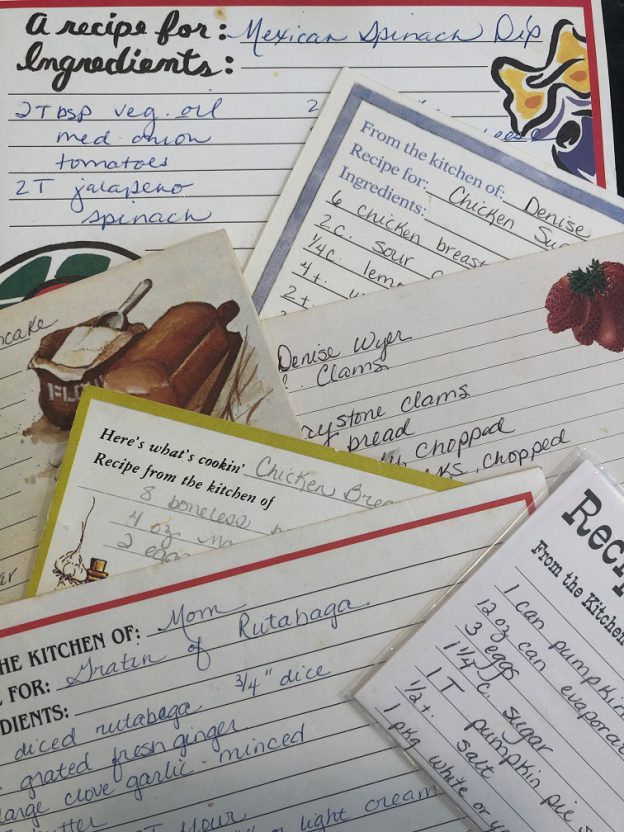
    By the late 19th and early 20th centuries, cookbooks had become widely available, and many homes had their own collection. These cookbooks often contained family recipes or popular dishes of the time, with annotations scribbled in the margins and additions jotted down on spare pieces of paper. Recipe boxes, often filled with index cards or small slips of paper, were another staple in many kitchens. Passed down from generation to generation, these recipe boxes symbolized a family’s culinary history and held precious memories of meals prepared for holidays, birthdays, and family gatherings.

    Cookbooks and recipe boxes became central to meal planning. In a time before the internet or television cooking shows, cookbooks were the primary source of culinary education for home cooks. Whether it was an heirloom recipe or a new dish clipped from a magazine, these collections fostered a sense of pride and accomplishment in home cooking. They also ensured that family favorites—whether it was Grandma’s apple pie or Uncle Joe’s famous barbecue sauce—would never be lost.

    Cookbooks Remain the Most Popular Genre of Printed Books Today

    In today’s fast-paced world, where digital content is king, the popularity of printed cookbooks might come as a surprise to some. However, cookbooks continue to be one of the most popular genres of printed books, consistently topping bestseller lists. But why, in an era where almost any recipe can be found with a few clicks, do we continue to buy printed cookbooks?

    One reason is that cookbooks offer more than just recipes. They provide context, storytelling, and a sense of discovery that can be lost in the scroll of a digital recipe feed. Whether it’s the narrative behind a dish, stunning food photography, or tips and tricks from professional chefs, cookbooks offer a tangible, curated experience that online recipe searches often cannot replicate. There is something satisfying about flipping through a beautifully designed cookbook, bookmarking a recipe with a sticky note, and feeling the pages between your hands.

    Cookbooks are also becoming cherished collectibles. For many, building a cookbook collection is akin to collecting works of art. Some are drawn to cookbooks by celebrity chefs, while others prefer niche titles that focus on specific cuisines or dietary needs. They also make thoughtful gifts for weddings, housewarmings, and holidays, often tied to special moments in life. The physical presence of a cookbook on a kitchen shelf reminds us of the enduring value of tradition and the joy of cooking.
    The Role of Search in Finding Recipes and the Emergence of Online Recipe Boxes

    That said, the rise of the internet has undeniably revolutionized the way we find and store recipes. With the click of a button, we can access millions of recipes from around the world, filter by ingredients or dietary restrictions, and read reviews from other home cooks. Food blogs, cooking websites, and social media platforms like Pinterest have made it easier than ever to discover new recipes and cuisines. As a result, search engines have become an essential tool for everyday meal planning, with many people relying on them to answer the age-old question: “What’s for dinner?”

    Alongside the convenience of online searches, digital recipe boxes have emerged as a popular way to organize and store recipes. Unlike the handwritten recipe cards of old, modern online recipe boxes allow users to save, categorize, and easily access their favorite recipes from any device. Whether it’s bookmarking a recipe for future use or organizing a week’s worth of meals, these online tools offer flexibility and convenience. However, despite their practicality, digital recipe boxes lack the personal touch and sentimental value that come with handwritten notes or dog-eared pages of a beloved cookbook.

    The Family Cookbook Project: Blending Tradition with Modern Technology

    This is where Family Cookbook Project shines by bridging the gap between the convenience of online recipe storage and the timeless appeal of printed cookbooks. At FamilyCookbookProject.com, users can easily store, organize, and manage their recipes in a digital recipe box, accessible from any device. This means no more shuffling through stacks of recipe cards or scrolling through disorganized digital folders—the platform makes it easy to categorize recipes, search for specific dishes, and share recipes with friends and family.

    But Family Cookbook Project goes a step further by offering users the opportunity to create a personalized, printed cookbook. This option allows families to preserve their culinary heritage in a tangible, lasting way. Instead of leaving family recipes scattered across various websites, users can compile them into a beautifully designed cookbook that reflects the tastes and traditions of their family.

    These custom cookbooks make thoughtful, unique gifts for weddings, anniversaries, birthdays, and holidays. Imagine the joy of handing a newlywed couple a cookbook filled with family recipes, or gifting a friend a collection of your favorite shared meals. Printed cookbooks are more than just a collection of recipes—they are a piece of family history, a way to celebrate and remember the meals that brought everyone together around the table.

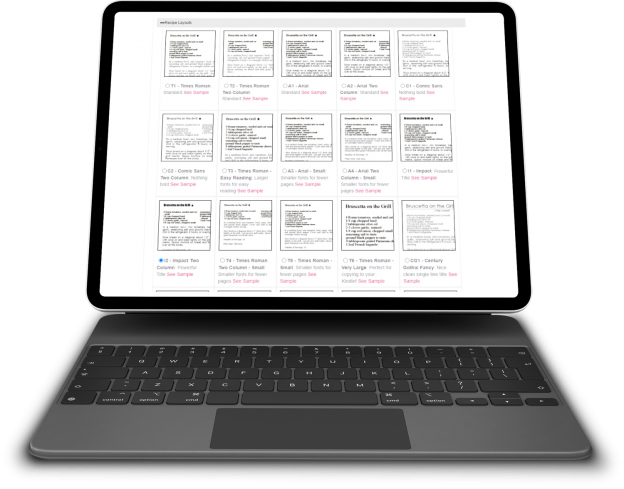
    FamilyCookbookProject.com makes it easy to collaborate with family members, ensuring everyone’s favorite dishes are included. Each contributor can submit recipes online, and once all the recipes are collected, users can choose from a variety of layout and design options to create a cookbook that reflects their family’s personality and style. And the best part? You don’t need to be a graphic designer or tech-savvy to create a professional-looking cookbook. Family Cookbook Project’s easy-to-use platform walks you through the process step by step.

    The Enduring Role of Cookbooks

    Cookbooks have come a long way since their humble beginnings, but their role in our kitchens remains as significant as ever. Whether it’s a worn and loved family heirloom or a new digital recipe box, the act of collecting and sharing recipes is a time-honored tradition that continues to evolve with the times.

    In today’s world, cookbooks represent a beautiful blend of tradition and innovation. While digital searches and online recipe boxes offer convenience and access to an endless number of recipes, there is still a deep appreciation for the tactile, personal nature of printed cookbooks. They tell the stories behind the food we love, preserve memories of meals shared with loved ones, and allow us to pass down culinary traditions to future generations.

    FamilyCookbookProject.com understands this dual need and offers a unique solution that honors both the past and the present. With its easy-to-use platform, you can maintain your recipes in an online recipe box for convenience while also creating a printed cookbook that captures the heart and soul of your family’s culinary history. Whether for yourself or as a gift, a custom cookbook from Family Cookbook Project is a lasting treasure that will continue to inspire and nourish for years to come.


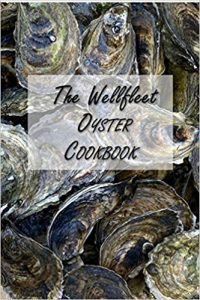
    Bill Rice is Founder and Co-Publisher of the Family Cookbook Project, a website that helps families and individuals collect, preserve and share food memories by creating their own printed personal cookbooks. He is the author of The Wellfleet Oyster Cookbook and the Cape Cod Cocktail Cookbook (Available on Amazon), both created using FamilyCookbookProject.com. He is also editor of the Donovan Family Cookbook, now it’s third printing and is an avid genealogist tracing his family back to the 1600’s.

    Follow Family Cookbook Project on Facebook, Instagram, Twitter TikTok, YouTube and Pinterest!


  • Grandma’s Recipes Preserved – 1,000 and Counting!

    Grandma’s Recipes Preserved – 1,000 and Counting!

    They go by many names – Grandma, Nonna, Oma, Granny, and Gram to name a few.

    Their cooking influenced not only what we ate, but what the entire family enjoyed.

    Our Family Cookbook Editors have preserved some of their grandmother’s recipes so that they can be passed down to future generations and help their memories live on forever.

    Here are over 1,000 recipes From our grandmothers for you to enjoy.


    Be sure to check out  Granny Peatie’s Scottish Shortbread

    This is a recipe found I found in my own Gram Helen’s recipe box from her husband’s grandmother in St Andrews, Scotland back in the late 1800s. I now make it at least several times a year and every time I do, I think of my Great-Great-Granny Euphemia Summers Peatie.


    Bill Rice is Co-Publisher of the Great Family Cookbook Project, a website that helps families and individuals collect, preserve and share food memories by creating their own printed personal cookbooks. He is the author of The Wellfleet Oyster Cookbook (Available on Amazon) and the Cape Cod Cocktail Cookbook, both created using FamilyCookbookProject.com. He is also editor of the Donovan Family Cookbook, now it’s third printing.

    Follow Family Cookbook Project on Facebook, Instagram and Pinterest!

  • How to Motivate Your Family Cookbook Recipe Contributors

    How to Motivate Your Family Cookbook Recipe Contributors

    As with any family project, getting everyone to contribute can be a challenge, especially if they have not seen the end product beforehand.
    Here are some tips to keep your Family Cookbook Project contributors motivated:

    The more the merrier – Be sure to include everyone, not just the great cooks. Everyone likes to be asked to participate and the more you invite, the more recipes you’ll likely get. To add contributors and send an email invitation, > Use the Invitation Tool

    Set a reasonable deadline – Set the submission deadline on the “Project Information Editor” page, but don’t set it too far in the future. We all tend to put off whatever we can and contributing recipes is often one of those things. A month is usually enough time to give everyone to find the recipes they want to contribute and get them entered. Two things to remember: most of the recipes will come in just in time for the deadline and second, you can always extend the deadline if you want more recipes.

    Send regular updates – Use the Reminder Tool to email some or all of your contributors on a regular basis. Remind them of the deadline and ask them to meet a specific goal, like “please add one or two recipes to each category”.

    Target the biggest recipe boxes – Every family has a handful of people who are known for their cooking (you are most likely one of them in your family!). Send a personal message to them either using the remainder tool or reaching out by telephone, Facebook or with a personal visit. People are flattered when their skills are recognized. Let them know the cookbook would not be complete without their contributions.

    Ask for specific recipes – Send a reminder to everyone asking for a specific recipe from your family’s past that will get everyone thinking of past gatherings. Include your memories of that dish or the person who created it. It might help remind everyone why putting together a family cookbook is important.

    Use social media – As you add your own recipes to your family cookbook, it is easy to post them to Facebook or pin them to Pinterest. Sharing your recipes this way shows other family members that you are contributing and shows them they should as well.

    Bill Rice is founder and Co-Publisher of the Great Family Cookbook Project, a website that helps families and individuals collect and share food memories through customized printed cookbooks filled with treasured recipes. Follow us on Facebook and Pinterest!

  • Dying to Get Your Recipe Remembered

    Dying to Get Your Recipe Remembered

    Source: New York Times

    Some people will do anything to make sure their recipes are not forgotten when they pass on.

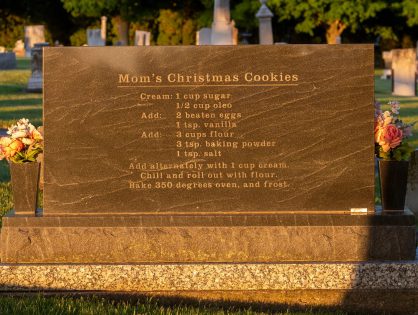
    The New York Times recently posted and article by  that they say you can’t take it with you, but recipes do disappear when loved ones die. Some families have found a novel way to record them for posterity. The article is entitled Family Recipes Etched in Stone. Gravestone, That Is. and highlights several families that have had special recipes carved in stone so they are not forgotten.

    In cemeteries from Alaska to Israel, families have memorialized their loved ones with the deceased’s most cherished recipes carved in stone. These dishes — mostly desserts — give relatives a way to remember the sweet times and, they hope, bring some joy to visitors who discover them among the more traditional monuments.

    Our course, we at Family Cookbook Project, know there is a much easier way to preserve special recipes for future generations and create a lasting tribute to a someone who was a great cook – preserve their recipes in a printed family cookbook that can be shared and cherished.

    FamilyCookbookProject.com is an online publishing platform that makes it easy to create a printed personal cookbook filled with your own photos and recipes. Our program has helped thousands of individuals organize recipes by providing professionally designed covers and recipe layouts, automatically created table of contents and index of recipes for beautiful printed cookbooks.

    Creating a family cookbook is easy and makes a great gift. To find out how easy, create a free personal account at Family Cookbook Project.


    Bill Rice is Co-Publisher of the Great Family Cookbook Project, a website that helps families and individuals collect and share food memories by creating their own printed personal cookbooks. Follow us on Facebook, Instagram and Pinterest!


  • How To Create a Single Topic Cookbook

    How To Create a Single Topic Cookbook

    Do you have a lot of recipes of a specific type? Maybe you love to make cookies or pies or cakes. You can create a “mini cookbook” to organize your recipes and even share with family and friends using FamilyCookbookProject.com.

    With a few as 10 recipes, you can create a single category cookbook or multiple categories within a theme.

    For example, were I live, oysters plentiful and are some of the best in the world. My family eats a lot of oysters each summer and I thought it would be great to create a cookbook with just oyster recipes. It was so well received, it is now available on Amazon!

    You can buy a copy of The Wellfleet Oyster Cookbook by clicking on this link.

    Next, I plan on creating a BBQ mini cookbook and giving it out as gifts for Christmas to my friends and family.

    To create you own mini cookbook, go to the Production Center on your editor page and select “more cookbooks”. Here you can create your own mini cookbook and even import your recipes from your main cookbook using our recipe transfer tool.


    Bill Rice is Co-Publisher of the Family Cookbook Project, a website that helps families and individuals collect, preserve and share food memories by creating their own printed personal cookbooks. He is the author of The Wellfleet Oyster Cookbook (Available on Amazon) and the Cape Cod Cocktail Cookbook, both created using FamilyCookbookProject.com. He is also editor of the Donovan Family Cookbook, now it’s third printing.

    Follow Family Cookbook Project on Facebook, Instagram and Pinterest!

  • Family Cookbook Project has an “Award-winning” Newsletter

    The Family Cookbook Project (www.familycookbookproject.com) has been named the Best Cooking and Recipe Online Newsletter of 2024 by the Web Marketing Association’s 22nd annual Internet Advertising Competition Awards.  The Family Cookbook Project creates personalized cookbooks for individuals, families, church groups and schools.

    Chip Lowell, Co-Publisher of the Family Cookbook Project, stated, “The Great Family Cookbook Project is a website devoted to assisting families in gathering and preserving cherished recipes in a printed cookbook that can be handed down through generations. We are honored that the Web Marketing Association has recognized our communication efforts with this IAC Award. Our monthly newsletter, sent to our cookbook editors, is designed to help them maximize their cookbook creation experience. We will continue to enhance our website and communication programs to support families, schools, and church groups in creating both online and printed cookbooks that will become treasured heirlooms.”

    The Family Cookbook Project Website was started as a project in 2003 to help one family collect and organize a family cookbook. Overwhelming feedback from those who used the website led to its continued development and public launch.  Currently, more than 140,000 families have started family cookbooks using the website and have entered more than 2.6 million individual recipes.

    The newsletter, Food for Thought, is sent to more than 96,000 editors each month and features ideas on creating a better cookbook, program enhancements, featured recipes from other editors, editor testimonials and famous food quotes.

    Thousands of entries from around the world were adjudicated in 90 industry categories during this year’s competition. Entries were judged on creativity, innovation, impact, design, copy writing, memorability and use of the medium. The competition was judged by a team of independent Internet professionals representing a variety of relevant disciplines of Web site development. Judges included members of the media, advertising executives, site designers, creative directors, corporate marketing executives, content providers and webmasters.

    This  is the forth year in a row that Family Cookbook Project’s newsletter has been recognized by the Web Marketing Association as Best Cooking and Recipe Online Newsletter.

  • Anatomy of a Great Recipe

    Anatomy of a Great Recipe

    One of the keys to a great family cookbook is to have great recipes that your family and friends have come to love. Here are some simple tips to help you capture the magic of the food you make.

    1. Use catchy titles. Using a catchy title will make your recipe sound more interesting. It is more interesting to people when they see the title “Gooey Triple Chocolate Cake” rather than just “Chocolate Cake”. When you are writing a title for a recipe, try to think of not only what the final dish will be, but what makes it special as well.

    2. Include photos. Using images in your recipes can allow the person reading your cookbook to see what the final dish will look like and give then a guidepost to follow. Next time you make one of your special dishes, snap a quick photo and add it to your recipe the next time you log in.

    3. Be specific with your Ingredients. For many cooks, include a can of crushed tomatoes in your recipe and they know exactly what you mean or maybe not. Tell them to include a 12oz can of crushed tomatoes and everyone will know exactly what your recipe needs.

    4. Use step by step instructions. You might have made this recipe a thousand times, but someone new will need detailed directions for how to do it. Remember to include pan sizes, cooking times, the order that ingredients are added and how to tell when a dish is done. Also adding how many servings a recipe can make will help with meal planning.

    5. Add personal notes. One of the things that make a family cooks so important is that it helps to capture the family traditions. Include a note with each recipe about how you first were introduced to the recipe and when it is typically served in your household. It makes the recipe more interesting and more meaningful to later generations.


    Chip Lowell is Co-Publisher of the Great Family Cookbook Project, a website that helps families and individuals collect and share food memories. Follow Family Cookbook Project on Facebook, Instagram and Pinterest!

  • How To Create A Multi-Part Recipe

    How To Create A Multi-Part Recipe

    Have you ever had a cake recipe that really needed a specific frosting? Or a meat recipe that required a special sauce? Wouldn’t it be great if a a recipe could have sub recipes attached to keep them together?

    Many of our FamilyCookbookProject.com editors have asked for the ability to have multiple sections or steps in recipes. We like to listen and have added it! Now you can have up to 5 “sub” recipes or steps within a recipe, each with its own set of ingredients and directions. Example? You have Carrot Cake and you want a section for the “Cake” with its ingredients and directions, then “Cream Cheese Frosting” with another set of ingredients and directions.

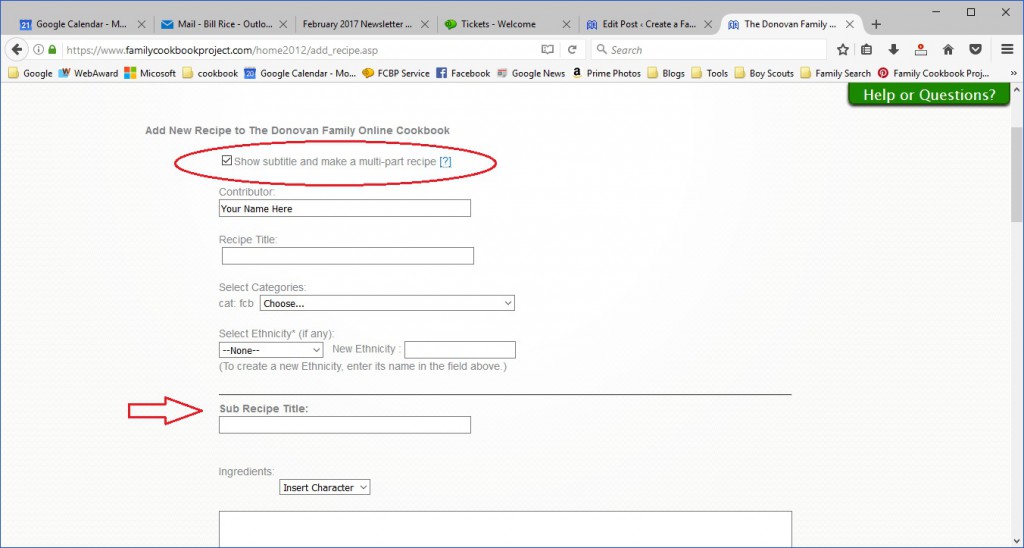
    To use this feature, simply go to Add Recipe or Edit an existing recipe. First check the box for “Show subtitle and make a multi-part recipe” right under the contributor field. This will add a field for sub-recipe title.

    Using our example above, here is where you would add your carrot cake ingredients and directions.

    Next, click on the green button to “Add new sub recipe”. This will add fields for a second set of sub recipe title, ingredients and directions for your Cream Cheese Frosting.

    You can add up to five sub recipes for your overall recipe.

    When you are done, make sure to click on the green button on the bottom of the page to save your recipe before moving on to your next recipe.


    Bill Rice is Co-Publisher of the Great Family Cookbook Project, a website that helps families and individuals collect, preserve and share food memories by creating their own printed personal cookbooks. He is the author of The Wellfleet Oyster Cookbook (Available on Amazon) and the Cape Cod Cocktail Cookbook, both created using FamilyCookbookProject.com. He is also editor of the Donovan Family Cookbook, now it’s third printing.

    Follow Family Cookbook Project on Facebook, Instagram and Pinterest!