Category: Recipes

  • How to Write A Great Recipe Title

    How to Write A Great Recipe Title

    Your recipe title is the single most important element of your recipe. This is because your title is a headline, and the headline in any type of content has one special and powerful property.

    Think about how you read a cookbook looking for a recipe to try.  You don’t start in the front and read every page like a novel then pick the one you want. No, you scan the pages looking for a photo or recipe title that catches your eye and looks interesting!

    Of all the elements in your recipe, the title has the greatest power for grabbing your readers’ attention and the greatest responsibility for enticing them to continue and read your recipe It follows that the better your title, the higher the chance of turning a recipe scanner into a recipe reader (and ultimately a recipe user).

    For a recipe title to be effective it needs to consider several things:

    Grab Attention – Like any headline you need to grab the readers attention.

    Describe the food being prepared – “Gruel” is one of my son’s favorite dishes, however it no one outside the family knows what it is. Including the main ingredient of the dish and even how it us prepared make the title more useful. “Baked Hamburger Gravy” would be a more descriptive title for our gruel.

    Be different and unique – If you have seen the recipe title before, it does not belong on your recipe!
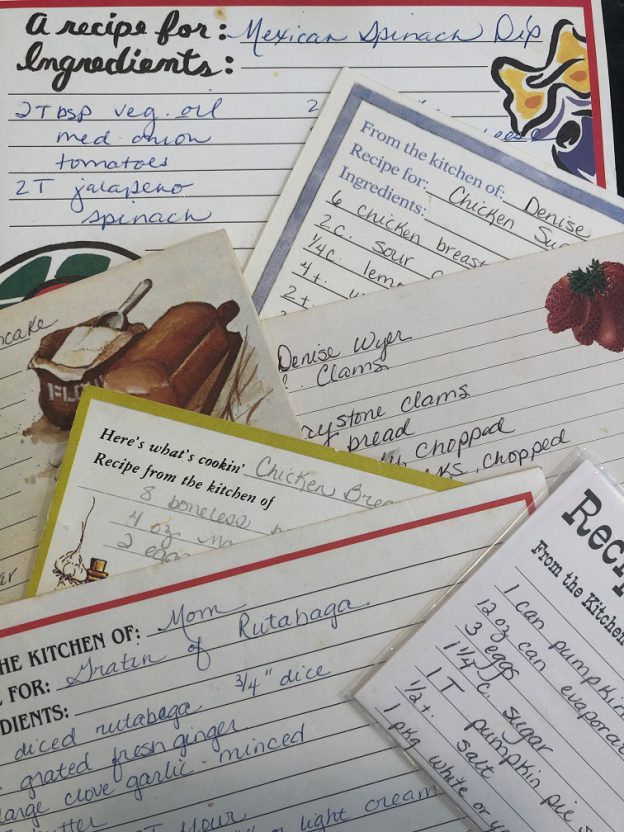
    Include the source – In family cookbooks, certain people are associated with certain recipes. Grandma’s Apple Pie or Lou’s Lemon Bars help the reader image exactly what dish you are referring to. It just does not help anyone who is not at family gatherings!

    Sell the sizzle as well as the steak – This means to highlight the benefit, the reason why this recipe is worth making.

    Recipe titles that address cooking and eating needs are more likely to seduce the reader into the recipe itself. A good title clearly shows the reader which of their cooking and eating needs the recipe addresses. Every readers’ need is different. For example, it could be for something indulgent or something low fat, or something quick and easy or something sophisticated and thus involved, or something refined or something rustic.

    Consider the following recipe titles: ‘Soft and Chewy Chocolate Chip Cookies’, ‘Quick ‘n’ Easy Chocolate Chip Cookies’, ‘Grandma’s Favorite Chocolate Chip Cookies’, ‘Gluten Free Chocolate Chip Cookies’. Notice how each title addresses a different need and even appeals to different audiences. Quite simply, as the chocolate chip cookie examples show, it’s all down to the words you choose for your title.

    With a little thought and imagination, your recipe titles can stand out and make your readers give your recipes the attention they deserve.


    Bill Rice is Co-Publisher of the Family Cookbook Project, a website that helps families and individuals collect, preserve and share food memories by creating their own printed personal cookbooks. He is the author of The Wellfleet Oyster Cookbook (Available on Amazon) and the Cape Cod Cocktail Cookbook, both created using FamilyCookbookProject.com. He is also editor of the Donovan Family Cookbook, now it’s third printing and is an avid genealogist tracing his family back to the 1600’s.

    Follow Family Cookbook Project on Facebook, Instagram, Twitter and Pinterest!
  • How To Write A Great Recipe

    How To Write A Great Recipe

    Whether you are writing down a family favorite, starting a food blog, or entering a recipe contest, learning how to properly write a recipe is a valuable skill any food lover can use.

    Here are a few standards and general rules of thumb we at FamilyCookbookProject.com suggests when it comes to writing a recipe.  It is important to accurately communicate the ingredients and process, so your recipe can be recreated by others.

    Before the ingredients, comes the title, number of servings and serving size if appropriate. Then the ingredient list and the preparation directions. The final area allows you to provide helpful comments on your recipe.

    Recipe Title:

    • This is the  name of your recipe using words that accurately describe the dish.  Feel free to have a little fun and make it catchy!  You want people to keep reading and be inspired to make the recipe themselves. See our post How to Write A Great Recipe Title to learn more about recipe titles.

    The Ingredient List:

    • List all ingredients in order of use, as described in step-by-step instructions.
      List the most important ingredients first, if it can be consistent with order of use.
    • Spell out everything: tablespoons, ounces, etc. or use commonly accepted abbreviations which can be inserted from the drop down menu on the “Add a recipe” page.
    • If the recipe has different parts (for example, a pie has a crust and a filling), break up the ingredient list with headings such as “Crust” and “Filling” using the multi-part recipe option on your “Add a recipe” page.
    • When several ingredients are used at the same time (in the case of baking, often all the dry ingredients are sifted or mixed together at once), list them in descending order according to volume. If there is an issue over preparation, list in order, so for example if you need the zest and juice of a lemon, list the zest first and then the juice since that is the order you will do the preparation.
    • Do not use two numbers together. You need to set off the second number in parenthesis. This comes up with sizes of packages. For example, “1 (8-ounce) package cream cheese.”
    • If an ingredient begins with a letter instead of a number, freshly ground black pepper, for example, capitalize the first letter, as in “Freshly ground black pepper.”
    • If the preparation of an ingredient is simple, place that technique in the ingredient list, as in “2 eggs, beaten” or “1 stick butter, softened.”
    • If an ingredient is used more than once in a recipe, list the total amount at the place in the ingredient list where it is first used, then add “divided.” In the method part of the recipe, indicated the amount used at each step. For example “1 cup all-purpose flour, divided” then in the method “Sift 3/4 cup of the flour with the…” and later “Sprinkle the remaining 1/4 cup of flour on top of…”
    • Use generic names of ingredients (semi-sweet chocolate chips, not “Tollhouse chips”.

    Directions

    • Where helpful, indicate the size of bowls and cookware. For example, “In a large mixing bowl….”
    • You do not have to write complete sentences. Be as short and concise as possible.
    • With instructions for the stove-top, indicate level of heat. For example, “Simmer over low heat.”
    • State exact or approximate cooking times, with descriptive hints for doneness, if appropriate. For example, “Sear 1 minute on each side,” and “Bake 18-22 minutes, or until crust is light golden brown.”
    • As in the ingredient list, if there are different elements to the recipe, as with the crust and filling of a pie, separate out each element in the method. Begin with the crust and write a header “For the Crust” and give the method. Then do “For the Filling” and give filling instructions. This is done automatically using the multi-part recipe option at FamilyCookbookProject.com.
    • Separate each step into a different paragraph. If you are mixing dry ingredients in a bowl, for example, use one paragraph for all the instructions for that step.
    • Finish with serving instructions including how to plate, what temperature to serve, how to garnish.
    • The last instruction can be regarding storage, if applicable. For a cookie recipe, for example, “Cookies will keep at room temperature in an airtight container for 3-4 days.”

    Comments

    • Use this area to communicate anything additional information someone would need to know to recreate your recipe at home.
    • You can also offer ideas for alternate ingredients, tips, or serving suggestions.
    • You also can use this area to tell a story about this recipe and the meal that is was introduced to the family.
    • Source your recipes in the comments field. If you got your inspiration from a magazine or cookbook, or lift a recipe from a blog or website, you should give them credit.  This goes for recipe photos as well.  Never use images without the owners consent.
    • Especially if you are posting your recipe online, it is important to include the name, source and webpage of the original recipe. State if the recipe is “Adapted from”: Which means you made minor changes to ingredients and/or preparation technique. or “Inspired from”: Which means you used the stated recipe as a guide or inspiration for your own recipe which may include some of the same ingredients and techniques.
    • Food bloggers:  If you are sharing a recipe from your own blog, this field is a great place to put in a link back to your site!

    Time and Servings:

    • Preparation time includes all the measuring, chopping and other preparation of ingredients.
    • Cooking time refers to the total time the food takes to cook, including any preliminary cooking needed.
    • Remember, these times are just a guide for the reader.  Try to be generous with the timing, someone making the recipe for the first time will take longer that you who has experience making it.
    • Also, include the number of servings based on reasonable portions.

    Pictures/Videos:

    • Try to include a photo of the finished product. There is nothing better for people to see the food they are about to prepare that what it will look like when complete.
    • A popular trend today is to create videos of yourself making the recipe. Remember to pause the camera or to cut extra footage so the final video is not too long to watch.


    Bill Rice is Founder and Co-Publisher of the Family Cookbook Project, the leading online cookbook publisher with a website that helps families and individuals collect, preserve and share food memories by creating their own printed custom cookbooks. He is the author of The Wellfleet Oyster Cookbook and the Cape Cod Cocktail Cookbook (Available on Amazon), both created using FamilyCookbookProject.com. He is also editor of the Donovan Family Cookbook, now it’s third printing and is an avid genealogist tracing his family back to the 1600’s.

    Follow Family Cookbook Project on Facebook, Instagram, Twitter TikTok, YouTube and Pinterest!

  • Grandma’s Recipes Preserved – 1,000 and Counting!

    Grandma’s Recipes Preserved – 1,000 and Counting!

    They go by many names – Grandma, Nonna, Oma, Granny, and Gram to name a few.

    Their cooking influenced not only what we ate, but what the entire family enjoyed.

    Our Family Cookbook Editors have preserved some of their grandmother’s recipes so that they can be passed down to future generations and help their memories live on forever.

    Here are over 1,000 recipes From our grandmothers for you to enjoy.


    Be sure to check out  Granny Peatie’s Scottish Shortbread

    This is a recipe found I found in my own Gram Helen’s recipe box from her husband’s grandmother in St Andrews, Scotland back in the late 1800s. I now make it at least several times a year and every time I do, I think of my Great-Great-Granny Euphemia Summers Peatie.


    Bill Rice is Co-Publisher of the Great Family Cookbook Project, a website that helps families and individuals collect, preserve and share food memories by creating their own printed personal cookbooks. He is the author of The Wellfleet Oyster Cookbook (Available on Amazon) and the Cape Cod Cocktail Cookbook, both created using FamilyCookbookProject.com. He is also editor of the Donovan Family Cookbook, now it’s third printing.

    Follow Family Cookbook Project on Facebook, Instagram and Pinterest!

  • Anatomy of a Great Recipe

    Anatomy of a Great Recipe

    One of the keys to a great family cookbook is to have great recipes that your family and friends have come to love. Here are some simple tips to help you capture the magic of the food you make.

    1. Use catchy titles. Using a catchy title will make your recipe sound more interesting. It is more interesting to people when they see the title “Gooey Triple Chocolate Cake” rather than just “Chocolate Cake”. When you are writing a title for a recipe, try to think of not only what the final dish will be, but what makes it special as well.

    2. Include photos. Using images in your recipes can allow the person reading your cookbook to see what the final dish will look like and give then a guidepost to follow. Next time you make one of your special dishes, snap a quick photo and add it to your recipe the next time you log in.

    3. Be specific with your Ingredients. For many cooks, include a can of crushed tomatoes in your recipe and they know exactly what you mean or maybe not. Tell them to include a 12oz can of crushed tomatoes and everyone will know exactly what your recipe needs.

    4. Use step by step instructions. You might have made this recipe a thousand times, but someone new will need detailed directions for how to do it. Remember to include pan sizes, cooking times, the order that ingredients are added and how to tell when a dish is done. Also adding how many servings a recipe can make will help with meal planning.

    5. Add personal notes. One of the things that make a family cooks so important is that it helps to capture the family traditions. Include a note with each recipe about how you first were introduced to the recipe and when it is typically served in your household. It makes the recipe more interesting and more meaningful to later generations.


    Chip Lowell is Co-Publisher of the Great Family Cookbook Project, a website that helps families and individuals collect and share food memories. Follow Family Cookbook Project on Facebook, Instagram and Pinterest!

  • Favorite Recipes From Grandma Preserved

    Favorite Recipes From Grandma Preserved

    They go by many names – Grandma, Nonna, Oma, Granny, and Gram to name a few.

    Their cooking influenced not only what we ate, but what the entire family enjoyed.

    Our Family Cookbook Editors have preserved some of their grandmother’s recipes so that they can be passed down to future generations and help their memories live on forever.

    Here are over 1,000 recipes From our grandmothers for you to enjoy.


    Be sure to check out  Granny Peatie’s Scottish Shortbread

    This is a recipe found I found in my own Gram Helen’s recipe box from her husband’s grandmother in St Andrews, Scotland back in the late 1800s. I now make it at least several times a year and every time I do, I think of my Great-Great-Granny Euphemia Summers Peatie.


    Bill Rice is Co-Publisher of the Great Family Cookbook Project, a website that helps families and individuals collect, preserve and share food memories by creating their own printed personal cookbooks. He is the author of The Wellfleet Oyster Cookbook (Available on Amazon) and the Cape Cod Cocktail Cookbook, both created using FamilyCookbookProject.com. He is also editor of the Donovan Family Cookbook, now it’s third printing.

    Follow Family Cookbook Project on Facebook, Instagram and Pinterest!

  • Favorite Recipes From Grandma Preserved

    Favorite Recipes From Grandma Preserved

    They go by many names – Grandma, Nonna, Oma, Granny, and Gram to name a few.

    Their cooking influenced not only what we ate, but what the entire family enjoyed.

    Our Family Cookbook Editors have preserved some of their grandmother’s recipes so that they can be passed down to future generations and help their memories live on forever.

    Here are over 1,000 recipes From our grandmothers for you to enjoy.


    Be sure to check out  Granny Peatie’s Scottish Shortbread

    This is a recipe I found in my own Gram Helen’s recipe box from her husband’s grandmother in St Andrews, Scotland back in the late 1800s. I now make it at least several times a year and every time I do, I think of my Great-Great-Granny Euphemia Summers Peatie.


    Bill Rice is Founder and Co-Publisher of the Great Family Cookbook Project, a website that helps families and individuals collect, preserve and share food memories by creating their own printed personal cookbooks. He is the author of The Wellfleet Oyster Cookbook and the Cape Cod Cocktail Cookbook (Available on Amazon), both created using FamilyCookbookProject.com. He is also editor of the Donovan Family Cookbook, now it’s third printing and is an avid genealogist tracing his family back to the 1600’s.

    Follow Family Cookbook Project on Facebook, Instagram, Twitter and Pinterest!
  • Anatomy of a Great Recipe

    Anatomy of a Great Recipe

    One of the keys to a great family cookbook is to have great recipes that your family and friends have come to love. Here are some simple tips to help you capture the magic of the food you make.

    1. Use catchy titles. Using a catchy title will make your recipe sound more interesting. It is more interesting to people when they see the title “Gooey Triple Chocolate Cake” rather than just “Chocolate Cake”. When you are writing a title for a recipe, try to think of not only what the final dish will be, but what makes it special as well.

    2. Include photos. Using images in your recipes can allow the person reading your cookbook to see what the final dish will look like and give them a guidepost to follow. Next time you make one of your special dishes, snap a quick photo and add it to your recipe the next time you log in.

    3. Be specific with your Ingredients. For many cooks, include a can of crushed tomatoes in your recipe and they know exactly what you mean or maybe not. Tell them to include a 12oz can of crushed tomatoes and everyone will know exactly what your recipe needs.

    4. Use step by step instructions. You might have made this recipe a thousand times, but someone new will need detailed directions for how to do it. Remember to include pan sizes, cooking times, the order that ingredients are added and how to tell when a dish is done. Also adding how many servings a recipe can make will help with meal planning.

    5. Add personal notes. One of the things that make a family cook so important is that it helps to capture the family traditions. Include a note with each recipe about how you first were introduced to the recipe and when it is typically served in your household. It makes the recipe more interesting and more meaningful to later generations.


    Chip Lowell is Co-Publisher of the Great Family Cookbook Project, a website that helps families and individuals collect and share food memories. Follow Family Cookbook Project on Facebook, Instagram and Pinterest!

  • Grandma’s Recipes Preserved – 1,000 and Counting!

    Grandma’s Recipes Preserved – 1,000 and Counting!

    They go by many names – Grandma, Nonna, Oma, Granny, and Gram to name a few.

    Their cooking influenced not only what we ate, but what the entire family enjoyed.

    Our Family Cookbook Editors have preserved some of their grandmother’s recipes so that they can be passed down to future generations and help their memories live on forever.

    Here are over 1,000 recipes From our grandmothers for you to enjoy.


    Be sure to check out  Granny Peatie’s Scottish Shortbread

    This is a recipe I found in my own Gram Helen’s recipe box from her husband’s grandmother in St Andrews, Scotland back in the late 1800s. I now make it at least several times a year and every time I do, I think of my Great-Great-Granny Euphemia Summers Peatie.


    Bill Rice is Founder and Co-Publisher of the Great Family Cookbook Project, a website that helps families and individuals collect, preserve and share food memories by creating their own printed personal cookbooks. He is the author of The Wellfleet Oyster Cookbook and the Cape Cod Cocktail Cookbook (Available on Amazon), both created using FamilyCookbookProject.com. He is also editor of the Donovan Family Cookbook, now it’s third printing and is an avid genealogist tracing his family back to the 1600’s.

    Follow Family Cookbook Project on Facebook, Instagram, Twitter and Pinterest!

  • 600 Cookie Recipes

    600 Cookie Recipes

    So we thought, wouldn’t be cool to pick a category and show all  the recipes titles with links to the recipes.

    so we did. The first one was Pies, then BBQ, then Candy

    Here are 600 great cookie recipes for the holidays!


    Bill Rice is know for making his great  great grandmother’s Scottish Shortbread and is founder and Co-Publisher of the Great Family Cookbook Project, a website that helps families and individuals collect and share food memories through customized printed cookbooks filled with treasured recipes. Follow us on Facebook and Pinterest!

  • 600 Candy Recipes

    600 Candy Recipes

    So we thought, wouldn’t be cool to pick a category and show all  the recipes titles with links to the recipes.

    so we did. The first one was Pies, then BBQ.

    Here are 600 Candy recipes for your family to enjoy!


    Bill Rice does not have a real sweet tooth but is know to partake and is founder and Co-Publisher of the Great Family Cookbook Project, a website that helps families and individuals collect and share food memories through customized printed cookbooks filled with treasured recipes. Follow us on Facebook and Pinterest!