Category: Cooking Tips

  • Anatomy of a Great Recipe

    Anatomy of a Great Recipe

    One of the keys to a great family cookbook is to have great recipes that your family and friends have come to love. Here are some simple tips to help you capture the magic of the food you make.

    1. Use catchy titles. Using a catchy title will make your recipe sound more interesting. It is more interesting to people when they see the title “Gooey Triple Chocolate Cake” rather than just “Chocolate Cake”. When you are writing a title for a recipe, try to think of not only what the final dish will be, but what makes it special as well. 

    2. Include photos. Using images in your recipes can allow the person reading your cookbook to see what the final dish will look like and give then a guidepost to follow. Next time you make one of your special dishes, snap a quick photo and add it to your recipe the next time you log in.

    3. Be specific with your Ingredients. For many cooks, include a can of crushed tomatoes in your recipe and they know exactly what you mean or maybe not. Tell them to include a 12oz can of crushed tomatoes and everyone will know exactly what your recipe needs.

    4. Use step by step instructions. You might have made this recipe a thousand times, but someone new will need detailed directions for how to do it. Remember to include pan sizes, cooking times, the order that ingredients are added and how to tell when a dish is done. Also adding how many servings a recipe can make will help with meal planning. 

    5. Add personal notes. One of the things that make a family cooks so important is that it helps to capture the family traditions. Include a note with each recipe about how you first were introduced to the recipe and when it is typically served in your household. It makes the recipe more interesting and more meaningful to later generations.


    Chip Lowell is Co-Publisher of the Great Family Cookbook Project, a website that helps families and individuals collect and share food memories. Follow us on Facebook and Pinterest!

  • Family Cookbook Project Introduces Three New Cookbook Cover Template Options

    Family Cookbook Project Introduces Three New Cookbook Cover Template Options

    Farm to Table

    The Great Family Cookbook Project is please to announce that three new cookbook covers have been added to the options available for  editors to select when they create their own personalized family cookbooks.These covers are now available for cookbook editors using FamilyCookbookProject.com to create personalized cookbooks for their personal or family recipes. These cookbook covers will also be available to for editors creating fundraising cookbooks on CookbookFundraiser.com

    Holiday Baking

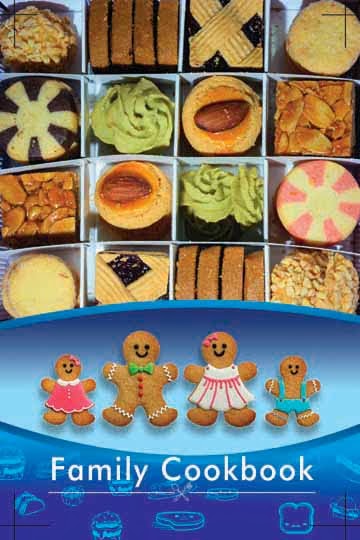
    These new cookbook covers, Farm to Table, Holiday Baking and Gingerbread Family join 21 other cookbook cover options that make it easy to create a personalized cookbook. The covers feature professionally designed graphics and text that can be personalized with actual title of the cookbook.

    Gingerbread Family

    Additional new cookbook cover options are in the works and will be released in the coming months.

  • Two Great Magazine Offers from Family Cookbook Project

    Two Great Magazine Offers from Family Cookbook Project


    At Family Cookbook Project,we are always looking for ways  to save you time and money in the kitchen. Here are two special offers that you might like.
    We were able to secure a great deal on a wonderful cooking magazine for our editors.  You can get a full year of CookingLight Magazine for only $5! This I the lowest price on the web! This offer is available for a limited time at MagazineOutlet.com. Click the link and enter the code CKJUST5 to receive your special price.
    This is another magazine we love and you can get 12 issues of Bon Appetit for only $12. Save 80% for the entire year! Subscribe Now.

  • Lowering the cost of printing your cookbook

    When it comes to printing your family cookbook, page count is the largest determining factor on what the cost per book will be.

    To lower the number of pages that need to be printed, you don’t always have to just delete recipes. Here are some simple formatting charges you can make to affect your page count.

    Go to Editor Tools>Publishing Tool>Cookbook Options and Design.  Under Recipe Layout, choose any or all of these options to save space:

    • Choose Arial or Times Roman, Two Column Small for the smallest type faces
    • UNcheck Print my recipes in non-continued format
    • UNcheck Force recipe photos to be on same page as recipe
    • CHECK Print Directions and Comments as single paragraphs
    • Under Recipe Sorting, choose Print my recipes in book order – shortest to longest

    Another thing to do is look at your recipes that are more than one page long. We show you multi page recipes in the “recipes by category” index. There is a “*” next to the edit button of long recipes. Consider removing some of these recipes by unchecking the box by the recipe title and see the impact on page count.


    Bill Rice is Co-Publisher of the Great Family Cookbook Project, a website that helps families and individuals collect and share food memories. Follow us on Facebook and Pinterest!

  • Copy-writing and proper usage of recipes

    Copy-writing and proper usage of recipes

    One issue that comes up regularly for family cookbook project editors is the topic of copy-writing recipes and proper usage. While we at the FamilyCookbookProject.com are not lawyers and do not give legal advice, our research shows that recipes cannot generally be copyrighted. 

    At the same time, it does not make it right to simply take credit for other people’s work. One way to avoid this is to give credit where credit is due. If your contributor submits a recipe that they originally found in a magazine or cookbook, it is appropriate to list the source in the notes section of the recipe.

    A few articles of interest in this topic

    Copyright Office flyer on recipes
    http://www.copyright.gov/fls/fl122.pdf

    Copyrighting Recipes
    http://smallbusiness.findlaw.com/copyright/copyright-realworld/recipe-copyrighting.html

    Questions & Answers – Copyrighting Recipes
    http://whatscookingamerica.net/Q-A/CookbookAdvice.htm

    Bill Rice is Co-Publisher of the Great Family Cookbook Project, a website that helps families and individuals collect and share food memories. Follow us on Facebook and Pinterest!

  • Freezing Cookie Dough


    The best cookie recipes can be frozen and used as needed

    In our house, there is nothing like a warm, soft cookie right out of the oven. However since it is not practical to make dough for only a few cookies at a time, the next best thing is to freeze your cookie dough and pull out enough cookies for your immediate needs.

    Freezing cookies also provides time saving opportunities when you want to get ready for a holiday cookie swap in October or getting ready for a school bake sale anytime.

    How you best freeze cookies depends on what type of cookie you are making. The FamilyCookbook Project had collected thousands of cookie recipes if you need a suggestion.

    Cookies like chocolate chip and oatmeal-raisin freeze best if you make the actual cookie beforehand. Scoop out the dough just as if you were about to bake it and place it on a baking sheet lined with parchment or a Silpat (they can be close, but not touching). Instead of putting it into the oven, but them into the freezer for atleast 6 hours instead. Once frozen, the dough balls get sealed inside a plastic freezer bag and when it is time to bake, you are ready to go.

    Cookies like shortbread or sandies, or any smooth slice-and-bake cookies can be pressed into logs, wrapped in wax paper and frozen solid. Prepare the dough as usual, then shape it into one or two logs that can be covered with wax paper and placed in a plastic freezer bag. When you’re ready to bake, let them warm on the counter for 10 to 15 minutes before slicing. You might also want to let the logs thaw in the fridge for a few hours before you’re ready to use the dough. Slice the cookies into thick disks and you’re ready to put them in the oven as usual.

    The third type of cookies that can be frozen are cut-out cookies, like sugar cookies and many holiday cookies. The dough for these cookies can be frozen in disks and then stacked together with wax paper between them. When ready to bake, thaw until bendable and continue with the recipe.

    Most frozen cookies will need an extra minute or two in the oven. Otherwise, prepping and baking the cookies is exactly the same as in the recipe.

    Bill Rice is Co-Publisher of the Great Family Cookbook Project, a website that helps families and individuals collect and share food memories. Follow us on Facebook and Pinterest!

  • Valentine’s Day is for Recipe Lovers!

    Valentine’s Day is for Recipe Lovers!


    While the end of year holidays are a great time to give out your cookbooks, there are lots of fun events coming up that make for perfect gift giving.   Whether you’re creating a cookbook with our cookbook and recipe organizing software at FamilyCookbookProject.com or a fund raising project at CookbookFundraiser.com we make it easy and fun!

    Valentine’s Day is in a couple weeks. How about giving your family some food love! You’ll need to order in the next day or two to ensure delivery.

    Mother’s Day is coming quickly – May 12th – and it also is one of the best times to have your family cookbook published. Family cookbooks make a great Mother’s Day gift both for the mothers in our lives and even from a mother to her children.

    Wedding season is coming, too! How about a family & friends cookbook for a shower or bridal party gift?


    Editor Ideas – how to improve your recipes

    One of the keys to a great family cookbook is to have great recipes that your family and friends have come to love. Here are some simple tips to help you capture the magic of the food you make.

    1. Use catchy titles. Using a catchy title will make your recipe sound more interesting. It is more interesting to people when they see the title “Gooey Triple Chocolate Cake” rather than just “Chocolate Cake”. When you are writing a title for a recipe, try to think of not only what the final dish will be, but what makes it special as well.


    2. Include photos. Using images in your recipes can allow the person reading your cookbook to see what the final dish will look like and give then a guidepost to follow. Next time you make one of your special dishes, snap a quick photo and add it to your recipe the next time you log in.

    3. Be specific with your Ingredients. For many cooks, include a can of crushed tomatoes in your recipe and they know exactly what you mean or maybe not. Tell them to include a 12oz can of crushed tomatoes and everyone will know exactly what your recipe needs.

    4. Use step by step instructions. You might have made this recipe a thousand times, but someone new will need detailed directions for how to do it. Remember to include pan sizes, cooking times, the order that ingredients are added and how to tell when a dish is done. Also adding how many servings a recipe can make will help with meal planning.

    5. Add personal notes. One of the things that make a family cooks so important is that it helps to capture the family traditions. Include a note with each recipe about how you first were introduced to the recipe and when it is typically served in your household. It makes the recipe more interesting and more meaningful to later generations.


    Featured recipe from the database

    The Great Family Cookbook Project has a huge amount of public recipes in the system thanks to you! If you need a fun recipe idea that’s not in your own cookbook, go to our home page and use the search function to see what’s available – lots of good eats!

    Here is a recipe we tried recently:

    Valentine Truffles

    This recipe for Valentine Truffles, by Susan Aitken, is from The Aitken Family Cookbook Project. Search for more great recipes here from over 500,000 in our family cookbooks!


    Ingredients:

    1 1/2 lb semisweet chocolate
    3 lbs unsalted butter
    1 1/2 c. heavy ream
    3 tbsp. coffee liquor or vanilla
    dark chocolate and/ or rolling powders as needed


    Directions:

    Cut the semisweet chocolate and butter into the smallest pieces you can manage. Place them in a large stainless-steel bowl. In a small saucepan, bring cream to boil, stirring to avoid burning. Remove from heat and pour over chocolate and butter. Stir until they melt. If they do not quite melt, place 1 inch of water in a frying pan, bring to a boil turn burner off, and place the chocolate bowl in the pan, being careful not to wet the chocolate. Stir until melted. When chocolate is melted whisk in the vanilla. Pour chocolate mixture into a shallow pan, and chill until firm enough to shape. Using hands and a spoon or a melon baller; shape chocolate into small balls. This process may get messy and chocolate tends to melt. Sprinkle hands with cocoa powder or confectioner’s sugar to minimize mess. when balls are shaped, roll some in cocoa powder or in a sifted mixture of instant coffee and confectioner’s sugar and set aside. Pace remaining balls on a butter surface in the freezer to firm for dipping. When balls have firmed, prepare dark chocolate by melting a small amount in the microwave or a double boiler. Dip each ball in chocolate. To be extra festive, melt a bit of white chocolate as well and decorate the tops of the coated truffles.


    Number Of Servings:

    60 truffles


    Chip Lowell is Co-Publisher of the Great Family Cookbook Project, a website that helps families and individuals collect and share food memories. Follow us on Facebook and Pinterest!

  • 5 things in your kitchen – that plan to destroy your kitchen!

    Here’s a fun guest post about your kitchen items that you haven’t considered!  Fun read!  Remember to add your great holiday recipes into your recipe box and cookbook at Family Cookbook Project!

    The Fridge…
    (Image Source| Credit)

    What you expect from a fridge:

     – for it to keep your food cold, or else there’s little difference between it and a table.

     – to keep your food fresh, because that’s what fridges do. Are supposed to.

    –  for there to be a nightlight, please, thank you. Very important for munchies in the middle of the night, no?


    Your fridge’s evil plan!

     – to leave an iceberg of Titanic proportions in your freezer compartment, such that it’ll take days, (nay, years), to defrost.  “Frost free? What’s that?”, your fridge chuckles.

    – to make like the sun and thaw your food when you explicitly asked it NOT to (and it explicitly agreed)

    – to hide your food in places you never knew existed (labyrinth, anyone?) until you start to smell something verrrrrry wrong each time you open the fridge door.

    How to prevent your fridge’s disobedience:

     – every night, read poetry to itDefrost and declutter it on a regular basis so it feels loved and cared for and feels less of a need to rebel in order to be noticed.

    – Make a note of its insurance and warranty and stick both dates on the fridge door to ensure they’re both always up to date.

    – Every week or so, have a rummage through to ensure nothing should be in the bin rather than the fridge.

    2) The Oven…
    (Image Source| Credit)


    What you expect from an oven: 

    – heat up fairly quickly and not think it’s your fridge

    – warm your food thoroughly. Cooked through. Piping hot. Steam curling out seductively from your dinner when you cut into it, like it’s in an advert.

    – not burn your food

    Your oven’s evil plan:

    – to take AGES warming up, to the extent that you start considering perhaps the food’ll warm up quicker if you breathed on it yourself

    – to cook your food deceptively. Piping hot on the outside. Cold on the inside.

     – burn your food whatever temperature you set it at, because once your oven makes up its mind, it makes up its mind.

    How to prevent your oven’s disobedience:

    – test your oven’s sensor on a regular basis (you’ll need an Ohm meter). It should be at a healthy 1050-1100 Ohms at a room temperature of 15-27 C. (p.s.: disconnect from mains before testing)

    – keep insurance/warranty up to date. Ovens have an uncanny way of misbehaving the minute these expire.

    – If you have a non-electrical oven, check your pilot light often to make sure there isn’t anything covering its port (bits of food, residue from what you used to clean the oven). You can clean the port with the aid of a small wire.

    3) The Sink…
    (Image Source | Credit)


    What you expect from a sink:

    – for it to like water

    – for it to express how much it likes water by letting it pass through effortlessly

    – for it not to leak


    Your sink’s evil plan:

    – to develop an allergy to water

    – to be extremely receptive to food

    – to leak at the most inconvenient of times as it’s psychically attuned to your diary.


    How to prevent your sink’s disobedience:

    – leave it to have an overnight heart-to-heart chat with some liquid drain unblocker (or vinegar and bicarbonate of soda).

    – put it on a strict water diet by buying a sink strainer

    – have a second diary as a decoy


    4) The Washing Machine…
    (Image Source| Credit)


    What you expect from a washing machine:

    – for it to actually wash

    – to stick to the cycle you set it at, because it likes and respects you

    – to be noisy but courteously so

    – to physically stick to one spot

    Your washing machine’s evil plan:

    – for your clothes to come out dirtier than when you put them in the wash

    – to wash twice as long as you initially set it, sometimes longer, depending on whether it’s a full moon or not

    – to make as much noise as possible…and move around just as much (“Hello. Only me. Just passing through”, it says as it rattles past you towards the hallway).

    – to collaborate with your sink to give you the motherload of swimming pools when you come back from the shops


    How to prevent your washing machine’s disobedience:

    – After each wash, leave its door slightly open to air it out. It stops stale smells from taking up residence.
    – Once every month, give your washing machine a service wash. Put the machine on a spin (temperature: hot) with nothing in it but detergent. It’s like a detox.
    – if it’s not sticking to its cycle and/or it really is that noisy and it’s happened a few times, check your warranty/insurance and see if it can get fixed or replaced.

    – tell it you’re sorry, even though you’ve done nothing wrong. Sometimes, that’s all a washing machine wants to hear.

    5) The Toaster…
    (Image Source | Credit)

    What you expect from a toaster:

    – to be sensitive towards all slices and forms of bread and treat them all equally

    – to pop up/stay down when it’s supposed to and to know the difference between the two

    – for it to toast bread in an unburnt fashion, unless you explicitly ask it to


    Your toaster’s evil plan:

    – to burn everything, even at the expense of its own demise

    – to adamantly refuse to pop up/stay down when it’s meant to

    – to have a complete and utter disregard for the current economic climate and make you buy twice as many loaves of bread as you actually need because it insists on burning every slice to a crisp.


    How to prevent your toaster’s disobedience:

     – Crumbs collect at the bottom and might be one of the things your toaster’s moaning about. Clean it out on a weekly basis. (again, disconnecting it from the mains first.)

    – Toast slices that are of the same size. Lessens the likelihood of burning.


    – If the lever is faulty, check there aren’t any bits of food blocking it or the thermostat playing up.

    This guest post was contributed by Kit Stone; a leading provider of beautiful bespoke kitchens.

  • Make a Halloween or Holiday Recipe Book Time!

    Make a Halloween or Holiday Recipe Book Time!

    Trick or Treat!

    As we prepare for the holiday season, many family cookbook editors are working to finalize their projects in order to give as gifts this year. Cookbooks must be submitted for printing before the deadline of Thursday, November 1st to receive your cookbooks by Thanksgiving. Friday, November 30th is the deadline to guarantee delivery without expedited shipping before the Christmas holiday.

    So now is the time to contact all of your contributors with your reminder tool and tell them to enter their recipes now before it is too late. We recommend using a recipe submission deadline of November 15th in order to give you time to review the recipes, make sure all of the extra spaces are removed and words are spelled correctly, and still have time to place your order before the printing deadline.

    Family cookbooks make wonderful gifts for family and friends alike. The effort you put into your cookbook now will pay off for your entire family for years to come.

    Get Our iPhone or Android App
    Announcing our new App for iPhone and Android! You don’t always have to have a printed cookbook to use your recipes – you can always access them from the web on any PC, Mac or iPad with a nice larger screen. But what about your phone? Well, now we have an app for that! Here are links to get the one for your phone:
    iPhone App here    Android App here

    Check out our Cookbook Accessories Shop
    Need a great extra to go along with your cookbooks – like a nice cookbook stand? Check out our Accessories Shop powered by Amazon!

    Refer-a-Friend and Make Some Cash!
    Want a little extra money? Refer a friend or two our way – they’ll get 50% off our Lifetime Membership and you get a $50 Gift Card to Amazon.com! Click here to sign up!


    Featured recipe from the database


    The Great Family Cookbook Project has a huge amount of public recipes in the system thanks to you! If you need a fun recipe idea that’s not in your own cookbook, go to our home page and use the search function to see what’s available – lots of good eats!

    Here is a recipe we tried recently for a fun party:

    This recipe for Halloween Party Punch, by Micki Clark, is from The Clark Family Cookbook. Search   for more great recipes here from over 400,000 in our family cookbooks!

    Halloween Party Punch Recipe

    Contributor:

    Micki Clark

    Category:

    Appetizers & Beverages

    Ingredients:

    1 3oz. pkg orange gelatin
    2 c. boiling water
    1 6oz can orange juice concentrate
    1 46 oz. can unsweetened pineapple juice
    1 qrt. ginger ale

    Directions:

    Dissolve gelatin in boiling water.

    Mix orange juice with three cans of water and add to gelatin mixture.

    Add pineapple juice and chill.

    Add ginger ale just before serving. Makes 30 1/2 cup servings


    Tips to Ease the Holiday Hustle 

    (NewsUSA) – The holidays are supposed to be the most wonderful time of the year, but they may also be the busiest. As the guest list grows, so does the grocery list, not to mention the piles of laundry and dirty dishes.

    But there’s no need to be a Grinch. Turn on the holiday cheer by taking advantage of some simple tips from the experts in Whirlpool brand’s test kitchens:

    ·         Prepare ahead. Over-estimate the number of guests expected to attend, and bring full recipes to the grocery store to make sure every ingredient makes it home. This can help you avoid being a plate short or having to dig out old frosting for the last batch of cookies.
    ·         Make sure the refrigerator can handle the shopping list. French-door refrigerators offer wide shelf space to keep large cakes and deli trays fresh leading up to the big holiday meal. A side-by-side refrigerator may fit the bill if fresh ingredients typically fill the shopping cart.
    ·         Make it a team effort. Kids can help wash potatoes or arrange platters, and everyone can help clean up. Also, keeping recipes handy in plastic sleeves ensures everyone is on the same page.
    ·         Put appliances to work for you. Convection cooking allows you to bake potatoes and roast turkeys much faster than a traditional oven, while a double oven range can cook two different meals at once, toast crusty breads or keep one dish warm.

    “Holiday cooks no longer have to play musical pans when trying to broil steaks and warm rolls at the same time, thanks to new double-oven ranges,” said Monica Teague, senior manager, brand experience, Whirlpool. “In addition, knowing how to properly load the dishwasher can ease clean-up once everyone is stuffed. Greasy pots and pans go on the bottom rack face-down or at a slight angle for optimal cleaning, and delicate stemware stay up top, where water pressure is not as strong.” 

    ·         Don’t overlook laundry as guests shuffle in and out. Pre-sorting clothes into designated baskets for lights, darks and whites can streamline the process, while some of latest features enable consumers to do laundry at times that fit their hectic holiday schedule.

    Fit in a quick nap — and a load of laundry — before the guests arrive. The holiday season will feel more “Hava Nagila” than “Bah, Humbug.”

    For more information, visit www.whirlpool.com. 

    Editors Ideas – how to keep your contributors motivated


    The holidays are here. Remember, it may take a full 3 weeks to get your cookbooks at this time of year – so start today! When you do get together in the coming weeks, bring a printed recipe or two from your cookbook and hand them out. Let folks know that you plan to print the book in November or December – and get all their email addresses so you can add them to your book. Have fun!


    What they are saying

    “I LOVE the website…it is so easy to use and the e-blast feature has made managing this project a breeze!”
    –Susie Dvorak, The Kadavy Family Cookbook

    Famous Quotation

    “Non-cooks think it’s silly to invest two hours’ work in two minutes’ enjoyment; but if cooking is evanescent, so is the ballet.”
    Julia Child (1912 – 2004)

  • Baking Cookies–An Afternoon Activity That Kids Love

    (NAPSI)-Baking cookies with your kids and their friends is not only fun, it’s a nice way to spend quality time together. Remember to take your time. Cooking with kids is as much about the process as it is about the end result. And, the end result in this case is a batch of holiday cookies that are as good to look at as they are to eat.

    SNOWMAN AND TREE CUTOUT COOKIES

    (Submitted by J. Gottfried from Ohio)

    Prep time: 45 minutes

    Bake Time: 7 to 8 minutes per batch

    Makes: 3 to 4 dozen cookies

    Dough

    1 ½ cups powdered sugar

    1 cup butter OR margarine, softened

    1 teaspoon vanilla extract

    ½ teaspoon almond extract

    1 egg

    1 ½ cups all-purpose flour

    1 teaspoon baking soda

    1 teaspoon cream of tartar

    Frosting

    2 ½ cups powdered sugar

    ¼ cup water

    4 teaspoons meringue powder

    ¼ cup Karo® Light Corn Syrup

    Green food coloring

    Assorted decorations

    ¼ cup semisweet chocolate chips, melted

    For dough, mix sugar, butter, vanilla, almond extract and egg in large bowl. Stir in remaining ingredients. Cover and refrigerate until dough is completely chilled.

    Preheat oven to 375ºF. Divide dough in half. Roll each half ¼-inch thick on lightly floured surface. Cut into snowman and tree shapes using cookie cutters. Place on lightly greased baking sheet. Bake until edges are light brown, about 7 to 8 minutes. Remove from baking sheet and cool on wire rack.

    For frosting, beat sugar, water and meringue powder on low speed just until combined. Beat on high for 4 minutes or until soft peaks form. Add corn syrup; beat 1 minute longer.

    Tint half of frosting with green food coloring. Frost cookies with green and white icing. Use melted chocolate to form snowmen’s hats. Decorate and let stand until frosting sets.

    Corn Syrup Tips

    A question often asked is whether corn syrup serves any function in recipes besides sweetening?

    Corn syrup serves different functions in different types of products and in recipes. It controls sugar crystallization in candy, prevents the formation of ice crystals in frozen desserts, enhances fresh fruit flavor in jams and preserves, sweetens and thickens relishes. Corn syrup balances sweet and sour flavor profiles, and is therefore an ingredient in many Asian dishes.

    When brushed onto baked ham, barbecued meats, baked vegetables or fresh fruit, it is an ideal glaze. Corn syrup helps hold moisture and maintains freshness longer in baked goods. Karo can also be poured over waffles, hot cereal and pancakes. Enjoy most of your favorite Karo recipes with Karo Lite Syrup that has 33 percent fewer calories and no high fructose corn syrup. This new product makes it okay to indulge in that favorite holiday treat or find a new treat that you can make all year-round. For best results in candy and no-bake cereal bars, use original Karo Light or Dark Corn Syrup.

    For more recipes and tips, visit www.karosyrup.com.

    Cooking with kids is as much about the process as it is about the end result. The idea is to have fun and spend a nice afternoon together.

    This posting is sponsored by the Family Cookbook Project which helps families and small groups create personalized cookbooks that are easy and affordable.